


The Human Organ and Tissue Transplant Agency (HOATTA) has announced a three-step certification process for hospitals seeking to conduct kidney transplants. The announcement was made during a sensitisation session with representatives of private and public hospitals and specialists involved in kidney transplantation to strengthen understanding of the regulatory requirements governing organ and tissue transplantation in Guyana. The session brought together representatives from the Georgetown Public Hospital Corporation (GPHC), St Joseph Mercy Hospital and Woodlands Hospital Inc, as well as specialist clinicians, including intensive care physicians, nephrologists and transplant surgeons. The session formed part of HOATTA’s ongoing work to support the implementation of the Human Organ and Tissue Transplant Act No. 1 of 2022 and to promote safe, ethical and quality-assured organ donation and transplantation services in Guyana. HOATTA’s Chairperson, Dr Shanti Singh-Anthony, explained that health facilities seeking certification as a transplant centre will first be required to submit an application. Secondly, upon receipt and review of the application, HOATTA will appoint a Health Facility Certification Assessment Team to conduct an assessment of the facility against the established certification framework and standards. Third, where the outcome of the assessment is a recommendation for certification, HOATTA will make a formal recommendation to the Minister of Health for the designation of the health facility as a Transplant Centre, in accordance with Act No. 1 of 2022. Dr Singh-Anthony encouraged participating hospitals to begin reviewing the certification document and to engage with HOATTA as they assess their current capacities and identify areas requiring further development.
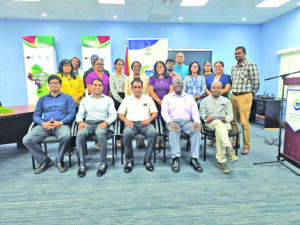
Moreover, during the session, Dr Singh-Anthony also provided an overview of the Human Organ and Tissue Transplant Act, the establishment and role of HOATTA, and the Agency’s statutory mandate. Particular attention was given to the provisions of the Act relating to the Designated Officer and Designated Hospital, and their importance within the regulatory framework for organ and tissue transplantation. Dr Singh-Anthony noted that, “in accordance with Act No. 1 of 2022 and the related regulations and policies, HOATTA is mandated to establish the framework and standards for certification.
At the same time, recognising the local context and the challenges that hospitals may face in meeting certain mandatory certification requirements, HOATTA stands ready to work collaboratively with hospitals to identify gaps and support the strengthening of capacity in the areas where support is needed.”
Certification & protecting patients
Meanwhile, HOATTA Secretariat’s Chief Executive Officer (CEO), Dr Sondia Gordon, emphasised that certification is central to protecting patients and upholding the integrity of Guyana’s transplant programme under the Act. She emphasised that “Certification is not about creating barriers. It is about setting the standard…A standard that is our assurance to the public that any institution performing living kidney donation and transplantation in Guyana has the capacity, the team, the systems, and the safeguards to do so safely, ethically, and transparently.”
The core of the session was a detailed review of the Transplant Centre Certification Manual, presented by Dr David Samaroo, Member of HOATTA and focal point for the certification process. The Manual outlines the requirements and process for attaining institutional certification as a Transplant Centre. Dr Samaroo guided participants through the key requirements, including technical human resources, infrastructure and equipment, clinical protocols, standard operating procedures, guidelines, and other essential institutional requirements. He encouraged the hospital leadership to prioritise the mandatory requirements and put in place the necessary measures to ensure compliance. In addition to the other mandatory requirements, the certification framework places particular emphasis on the establishment of a multidisciplinary kidney transplant team, comprising of qualified transplant and/or vascular surgeons, nephrologists, transplant nurses and other related professionals. The team brings together the necessary clinical and technical expertise to support the evaluation of donors and recipients, transplantation, post-transplant care, and the management of potential complications. He further explained that, during the assessment process, the Health Facility Certification Assessment Team will categorise each requirement as fully met, partially met, or not met. Based on the findings, recommendations will be provided to address identified gaps and strengthen the facility’s readiness for certification. Dr Samaroo emphasised that HOATTA, together with the Health Facility Certification Assessment Team, stands ready to work collaboratively with hospitals to provide guidance and support in addressing identified gaps and building the capacity required to meet the certification requirements. “Certification is not simply about meeting a set of requirements; it is about ensuring that every transplant centre has the people, systems, infrastructure and processes in place to provide safe and quality transplant services. While the requirements are mandatory, our approach is collaborative. HOATTA is committed to working with hospitals to identify gaps, strengthen capacity and support them on the pathway to certification,” Dr Samaroo said. Meanwhile, Dr Rita Gobin, Chair of the Institutional Review Board of the Health Ministry, underscored the importance of strong certification processes. She noted that, “Living kidney transplantation can save and transform lives, but it must always protect the autonomy, safety and dignity of both donor and recipient. Donation must be voluntary, based on fully informed consent, and free from coercion or financial inducement.” Dr Gobin further shared that “ HOATTA’s certification process provides essential assurance that hospitals have the expertise, systems, and ethical safeguards required to deliver transplant services safely, transparently, and responsibly, while maintaining public trust.” CEO of the St Joseph Mercy Hospital, Enoch Gaskin, emphasised that, “Certification will provide an opportunity for the St Joseph Mercy Hospital to directly contribute to a better quality of life for persons suffering from chronic kidney disease.”
CEO of the Woodlands Hospital, Dr Vilas Gobin welcomed the process. “Woodlands Hospital welcomes the publication of the Manual on Certification of Transplant Centres. It provides a clear framework for healthcare institutions to strengthen clinical governance, patient safety and quality standards while supporting the development of safe, ethical, and internationally aligned transplant services in Guyana. We look forward to working closely with HOATTA as we develop the hospital’s Kidney Transplant Programme.”
Structured national framework
According to a statement from the Health Ministry, the sensitisation session represents another step in the development of a structured national framework for organ and tissue transplantation in Guyana and reflects HOATTA’s commitment to ensuring that transplantation services are delivered within a system that prioritises patient safety, donor protection, ethical practice, quality of care and accountability.
HOATTA is the national regulatory body in Guyana responsible for overseeing, regulating, and strengthening living and deceased organ donation and transplantation programmes. It is established under the Human Organ and Tissue Transplant Act of 2021, and operates under the oversight of the Ministry of Health.
In June, the Health Ministry announced that it is collaborating with the European Union (EU) through its Global Gateway initiative, to establish a sustainable organ donation and transplantation system in Guyana. The project, titled “Building a Sustainable Organ Donation and Transplantation Programme in Guyana,” is being implemented under the Guyana HealthNext: Training, Research and Development Programme, which is coordinated by Expertise France. The programme will run through to October 2028, and is expected to lay the groundwork for a comprehensive and internationally aligned organ donation and transplantation framework in Guyana. It is designed to address the growing burden of chronic kidney disease and end-stage renal disease in Guyana, conditions that currently leave many patients dependent on dialysis with limited access to transplantation.
Over the course of the programme, activities will focus on establishing a fully operational national HLA (Human Leukocyte Antigen) laboratory, strengthening nephrology and transplant referral pathways, building institutional capacity for deceased organ donation, and supporting the development of a national governance framework aligned with international standards. The project is expected to position the country as a potential regional reference model for organ donation and transplantation in the Caribbean.
Discover more from Guyana Times
Subscribe to get the latest posts sent to your email.