

– urges leaders to accelerate CSME, climate & food security goals
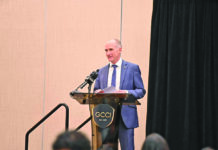
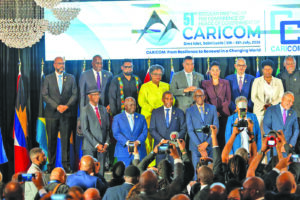
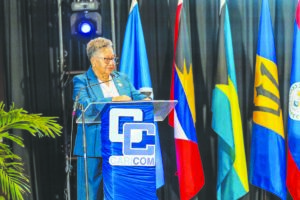
Secretary-General (SG) of the Caribbean Community (Caricom) Dr Carla Barnett has revealed the organisation will invest in training and capacity building for its electoral observer missions, strengthening a key mechanism that supports democratic processes across the region. She made the remarks on Sunday during the opening of the Fifty-First Regular Meeting of the Conference of Heads of Government of Caricom underway in St Lucia under the theme “Caricom: from resilience to renewal in a changing world. ” “Over the past two years, we have organised a relatively large number of Caricom Electoral Observer Missions, the most recent being two in Antigua and Barbuda and The Bahamas this year. We are also engaged in activities to strengthen our Elections Observation Missions through training and capacity building, including observers who are from election bodies in Member States,” she said. Caricom Electoral Observation Missions (CEOMs) are independent, impartial assessment teams deployed by the Secretariat at the formal invitation of a Member State. Their primary goal is to observe national elections and ensure they align with the democratic traditions and accepted standards of the region. Each CEOM is led by a Chief of Mission, supported by a Deputy Chief of Mission (in the case of a large Mission) and consists of members drawn mainly from the electoral bodies of Caricom Member States. The Chief of Mission is the head of the observation team and is selected by the Caricom SG based on seniority, level of experience, leadership ability and history of sound judgment. Funding and administrative support are provided by the Caricom Secretariat.
Caricom mounted its first Election Observer Mission in 2000 at the invitation of Haiti and Suriname for parliamentary elections in these countries. The Secretariat was then mandated by the Conference to mount the Missions as requested.
Caricom has mounted Election Observation Missions in Guyana over the past two decades, with the most notable being in 2020. In fact, the CEOM played a vital and dual role in the tumultuous March 2, 2020, General and Regional Elections, serving as both initial polling day observers and the primary auditors for the national recount. The team observed a grueling national recount process in all 10 administrative regions and, in June 2020, submitted their final Caricom Recount Report, which declared that the recount results provided an acceptable, credible basis to declare a winner. This paved the way for the ultimate declaration of the final results in August 2020. Meanwhile, Dr Barnett noted that as another Caricom Heads of Government meeting gets underway, leaders must focus on critical issues and decisions that must be taken to strengthen the regional integration process. This, she said, will be set against the backdrop of the things that have been achieved and the challenges of the past several years in order to guide the way ahead.
CSME
On strengthening the operations of the Caricom Single Market and Economy (CSME), Dr Barnett noted that while notable achievements were made, more can be done. She acknowledged that strides were made through improved implementation of the Revised Rules of Origin, expansion of the categories of skilled workers under the movement of skills regime, and the commencement in October 2025 of full free movement among four Member States as agreed a year ago, using the Protocol on Enhanced Cooperation of 2022.
“But while we can acknowledge positively the work we do together as a Region, the challenges we face call us to redouble our efforts. We have to do what is necessary to implement key outstanding aspects of the CSME, such as capital market institutions, payments and settlement systems and expanding the movement of persons,” she stressed. “This requires greater focus and action, not only at the regional level in the Ministerial Councils of the Community but also at the national level to ensure necessary consultations, parliamentary approvals, and any other actions necessary to ensure national implementation of regional decisions,” she added.
Agriculture
On the issue of agriculture, the Caricom SG expressed satisfaction with the increased production in the region, driven by the 25 by 2025 strategy, which has now been extended to reducing the food import bill by 2030. “This strategy, which has the objective of reducing food imports and strengthening food security, has seen increased investment in and technical support for agriculture across the Community. It has focused attention on including young people to ensure the development of the next generation of farmers and facilitating the application of new technologies to the operation of agricultural enterprises. Advances such as these will be showcased at the Annual Caribbean Week of Agriculture to be staged in Jamaica later this year,” she outlined.
Climate change
Dr Barnett also reflected on the challenges of climate change and how it impacts sustainable development, noting that “we have helped to guide the implementation by Member States of critical international treaties on biodiversity and areas beyond national jurisdiction. ” Caricom, she noted, also works closely with our regional institutions to prepare for ongoing climate negotiations, “even as we face the reality of the impact of climate change: that is, shifting weather patterns, more hurricanes and floods, etc, which are increasing the need to finance disaster relief and reconstruction at a much faster rate than financing is becoming available.” In fact, she noted that “when we see agriculture production being decimated by hurricanes in successive years, as happened in Jamaica with Beryl in 2024 and Melissa in 2025, the climate challenges we face are even more stark.”
Haiti
On Haiti, she said Caricom continues to work to address the ongoing challenges of governance and security within the country. She noted that the Caricom Eminent Persons Group continues to work with stakeholders to facilitate dialogue and participation of political and civil society representatives of the people of Haiti, with a view to promoting broad consensus on the pathway and mechanisms to achieving peace and security and holding credible elections as agreed. She added that Caricom supports the implementation process of the United Nations Security Council (UNSC) Resolution which established the Gang Suppression Force, and two of its Member States – The Bahamas and Jamaica – have been closely involved in the initiative.
Partnerships
Moreover, the SG lauded efforts to expand Caricom’s associate membership to include Curaçao, Martinique and French Guiana. She stressed that Caricom must continue to strengthen relations with existing partners while also building new ones.
“In the area of international relations and partnerships, even as we sought to reinforce traditional partnerships, the past several years has seen us building stronger relations with Africa, including the African Union, Saudi Arabia, and the United Arab Emirates (UAE) and enhancing cooperation with the European Union (EU), Japan, Korea, Singapore, India, Brazil and Colombia,” she expressed.
In fact, she highlighted that with the support of international partners, Caricom has put in place improved frameworks for cooperation in health and education, as well as a framework on crime and violence as a public health issue, with attention to related juridical processes. Meanwhile, Dr Barnett also emphasised the importance of wider consultations in regional decision-making, noting that “the voices of a wider range of people in the Community, including civil society organisations, must be more meaningfully incorporated in regional discussions.”
“Greater public participation will foster a deeper understanding of how decisions shape everyday experiences,” she added.
Discover more from Guyana Times
Subscribe to get the latest posts sent to your email.