

As part of region-wide efforts to dismantle criminal networks by going after their assets, Attorney General (AG) and Legal Affairs Minister Anil Nandlall says that more applications will be made in the local courts to freeze and seize criminal assets in Guyana.
Speaking on Tuesday evening during his weekly programme “Issues in the News”, Nandlall pointed out that the local judiciary must be prepared for this shift in combatting criminal networks.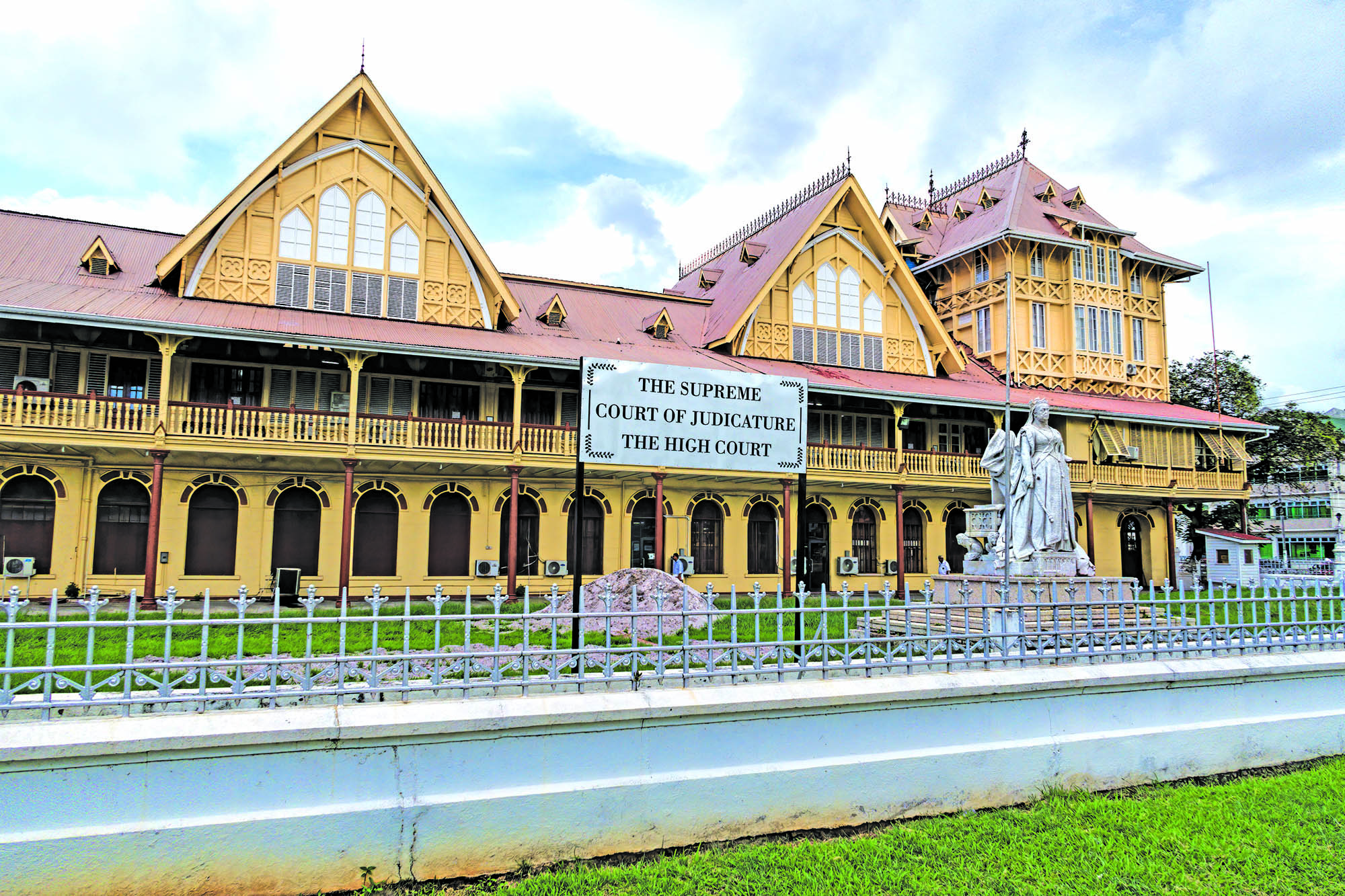
“Our Magistrates and Judges have to also be cognisant of this new dimension, because repeated applications will now be made to the various courts across the judicial spectrum for orders such as freezing orders to freeze bank accounts and detention orders to detain properties, as well as forfeiture orders to confiscate properties that are implicated in or are considered proceeds of crime and criminality,” he stated.
According to the AG, the necessary legislation is now being crafted to facilitate this new and emerging crime-fighting dimension.
In fact, he noted the new Anti-Money Laundering and Countering the Financing of Terrorism (AML/CFT) Bill currently being drafted places much emphasis on these remedial and procedural areas, that is, forfeiture of assets and proceeds of crime.
Added to this, Nandlall said, would be the preparation of the various stakeholders, including in the investigative field as well as the judiciary.
“Prosecutors are being framed in this new endeavour. The legislation…is now being crafted to achieve these new objectives, and therefore, those who are charged with the responsibility of interpreting and applying that legislation must necessarily become part of this machinery. The successful combating of crime requires the participation of many organs and agencies,” the minister contended.
He further underscored the importance of having skilled personnel within key agencies such as the Guyana Police Force (GPF), Customs Anti-Narcotics Unity (CANU), Guyana Revenue Authority (GRA), the Financial Intelligence Unit (FIU), Special Organised Crime Unit (SOCU), and the Guyana Geology and Mines Commission (GGMC), among others, that will be actively involved in these efforts.
Nandlall said, “They now must have qualified persons to do sophisticated types of analysis, ballistics, forensic examinations of evidential materials, financial scrutiny and analysis of movements of money and voluminous financial records. The Financial Intelligence Unit must also collaborate with its counterparts across the globe and international agencies with which it has working relationships. These must all coordinate. The prosecutors have to be trained to present these types of evidence, and likewise, the courts have to be attuned to this new dispensation.”
“So, all the important players have to be in sync if we are to succeed against a very evolving and sophisticated criminal world, because the criminals are investing heavily in technology and in equipment, and they are exploiting every new innovation available. And unless, on the other side of the law, these multiple agencies respond with commensurate sophistication and efficiency, then the criminals will continue to win the battle,” the AG posited.
His remarks come on the heels of the 27th International Criminal Police Organization (INTERPOL) Americas Regional Conference held in Georgetown last week. Over 80 senior law enforcement officials from some 37 countries along with other regional officials had gathered in Guyana for the two-day event to examine emerging criminal trends, share operational experiences and identify practical solutions to tackle transnational crime affecting communities throughout the Americas.
In fact, senior officials of INTERPOL stated that law enforcement must go beyond seizing drugs and other illegal commodities, focusing instead on following the money and identifying criminal assets. They cited that more criminal syndicates in the Americas are turning to illegal gold mining to move and hide profits generated from the cocaine trade.
In recognition of this growing trend, INTERPOL launched its first ever transnational operation to combat illegal gold mining back in December 2025 called “Operation Guiana Shield”. Involving Brazil, Guyana, French Guiana, and Suriname, this coordinated cross-border law enforcement crackdown targeted illegal gold mining, environmental crimes, and associated transnational organised crime.
Back in January, INTERPOL reported that the operation saw over 24,500 checks on vehicles and individuals, leading to some 198 arrests.
As part of the exercise, Guyanese authorities detained three men on suspicion of gold smuggling and money laundering after discovering unprocessed gold and US$590,000 in cash. INTERPOL had linked these suspects to a major organised crime group with possible connections to a leading Guyanese gold-exporting firm.
Meanwhile, this unified approach across the Americas augurs well for the fight against crime, not just locally but regionally and internationally. Already, Guyana has deepened its security partnerships with the United States and various Latin America and the Caribbean (LAC) neighbours through the US-led Shield of the Americas alliance to combat narco-terrorism in this hemisphere.
Discover more from Guyana Times
Subscribe to get the latest posts sent to your email.