


A Tribute by Neaz Subhan
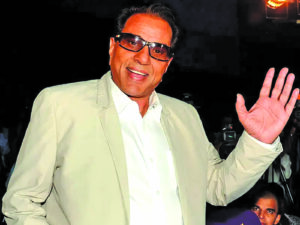
There were many things that were and will still be said about the cinema legend from Bollywood, India, Dharmendra Kewal Krisha Deol. We here in Guyana fondly refer to him as “Dharamji”. However, we all latched on to the moniker “He Man”, not because we were influenced by the constant bombarding of information on Bollywood films in the times of “Radioland” decades back, but because we were convinced by our eyes. Being one of the most handsome men in the world, brawny and with that signature Greek-God-like look, brought tremendous pressure on our young male souls to emulate.
I believe it was a fruitless escapade through self-imposition for many boys then, here and across the globe. We wanted to be a “He-Man”. That self-inflicted pressure was “inspired” by cinema, a most potent phenomenon in a past era devoid of the technological advances which today have become fused to everyday living. In my boyhood days, my circle couldn’t have envisaged today’s lifelines like the internet, computers, cellphones and artificial intelligence, but that’s a different story.
Then, we were occupied primarily with what was coming at the silver screens in those now non-existent cinema halls. Yes, our cinema-stricken preoccupation in our time competed with schoolwork and mandated chores, but that was inescapable. Regrettably, we were not interested in the then and first Bollywood superstar, Rajesh Khanna. No. Despite his global influence and seventeen consecutive hits, he was soft: the romantic hero. Dharmendra “knocked hard”; action was guaranteed.
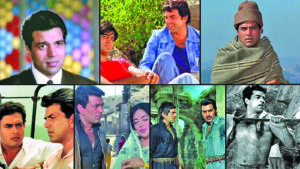
In the cinemas, we felt the power of his punches as they landed on the “scamp men”, e.g., Baldhead Shetty, and, often, freed the captured heroine and family members. In reality, those duels were “soothing” to us; our solace and enjoyable reward for doing our schoolwork and chores. In many ways, cinema in general shaped us, including instilling that discipline to complete all tasks before our parents permitted us the opportunity to feast our eyes on the silver screen. Yeah, it sounds ironic.
We were transformed by the excitement, especially Dharmendra, totally oblivious that he also started as a romantic hero in his first film, “Dil Bhi Tere Hum Bhi Tere” (“My heart is yours, I am also yours”) in 1960 and followed up with a few others. It didn’t matter even after I was enlightened. For me, he, Amitabh Bachchan, Feroz Khan and Vinod Khanna were the star boys of choice, given their powerful fists. Of course, Dharmendra didn’t disappoint, for he was known to possess the most powerful pair of fists fit for taking revenge, especially for his mother.
With that automatic adrenaline rush, both on screen and in our bodies, the crescendo was anticipated and “typecast”, for it stayed within expectations. That was motivation to visit again, for our parents were seemingly assured that the chores were already done without fuss. Despite the harsh economic challenges then, somehow efforts to get a cinema “bill” were generally successful. When the parents were unable, there was a dependable grandparent.
With the incredible impact of this “He-Man” on us boys and the “drooling” of girls across the globe, with some, according to reports, sleeping with his photographs under their pillows, we better understood why my mother and neighbouring ladies spoke adoringly about the thespian, Dilip Kumar, and his fellow actor, Dev Anand. That was an era before us, and I am sure that their gathering in the great beyond would make for good “cinema” still.
While I am tempted to venture into more details about the impact of Bollywood on our generation and era, for those who are still around, the influence and memories of Dharmendra are foremost. His unforgettable performance as the lovable Veru in the emblematic cinematic masterpiece, “Sholay”, often regarded as the greatest film made in Bollywood, remains a reservoir of comfort and motivation. Smitten by Basanti, played by Hema Malini, whom he eventually married, and his relentless efforts to win her heart, he provides much courage to the timid boys.
Alongside Jai, a completely opposite character to Veru and played by Bollywood Badshah (King), Amitabh Bachchan, and taking revenge on the iconic villain, Gabbar Singh, as excelled by Amjad Khan for Thakur Baldev Singh as effortlessly and skilfully portrayed by Sanjeev Kumar, “Sholay” will remain that legendary classic not just for cinema, but for Dharmendra too. It will be re-released in December 2025. Sadly, Dharmendra will be absent. Who knows, there might be a “special reunion” up above with him and both Sanjeev Kumar and Amjad Khan. He will also not be with us for his 90th birthday on December 8. Life will always be that foremost enigma.
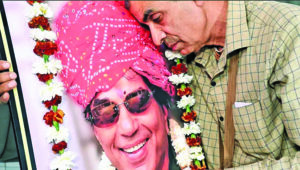
While his forte was the action genre, he excelled at comedy, and his humorous attempts to dance will forever evoke laughter. From all reports, even before his death, the character Veru was in many ways a reflection of who Dharmendra was in person: altruistic, devoid of any semblance of ego and selfless in his efforts to assist and lift others up. Having ventured into politics, he left after a brief stint, citing that he was an emotional person and that may not be a quality required for that endeavour. Much was said in that statement, confirming what others know of him: magnanimous and unpretentious.
It was therefore no surprise that he was treasured even before his death, as vindicated by the innumerable tributes from across the globe and from all strata of society. With his death being one of the lead stories on the BBC and other international news agencies, there is no disputing the global impact he had in many countries he never visited and on millions of people he never met. That is what makes a legend, in both life and death: a legend as reflected through the versatile Dharmendra, Dharamji. Despite two of his sons, Sunny and Bobby, being seasoned and respected actors, I believe that Dharmendra’s shoes will remain unfilled.
Cinema, and, of course, India, has lost an icon, a standard bearer and a humane mortal. We are comforted knowing that with technology, we can still enjoy his efforts through the treasure trove of movies he left us and be reminded by the multitude of those named after him, including in Guyana.
Discover more from Guyana Times
Subscribe to get the latest posts sent to your email.