


Developed through a collaboration involving the Ministry of Education, the World Bank and other key stakeholders, a new digital management platform, the Technical and Vocational Education and Training (TVET) Education Management Information System (EMIS), has been launched to improve institutional management, strengthen oversight and support the monitoring of trainees’ progress and the quality of training across Guyana.
The platform, an open-source application backed by United Nations Educational, Scientific and Cultural Organisation (UNESCO) and used by Ministries of Education worldwide, currently features 29 public and private TVET institutions across Guyana.
The system allows institutions to manage trainee registration, monitor student progress and access information on academic performance, transcripts and assessment results. It also provides institutional dashboards displaying student and staff attendance, enrolment figures, gender breakdowns and the number of trainees enrolled in different subject areas.

Additionally, TVET EMIS features an inventory management component that allows institutions to monitor the quantities and availability of materials and equipment needed for practical training, helping to ensure that essential supplies are available for students and instructors.
Speaking at the launch of the TVET EMIS platform on Monday, Deputy Chief Education Officer Dr Ritesh Tularam highlighted the benefits of the system, noting that it will streamline trainee management by tracking students’ progress from the initial application and registration stages through to certification.
Smoother oversight, coordination
“So this system will improve data management and record-keeping. It is centralised in the sense that it will provide information on all the trainees in post-secondary institutions and all the programmes, from registration all the way to certification. We know the laborious methodology that we have in our institutions, where we have to document every single individual, their biodata and all other required information.” He added, “We will be able to manage everything from the application and registration processes all the way to the certification of a student. It means that we are tracking progress,” he said.
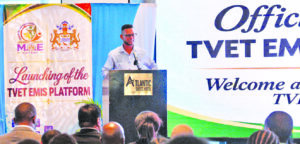
According to him, Education Minister Sonia Parag will be able to access the platform through designated login credentials, allowing for smoother oversight and coordination in aligning training programmes across institutions. “We are checking the rate of completion of assessments. We are checking to see if the internal verifiers who are paid to execute their duties are completing their reports. We are checking to see if the external verifiers are submitting their reports. We are ensuring that all the required materials, tools and equipment are accessible to trainees in the programme. All those things are there so we can monitor periodically.
Labour market demands
Meanwhile he added that the system is designed to strategically align training programmes with labour market demands, rather than simply utilising available funding or facilities. She explained that the platform will provide insight into the skills and qualifications sought by the private sector, allowing training institutions to better tailor their programmes to industry needs.
He added that that private sector companies will be able to log into the system, upload information and advertise job opportunities within their organisations, giving institutions and students greater access to employment opportunities.
Meanwhile, Education Minister Sonia Parag highlighted the importance of accurate and reliable data in supporting the Ministry of Education’s management of the TVET sector, noting that the information gathered through the platform will help ensure effective programme oversight and the delivery of quality training to students.
“I can’t emphasise that enough, and that doesn’t just go for the Ministry of Education or for TVET. Having accurate data on every single aspect of that journey helps us to improve the entire system, and it helps you to be able to get better-quality training. And so this is going to help us to do that,” she said.
She added: “One, we can know if you have enough equipment or you don’t, what the inventory looks like. We know if you’re getting through your application or you’re not. We know how the programme is running and how it’s not, how it’s going to be helping you, and what we need to do to fix it if that’s the case.”
As Guyana continues to expand across key sectors, including construction, agriculture, information technology, manufacturing and energy, the availability of reliable and timely information is increasingly important in ensuring that the country’s workforce is equipped with the competencies required by a growing economy. The initiative also reflects collaboration among the Ministry of Education, its TVET institutions, industry partners and the World Bank in strengthening the systems that support education and workforce development.
Ultimately, the platform is intended to support a more comprehensive understanding of the TVET sector, helping the Ministry and institutions identify needs, monitor progress and make better-informed decisions about the delivery and development of technical and vocational education.
Discover more from Guyana Times
Subscribe to get the latest posts sent to your email.