


…says over 3000 indigenous villages received funding for projects under LCDS

Some four years after signing the historic deal that generated financing for national development and climate action under the country’s model Low Carbon Development Strategy (LCDS) 2030, Guyana has earned approximately US$353 million to date from the sale of its highly-certified forest carbon. This is according to Senior Director of Climate and Reducing Emissions from Deforestation and Forest Degradation (REDD+) in the Office of the President, Pradeepa Bholanath, who has had a front row seat to Guyana’s internationally-renowned environment stewardship over the years. Back in November 2022, Guyana became the first country in world to be issued with Architecture for REDD+ Transactions (ART) TREES certified jurisdictional scale carbon credits, making some 33 million credits available to be sold. A month later, the Guyana Government again made history when it inked the US$750 million multi-year deal with United States (US) energy major, Hess Corporation, for the sale of 30 per cent of those high-quality carbon credits.
“Since then, we’ve been able to expand those market opportunities in ways that we didn’t even envision to the point now, where to date since 2022, we have earned a total of US$353 million from the sale of carbon credits,” Bholanath disclosed during an appearance of the latest edition of the Starting Point podcast. Included in these earnings are monies also generated from the sale of forest carbons on the Carbon Offsetting and Reduction Scheme for International Aviation (CORSIA) market – the International Civil Aviation Organisation (ICAO)’s global emissions reduction programme. This was after Guyana was issued with 7.14 million carbon credits in 2024, marking the first-time carbon credits have been issued that can be used by airlines in an effort to meet their carbon emission targets for the 2024-2026 period.
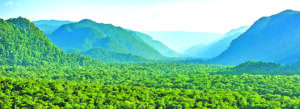 In March of this year, Bholanath had revealed that within an 18-month period, Guyana had sold these certified credits to at least 19 airlines through a partnership with the International Air Transport Association (IATA). Just earlier this month, it was revealed during IATA’s Annual General Meeting in Rio de Janeiro, Brazil that Guyana is among the top 10 countries around the world that have supplied CORSIA-compatible carbon credits. In fact, Guyana was listed as the highest supplier with nearly 25 million ART-TREES credits – more than half of the 38 million credits made available on the CORSIA market. Back in March, Bholanath had said that Guyana is anticipated even more airlines to purchase Guyana’s high-quality carbon credits over the next two years. Moreover, Guyana has also sold its high-quality carbon credits to US technology giant, Apple Inc. Last year, the tech company purchased some 100,000 credits from Guyana at a cost of almost $314 million as part of its environmental sustainability efforts. This year, it is projected that the carbon credit inflows would amount to some $49.7 billion for 2026. With a tropical forest that takes up 86 per cent of its landmass, Guyana has the second highest percentage forest cover on earth and one of the lowest deforestation rates. The forest stores 19.5 gigatons of carbon and sequesters more than 153 million tonnes annually.
“Groundbreaking” concept
Nevertheless, during the podcast, Bholanath, who is also leading the implementation of LCDS 2030, recalled that the country’s environmental journey was paved under the Bharrat Jagdeo presidency when he came up with the concept of the LCDS – a model that balances economic development with environmental protection and conservation. She described the concept of monetising the country’s forest resources as “groundbreaking”, noting that it’s not only reflective of critical climate actions but also a key component to Guyana’s sustainable development and taking benefits directly to citizens through the creation of livelihood opportunities. Under the LCDS 2030 framework, a portion of the US$750 million Hess deal is being directly injected into Amerindian communities to drive economic development. To date, more than $14.4 billion have been channelled into some 252 Amerindian villages since 2023, of which $4.8 billion was disbursed in 2025 to fund initiatives in the areas of tourism and agriculture, among others.
“That has been, to my mind, one of the biggest successes of the implementation of LCDS 2030…and these investments go towards the activities that the villages have identified. So, it’s this impressive process of self-determination. They determine what they would like to see in terms of the look and the shape and the way that the village evolves, and then the financing would go towards making sure that that is possible,” she posited.
3,000 projects implemented
To date, the Climate Director noted that there has been close to 3,000 projects implemented at the village level from three tranches of disbursements in 2023, 2024 and 2025.
“We have this multiplicity of project activities showing all kinds of success stories and interesting experiences at the village level, whether it’s building out a kitchen to help with the Ministry of Education’s [food programme] and the provision of hot meals, or whether it’s setting up a bakery unit for the village to expand its activities…or whether it’s creating a daycare facility at the village level so single moms can work during the day. So. it’s a range of economic activities – income generating activities, livelihood activities, and any activity that the village sees would be necessary for it to expand its development,” she added. Going ahead, Bholanath believes that there is much more scope for Guyanese to benefit from these resources the Guyana Government is making available, with opportunities spanning across all sectors and accessible to every category including vulnerable groups.
Discover more from Guyana Times
Subscribe to get the latest posts sent to your email.