…assures no interruption in power generation
The Guyana Government is currently engaged in active negotiations with the company that operates the two power ships that are supplying the national grid with some 96 megawatts (MW) of electricity.
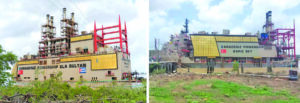
The two power ships, one in the Demerara River at Meadow Bank producing 60 MW and the other at Everton in the Berbice River supplying 36 MW of electricity, began generating power in 2024 on a two-year contract between the Guyana Power and Light Inc (GPL) and the Joint Venture of Turkish-based Karpowership Global DMCC and Qatar-based UCC Energy International LLC (UCC JV).
However, it has been reported that the contract has expired. On Thursday, Minister of Public Utilities Deodat Indar addressed the renewal of the contract between GPL and UCC JV with Karpowership.
“I would like to assure the public that the Government of Guyana is working in the best interests of the people of Guyana to get the best possible commercial rate for the renewal of the contract,” the Minister stated.
Over the past weeks, there have been reports that the power ship company has threatened, via a correspondence to the Public Utilities Minister, to shut off operations if a new deal is not reached.
But Indar has reassured that the two vessels are still operating as the Government and power ship operators iron out a new agreement.
“We continue to be in the negotiation process, while the power ship maintains an uninterrupted supply of electricity to the national grid… I want to reassure the population that no power outage is occurring due to a lack of power generation,” the Minister contended.
In fact, contrary to reports, Minister Indar explained that the recent increases in power outages across the country may have been due to issues relating to the maintenance of the power grid and interruptions caused by private contractors, and not the shutdown of the power vessels.
According to the Public Utilities Minister, the public will be apprised, at the appropriate time, on the completion of the contractual negotiations between GPL and UCC JV with Karpowership.
This statement from Minister Indar comes as opposition parliamentarian A Partnership for National Unity’s (APNU) Ganesh Mahipaul, on Thursday, submitted oral questions without notice to Speaker of the National Assembly, Manzoor Nadir, about the status of the negotiations with the power ship company. These questions were filed ahead of today’s sitting of the National Assembly.
The Guyana Government had contracted the two power ships to provide additional capacity in order to meet the country’s growing demand for electricity. This, the Government had explained, was a short-term solution as it awaits the highly anticipated Gas-to-Energy (GtE) project that is slated to come onstream later this year, bringing some 300 MW of power using natural gas from offshore Guyana.
Back in February, Team Lead at GPL, Kesh Nandlall, had indicated that the country’s current peak electricity demand is at 236 MW and is expected to surge by a whopping 600 per cent in the next five years.
“By 2030, we estimated it to be 1650 MW, or one gigawatt (GW), 650 MW of peak demand output that we’ll have to have generation in place [to meet]…that means a 600 per cent increase in our generating capacity from now to 2030,” Nandlall had stated during a panel discussion at the Guyana Energy Conference and Supply Chain Expo held in Georgetown.
The current 236 MW peak demand is a significant growth from 2020, where it stood at 120 MW – representing a 100 per cent increase over the last five years.
The GPL Head explained that this increase is driven not only by growth in the consumer base, which moved from 201,000 in 2020 to now 244,000, but mostly by the rising power demands of existing consumers.
At present, GPL’s generation output stands at 1485 gigawatt-hours compared to 903 gigawatt-hours in 2020.
The Demerara Berbice Interconnected System (DBIS), the country’s primary grid that links the western Demerara system and the eastern Berbice system generating facilities, currently has approximately 260 MW of firm capacity available – a figure that is likely to spike to around 285 MW this year.
“We have to now equip ourselves to bridge that gap until the end of the year when the Gas-to-Energy Project will come onstream,” Nandlall had stated.
Located in Wales, West Bank Demerara, the GtE Project comprised a 300-megawatt combined cycle power plant and a natural gas liquids (NGL) facility. The Guyana Government has touted this initiative as the country’s answer to both reliable and cheap electricity, with prices set to be slashed by half when it comes on stream later this year.
But with power demand expecting to increase by 600 per cent over the coming years, the power plant will be inadequate to meet Guyana’s growing demand. Against this background, the Government is embarking on a second power plant to add another 300 MW of electricity to the national grid. That second project – GtE Phase Two, which also includes another NGL facility – is slated to come onstream in 2030.
Discover more from Guyana Times
Subscribe to get the latest posts sent to your email.