


Guyana approves US$12.5B Longtail project

… project will unlock new value for Guyana – ExxonMobil

Guyana’s offshore oil and gas industry is set for another phase of expansion following the approval of the US$12.5 billion Longtail Project, the country’s eighth petroleum development and its first dedicated to extracting non-associated natural gas.
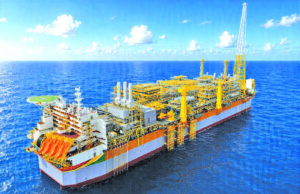

A rendering of the FPSO that will support the project

The Natural Resources Ministry on Thursday announced that the Government had approved the Longtail Field Development Plan (FDP) and issued the corresponding Petroleum Production Licence (PPL), clearing the way for the project to advance.
Also on Thursday, ExxonMobil announced that it had taken the final investment decision (FID) for the development, following the required Government and regulatory approvals. First production is expected in 2030.
Located in the southeastern section of the Stabroek Block, Longtail will be operated by ExxonMobil Guyana Limited (EMGL), which holds a 45 per cent interest. Its co-venturers, Hess Guyana Exploration Limited and CNOOC Petroleum Guyana Limited, hold 30 per cent and 25 per cent interests, respectively.
According to the Ministry, the project will target nine reservoirs and is expected to produce approximately 776 million barrels of condensate over a 30-year production period.
The development will use a newly built Floating Production, Storage and Offloading (FPSO) vessel designed to handle approximately 1.2 billion standard cubic feet of gas per day and produce up to 250,000 barrels of condensate daily.
It will involve approximately 45 subsea production and injection wells, comprising 27 production wells and 18 gas injection wells.
The Ministry said the project would incorporate full gas reinjection capabilities, alongside facilities to accommodate the eventual export and utilisation of natural gas onshore.
Non-associated gas projects are designed to extract natural gas from underground reservoirs containing little or no commercially significant crude oil. The Longtail development therefore represents a new direction for Guyana’s offshore petroleum industry, which has so far been driven primarily by oil production.
ExxonMobil said the project could also facilitate the transportation of gas to shore through a pipeline, subject to future investment decisions, market demand and the development of the necessary infrastructure.
“This is a significant milestone in the country’s petroleum sector and an important step towards the development and commercialisation of its natural gas resources,” the Ministry said.

Specific provisions
The approval also introduces specific provisions in the Longtail Petroleum Production Licence to guide the development and management of the gas resources.
Among these are requirements for a gas utilisation and export study covering reservoir performance, production forecasts, timelines for gas exports and potential gas marketing opportunities.
The licence also requires appropriate risk and safety management systems for gas export and ensures that the FPSO’s base design includes the facilities needed to accommodate future gas exports.
The Ministry said these provisions were intended to ensure that the necessary plans and infrastructure were in place to support the eventual use of the gas resources.
Apart from offshore production, the Longtail development is expected to support Government plans to establish a natural gas industrial site in Berbice, as outlined by President Dr Irfaan Ali at the Berbice Development Summit.
Those plans include a second offshore Gas-to-Energy (GtE) pipeline to increase the supply of natural gas for electricity generation and support the establishment of industries, including fertiliser production, alumina and mineral processing, data centres and other energy-intensive operations.
The Government has identified the development of these industries as part of its wider strategy to diversify the economy, attract investment and expand opportunities beyond the petroleum sector.

Unlock new value for Guyana
ExxonMobil Upstream Company President Dan Ammann said Longtail represented another phase in developing the resources in the Stabroek Block.
“By developing these gas and condensate resources, we’re unlocking new value for Guyana while delivering advantaged energy to meet growing global demand,” he said.
ExxonMobil also disclosed that approximately 6000 Guyanese currently support operations in the Stabroek Block, while the company and its contractors have spent more than US$3.9 billion with Guyanese suppliers since 2015.
Longtail is the eighth approved development in the Stabroek Block, following Liza Phase One, Liza Phase Two, Payara, Yellowtail, Uaru, Whiptail and Hammerhead.
ExxonMobil is currently producing approximately 900,000 barrels of oil per day from four offshore projects. The Uaru development, the fifth project, is expected to begin production in the fourth quarter of this year, taking Guyana’s output beyond one million barrels per day.
The Whiptail project is expected to come on stream in 2027, while Hammerhead is targeting a 2029 start-up.
The Longtail announcement comes as Guyana’s Natural Resource Fund (NRF) continues to accumulate revenue from offshore petroleum production.
The Finance Ministry reported earlier this week that the balance in the Fund had reached approximately US$5.5 billion at the end of the third quarter of 2026.
Over US$1.7 billion was earned from profit oil during the three-month period, with three oil lifts in July, 10 in August and nine in September from ExxonMobil’s four producing projects.
The Fund also received a royalty payment of US$111.2 million in July, relating to the second quarter, and a signature bonus payment of US$99,985 in August. These receipts brought total deposits into the NRF during the quarter to approximately US$1.88 billion.
The latest figures follow the US$4.29 billion balance reported in the Government’s 2026 Mid-Year Report.
The International Monetary Fund (IMF), in its 2026 Article IV Mission concluding statement released at the end of July, noted that continued oil revenue accumulation in the NRF was helping to build external and fiscal buffers, while investments in physical and human capital were supporting non-oil economic growth and improving outcomes in areas such as health and education.


Discover more from Guyana Times

Subscribe to get the latest posts sent to your email.