

…says unforeseen shocks, natural disasters hindered 25 by 2025 target
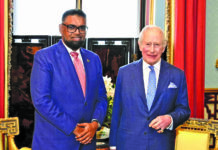
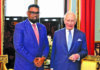
President Dr Irfaan Ali on Tuesday said that the Caribbean Community’s (CARICOM) Vision 2030 agenda is designed to ensure the region remains on track in strengthening food security, expanding agricultural production and incentivising investment, particularly capital investment in agriculture and food systems. 
The President made the remarks during a live interview on Tuesday with five women journalists and students, where he addressed concerns about regional food security targets and outlined Guyana’s growing role as an agricultural and food distribution hub for the Caribbean. President Ali rejected claims that regional targets had failed, noting that both Guyana and the wider Caribbean have been commended globally for their efforts to increase food production and strengthen food security. He explained that unforeseen shocks, including two major hurricanes and three storms, significantly disrupted agricultural output across the region, particularly in Jamaica, where much of the sector was almost wiped out, including major hatching egg production.
“But we also have to remember that a 25 by 2025 agenda came after the pandemic. And after the pandemic, tourism came back. With tourism, I’m speaking about the region, comes higher demand. So of course, although the production increase, it did not increase at a pace at which tourism and other sectors started to reemerge after the pandemic. So this straight-line simplistic analysis by some lack depth. But that comes from the inexperience in policy making. And that comes from sometimes agenda that are skewed for a narrative,” the Guyanese Leader reminded. “For a matter of fact, if you look at all the reports, the Caribbean and Guyana have been commended globally for the efforts we have made on food security and increasing production, but we did not plan for two major hurricanes and three storms. The entire agriculture sector is almost wiped out in Jamaica. They contributed significantly to hatching eggs,” he added.
Tremendous strides
The Head of State stressed that despite these setbacks, the region has made tremendous strides and in many cases, surpassed its targets. However, vulnerabilities remain, especially in relation to natural disasters and financing. According to the President, Vision 2030 is intended to ensure the policy environment continues to incentivise agriculture, food production and private investment, while supporting long-term resilience. President Ali pointed out that across CARICOM, Government budgets have placed heavy emphasis on food production and agricultural expansion, which he described as a major success.
“So, the 2030 agenda is to ensure we stay on track, to ensure that the policy environment continue to incentivise agriculture and food production, incentivise investment, capital investment in agriculture and food production. And you have seen in the budgetary allocation from every Government within the region, heavy focus has been on food production and agricultural expansion,” he said.
International investors
Turning to Guyana, President Ali highlighted major gains in poultry, livestock, egg, aquaculture, corn and soya production, noting that within two years Guyana is expected to begin exporting several of these products to the wider Caribbean. He also pointed to new investments in black-eyed peas and red beans, alongside the opening up of new lands for agriculture through major drainage and irrigation works. He said Guyana is now attracting international investors interested in large-scale swine and livestock production, sugar refining, ethanol production, mega farms, hydroponic and vertical farming. According to the President, this surge in interest is driven by strong public policy, a supportive investment ecosystem and confidence in the sector. President Ali also noted that lending to agriculture and food production has grown exponentially within Guyana’s banking system, reflecting increased confidence backed by infrastructure development, improved drainage and irrigation and targeted incentives.
Guyana-State of Roraima
On regional integration, the President said the CARICOM region now views Guyana as a key production and distribution hub for food. He highlighted the Guyana-State of Roraima food security partnership as a major achievement, noting that Roraima’s large-scale agricultural capacity is being leveraged to create value-added and agri-processing opportunities in Guyana.
“It’s important that we have a partnership with a state like Roraima that is huge in agriculture and their productive capacity is at a global scale. We are now leveraging that advantage to add value and create new wealth through agri-processing opportunities… We are now building out a cold storage facility to back that. We now have the food ecosystem that is being built out to support large-scale processing, production, storage and distribution. So, we are building out the infrastructure. We’re talking about the airport at Lethem so we can export directly to the Caribbean. Then we are looking at creating an agro-industrial hub in Lethem to bring raw produce, to add value, do all the packaging for the Caribbean and North American market. We are looking at similar hubs in Berbice, in Essequibo,” Ali disclosed. These initiatives, the President explained, form part of an integrated strategy that links infrastructure development, technology, new agricultural lands and access to markets.
He expressed confidence that agriculture and tourism will emerge as two transformative pillars of Guyana’s economy over the next five years, stating that the scale of growth and investment in both sectors “will blow our minds.”
Discover more from Guyana Times
Subscribe to get the latest posts sent to your email.