


– Execs cite industry-leading development pace, high oil prices for accelerated recovery
United States (US) oil major ExxonMobil has fully recovered some US$55 billion that was invested in the Stabroek Block operations offshore, paving the way for Guyana to benefit from a larger share of the oil profits going forward. This was revealed by executives of the US energy giant during the company’s 2026 second-quarter earnings call on Friday.
“We’ve fully recovered the $55 billion of investment along with all the operating costs,” Senior Vice President (VP) and Chief Financial Officer (CFO) of ExxonMobil Neil Hansen indicated. Hansen attributed this acceleration of the investment recovery to the company’s execution of its projects at an industry-leading pace, lower development costs, operational performance, and high oil prices on the global market – a view shared by Exxon’s Chairman and Chief Executive Officer (CEO) Darren Woods.

“It’s a real success story in what we’ve achieved in Guyana, delivering…the production units faster than we had originally anticipated at a lower cost, running those assets above the investment basis. Obviously, the market prices have been higher than our base assumption. All that means more cash sooner, which is good for the project…good for Guyana and the people of Guyana,” Woods stated during Friday’s earnings call.
Back in March, the President of ExxonMobil Guyana Limited (EMGL), Alistair Routledge, told reporters that Guyana was already seeing an increase in revenues from the sale of its crude due to Middle East conflict, which saw a surge in oil prices on the global market. Routledge had explained that these high prices, if sustained, would result in the country getting a larger share of the oil profits since the costs for the company’s historical investments in the Stabroek Block operations are fully recovered.
ExxonMobil and its co-venturers, Hess and CNOOC, had committed an investment of US$60 billion in the Stabroek Block operations. Under the 2016 Production Sharing Agreement (PSA), the Stabroek Block partners can recover costs expended on exploration, development and operation, including those accumulated historically, from up to 75 per cent of the gross revenues earned from the sale of oil produced offshore Guyana.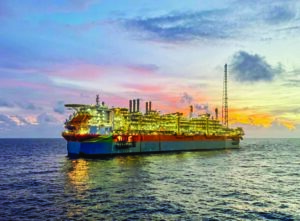
The remaining 25 per cent of profits are shared between the Stabroek Block co-venturers (ExxonMobil, Hess, and CNOOC) and the Guyana Government. In addition to its roughly 12.5 per cent share of profits, the Government also gets an additional two per cent in royalties from the total revenues. Routledge had told reporters earlier this year that Exxon managed to bring down the cost bank to approximately US$5 billion, which would be fully recovered this year rather than in 2027, as was initially anticipated.
More cash flow
With the oil costs now fully recovered, ExxonMobil’s CFO pointed out that there would be two times the level of free cash flow by 2030 compared to what was seen just last year. “The way the contractor agreement works is we can recover that investment up to 75 per cent. After that, the remaining production is shared 50/50 between us and the Government of Guyana. If you think about it, if you just stop today and there’s no additional investment, then more of your production and revenue is going to flow towards cash flow, again shared between us and the Government of Guyana,” Hansen posited.
According to the senior VP, even with the investment costs recovered, the cost recovery does not end since new capital spending and operating costs from future developments, such as new production assets and field expansions, will continue to build the cost bank and will have to be recovered in the future. However, he noted that the cost bank is unlikely to return to previous high levels.
“The reality is we have more investment. To the extent we have the investment come in and operating costs, they’ll still go into the cost bank. We’ll still recover that at that 75 per cent cap. There’s much less investment to recover. Given the level of production that we’re at, you’re unlikely to see that cost bank obviously be full again… Now that we’ve reached full recovery of that significant investment, more of our revenues will go towards free cash flow versus recovering cost and investment,” the Exxon CFO emphasised.
Currently, the US oil giant is operating four Floating Production Storage and Offloading (FPSO) vessels – Liza Destiny, Liza Unity, Prosperity, and One Guyana – producing approximately 900,000 barrels per day (bpd) in the Stabroek Block.
Exxon is now gearing up for its fifth development project – Urau, which will utilise the Errea Wittu FPSO. The vessel set sail for Guyana in June and remains on track for startup by the end of this year, increasing capacity by 250,000 barrels per day.
The oil major has already secured approvals from local authorities for its seventh project – Whiptail, which is scheduled to come on stream in 2027. The Longtail development, which is the company’s eighth project here, is on the path toward a Final Investment Decision (FID), while Exxon is already evaluating the potential for a ninth FPSO.
Discover more from Guyana Times
Subscribe to get the latest posts sent to your email.