

…upgraded homes, jobs, new business opportunities
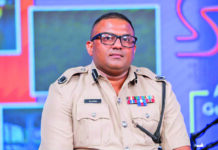
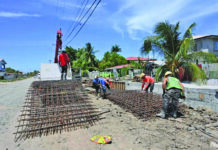
Communities across Region Two (Pomeroon-Supenaam) are set to benefit from a wide-ranging transformation programme aimed at improving infrastructure, creating economic opportunities and building safer, greener and more sustainable communities. President Dr Irfaan Ali outlined the plans during ‘Model Village’ community consultations at Good Hope Primary School and Suddie Primary School, where he engaged residents on the Government’s development vision for the region. The initiative is intended to go beyond physical infrastructure upgrades by creating opportunities for residents to earn, invest and establish businesses while improving the overall quality of life in communities. Among the proposed interventions are the cleaning and removal of encumbrances from road shoulders, drains and public reserves; upgrades to roads and bridges; improvements to utility poles and street lighting; construction of pedestrian walkways and suitable road shoulders; landscaping and streetscaping; tree planting; road demarcation; and upgrades to existing public spaces, green spaces and vending hubs. Ali said the objective is to create “living communities” that are safe, clean, sustainable and resilient. He pointed to the possibility of developing agricultural technology hubs and said community investments must also be used to generate employment, business opportunities and entrepreneurship. At Good Hope, the President used poultry farming as an example of how better planning could address existing challenges while expanding economic activity. He said residents involved in backyard poultry production could potentially be organised into clusters, allowing farmers to operate from designated areas, expand production, improve efficiency and reduce conflicts with neighbouring residents. Ali said Government is examining how such initiatives could be supported through financing and institutions such as the Guyana Development Bank (GDB). He also said opportunities could be created for persons seeking to upgrade their homes, provide elderly care and develop services for children.
Waterfront development
Waterfront development was also identified as having the potential to generate employment and business opportunities. At Suddie, Ali highlighted Region Two’s growing tourism potential and said future development should take advantage of the region’s natural and recreational assets. He said waterfront areas could become important components of the tourism economy, while upgraded parks, sports facilities and recreational spaces could contribute to sports tourism. The President envisioned visitors spending weekends in Region Two enjoying sports, parks, waterfront areas and other recreational attractions, creating an ecosystem in which community development and tourism work together to stimulate the local economy. The Model Village plans also place emphasis on safety and the environment. Ali said modern community planning must include proper traffic management, fire hydrants, CCTV cameras, improved drainage systems, green spaces, reserves and play areas. He also highlighted the importance of mental health and said communities should provide safe and enjoyable spaces for children, parents and elderly residents. According to Ali, infrastructure alone cannot guarantee a better quality of life if communities continue to face noise nuisance, environmental hazards and a lack of discipline. The plans therefore seek to combine physical improvements with efforts to create peaceful and healthy living environments. Housing remains another major component of the development agenda. Ali announced that persons who applied for house lots in Region Two will receive their allocations as Government works to address outstanding housing applications and move residents towards land ownership and, ultimately, homeownership.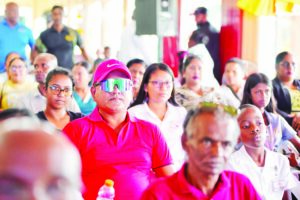
Major concerns
He said the Government’s objective extends beyond allocating land to supporting families in constructing homes. Housing was among the major concerns raised during a recent Cabinet outreach in the region, during which 641 issues were raised. Ali said more than 110 of those matters have already been resolved, while about 300 housing-related issues are expected to be resolved before the end of the year.
The President also announced plans for a social housing programme targeting persons facing extreme vulnerabilities, including elderly persons, single parents and persons living with disabilities. Eligible beneficiaries would be assisted with the construction of approximately 400-square-foot, one-bedroom homes, while support would also be provided to young people and low-income families seeking to construct two-bedroom homes. Education and professional training are also part of the development agenda. Ali said Government intends to expand opportunities for students in Region Two, including increased access to medical sciences and professional fields such as medicine, pharmacy, dentistry and engineering. He said the objective is to build an ecosystem capable of supporting young people’s aspirations without requiring them to leave the region to pursue every area of study. The President also pointed to the Government Service Centre in Region Two as an example of decentralised services. He said more than 11,000 transactions had already been conducted through the centre, saving residents from travelling to Georgetown to access services. Residents are expected to continue playing a role in shaping the Model Village plans. Ali said teams of engineers, planners and other technical personnel have been visiting communities over recent months to identify challenges and opportunities and develop preliminary proposals. Residents were then invited to provide feedback on those proposals and identify issues requiring urgent attention. Ali said Government intends to continue returning to communities to discuss projects and initiatives, including opportunities for residents to access financing through the Guyana Development Bank.
The Government is positioning the ‘Model Village’ Initiative as a broader transformation programme through which Region Two communities can benefit not only from improved roads and public spaces, but also from new jobs, stronger businesses, tourism opportunities, housing support and improved living conditions.
Among those attending the consultations were Housing Minister, Collin Croal; Minister within the Housing Ministry, Vanessa Benn; Minister within the Ministry of Local Government and Regional Development Pauline Campbell-Sukhai; Director General of the Amerindian Affairs Ministry, Sonia Latchman; Regional Chairman Devin Mohan; Regional Vice Chairman Humace Oodit and other regional officials and representatives.
Discover more from Guyana Times
Subscribe to get the latest posts sent to your email.