

Nearly six years after the brutal murders of West Coast Berbice, Region Five (Mahaica-Berbice) cousins Isaiah and Joel Henry shocked the nation and triggered widespread protests demanding justice, a Berbice High Court jury on Tuesday unanimously found Anil Sancharra and Vinod Gopaul guilty on two counts of murder.
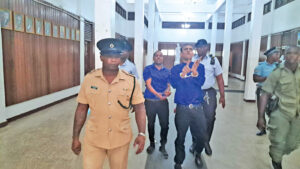
The verdicts were returned after more than two hours of deliberations by a 12-member jury following a month-long trial before Justice Simone Morris.
Following the verdicts, the Judge ordered psychiatric evaluations and probation reports for both convicted men and adjourned the matter to June 26 for a sentencing hearing.
The trial, which opened on May 7 and concluded on June 9, heard evidence from 16 prosecution witnesses, the testimony of both accused men, extensive cross-examination by defence attorneys Dexter Todd and Chandra Sohan, and detailed legal directions from the trial Judge before the matter was handed to the jury.
For many Guyanese, Tuesday’s verdict represented the conclusion of one chapter in a case that has remained etched in the country’s memory since September 2020.
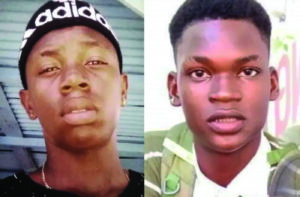
Isaiah Henry, 16, and Joel Henry, 19, disappeared on September 5, 2020, after heading into the Cotton Tree backlands, West Coast Berbice.
The following day, their mutilated bodies were discovered, sending shockwaves throughout Guyana and attracting international attention.
The killings sparked days of protests and unrest across West Coast Berbice as residents demanded answers and justice for the two cousins.
Those demands culminated on Tuesday when jurors unanimously convicted Sancharra and Gopaul of both murders.
The State’s case, led by State Counsel Marisa Edwards, was built around the testimony of Akash Singh, who became the prosecution’s principal witness.
Singh was initially considered a suspect during the investigation but later emerged as the state’s key witness and the only person who claimed to have been present when the killings occurred.
Marijuana farm
According to Singh, he travelled into the Cotton Tree backlands with Sancharra and Gopaul, where the men maintained a marijuana farm.
He testified that the group had established a makeshift camp in the backlands using branches, bushes and cut manure bags and spent time there tending crops.
Singh told the court that on a later occasion, they returned to the area and discovered that marijuana plants and nearby crops had been damaged or destroyed.
According to his testimony, discussions were taking place about the destruction when Isaiah and Joel Henry approached.
The witness said an exchange followed, and one of the teenagers laughed.
What happened next formed the foundation of the state’s case.
Singh testified that Gopaul attacked one of the cousins with a cutlass while Sancharra attacked the other.
“Plenty chops”
He told jurors that both teenagers attempted to flee but were overtaken.
The witness described seeing repeated blows being inflicted and memorably told the court there were “plenty chops.”
According to Singh, the attack was relentless.
His evidence was that both cousins suffered multiple injuries before collapsing.
The witness further testified that after the killings, the bodies were tied onto horses and removed from the area.
He alleged that Gopaul instructed him to mark an “X” on the foreheads of the victims before the bodies were transported away.
“I don’t know what the ‘X’ was for,” he also informed the court.
Singh also described what he claimed occurred after the killings.
According to his evidence, he later disposed of cutlasses and bloody clothing by throwing them into a canal before changing his own clothes.
The witness said both accused threatened to kill him if he revealed what had happened.
He explained that fear caused him to remain silent for months.
Singh told jurors that he eventually informed his sister and two other persons about the incident, although they reportedly did not believe him.
After his arrest in January 2021, Singh provided information to Police investigators and later accompanied officers into the backlands.
According to his evidence, he directed investigators to locations connected to the killings.
The prosecution argued that Singh’s testimony provided jurors with a direct account of what happened in the Cotton Tree backlands.
However, prosecutors did not ask the jury to rely solely on Singh.
Instead, the state contended that his evidence was supported by medical findings, Police testimony and other witnesses who testified throughout the trial.
Among those witnesses was Government pathologist Dr Nehaul Singh, whose testimony provided the medical foundation of the prosecution’s case.
The pathologist described in graphic detail the injuries suffered by both teenagers.
He testified that Isaiah Henry sustained multiple chop wounds to the head, neck and face.
Among the injuries was one so severe that it severed the spine. The doctor also described extensive trauma to Isaiah’s upper body.
Joel Henry likewise suffered numerous chop wounds.
According to the pathologist, the injuries affected the head, neck, arms and hands.
Several wounds to Joel’s hands and fingers were described as defensive injuries, indicating attempts to ward off the attack.
Dr Singh concluded that both cousins died from haemorrhage and shock caused by multiple incised wounds inflicted by a sharp instrument.
The prosecution argued that those findings were entirely consistent with Akash Singh’s account of a violent cutlass attack involving repeated blows.
Jurors also heard evidence from several relatives and community witnesses.
Familiarity with backlands
Laurce Fullington testified about the cousins’ familiarity with the backlands and aspects of their daily activities.
Gladstone Henry, Isaiah’s father, described joining search efforts after the teenagers failed to return home.
The court heard how relatives and residents searched for the missing cousins before their bodies were discovered.
Winston Henry and Leon King also testified concerning events surrounding the discovery and identification of the bodies.
The witness spoke about an encounter involving Akash Singh after newspaper photographs of the slain cousins had been published.
The prosecution later relied on that evidence as part of its argument that Singh’s account was supported by independent circumstances.
A series of Police witnesses then outlined the investigation that ultimately led to the charges against Sancharra and Gopaul.
Sergeant Nelci White described the crime scene and the condition of the bodies when they were discovered in the backlands.
Crime-scene photographs were shown during the proceedings.
Sergeant Demond John testified that investigators recovered blood-stained leaves, strands of hair and a cigarette butt from the area.
However, under cross-examination, the officer acknowledged that investigators had not taken measurements to establish the exact positions of the bodies and had not marked their precise locations.
Those admissions later formed part of the defence’s attack on the investigation.
Rural Constable Devindra Paradat testified that he arrested Vinod Gopaul and Akash Singh at Yakusari, Black Bush Polder, on September 6, 2020.
Importantly, he told the court those arrests were not connected to the murders of Isaiah and Joel Henry.
Inspector Shane James testified that he arrested Sancharra on the Essequibo Coast in January 2021 and denied suggestions that investigators assaulted or mistreated the accused.
Detective Sergeant Alexie Anys and Sergeant Sheldon Harvey gave evidence regarding interviews and confrontations conducted during the investigation.
According to their testimony, Akash Singh identified both accused during those confrontations and repeated allegations concerning their involvement in the killings.
Jurors also heard evidence relating to recorded interviews and video footage, although technical difficulties reportedly prevented complete recordings from being played in court.
One of the most significant Police witnesses was Superintendent Rodwell Sarrabo, who oversaw major aspects of the investigation.
Sarrabo testified that Akash Singh became a suspect after Police received information they considered credible.
He described how investigators followed up on leads, interviewed witnesses and conducted enquiries in the Cotton Tree backlands.
The superintendent also testified that investigators later contacted persons whom Singh allegedly spoke to about the killings and conducted visits to locations identified during the investigation.
According to his evidence, Singh accompanied investigators into the backlands and directed them to areas he said were connected to the events surrounding the murders.
The defence, however, subjected Sarrabo to extensive cross-examination.
Questions were raised about the various theories pursued during the investigation, missing records, investigative decisions and the absence of physical evidence linking the accused to the crime scene.
Particular attention was paid to Singh’s claim that cutlasses and clothing had been discarded in a canal.
Jurors heard that despite searches, those items were never recovered.
The defence also challenged aspects of the routes travelled by investigators and locations identified by Singh.
Sarrabo maintained that investigators pursued numerous leads before eventually developing the case against the accused.
After the prosecution closed its case following the testimony of 16 witnesses, both accused elected to testify.
Denied involvement in murders
Sancharra denied any involvement in the murders.
He told jurors that between September 1 and September 6, 2020, he was living at Tain Village with a Spanish woman and working as a labourer in the Black Bush Polder backlands.
He denied being with Akash Singh, denied travelling to a marijuana farm and denied knowledge of Cotton Tree Backdam at the time.
During his testimony, Sancharra told the court, “I have no idea what I am in jail for.”
Gopaul likewise denied participating in the killings.
He rejected Akash Singh’s allegations, denied instructing anyone to dispose of weapons and maintained that he had been wrongfully implicated.
He also alleged that he had been assaulted while in Police custody and pressured during the investigation.
Throughout the trial, defence attorneys Dr Dexter Todd and Chandra Sohan mounted a sustained attack on Akash Singh’s credibility.
The defence highlighted inconsistencies in his statements and questioned why aspects of his account changed over time.
Questions were raised about what Singh told Police, what he later told the court, and whether portions of his testimony had evolved during the investigation and trial.
The defence also challenged the quality of the Police investigation, pointing to missing records, unrecovered weapons and shortcomings acknowledged by investigators during cross-examination.
At the close of evidence, Justice Simone Morris spent considerable time reviewing the testimony and explaining the law to jurors.
The Judge reminded them that they were the sole Judges of the facts and that their verdicts must be based solely on the evidence presented in court.
A substantial portion of the summing up focused on Akash Singh’s evidence.
Justice Morris reviewed inconsistencies identified during cross-examination and instructed jurors to determine whether those issues affected the reliability of his testimony.
Among the matters highlighted were differences concerning what happened to a shirt allegedly connected to the incident.
Jurors were reminded that Singh at one stage spoke about burying a shirt but later said it was thrown away.
The Judge also pointed to differences in descriptions of clothing and colour variations between Singh’s earlier statements and his testimony before the High Court.
Another major issue concerned omissions.
Justice Morris-Ramlall reminded jurors that there were matters Singh mentioned during his testimony that were not included in earlier Police statements.
The Judge noted Singh’s explanation that investigators had not asked him about some of those matters.
Jurors were instructed that it was entirely their responsibility to determine whether those omissions undermined his credibility.
The Judge also directed the jury on the law relating to accomplice evidence.
She cautioned jurors that such evidence should be approached carefully while explaining that persons involved in criminal activity are often in a position to provide direct evidence about what occurred.
Ultimately, she said, the jury had to decide whether Singh was truthful and reliable.
Justice Morris also reviewed evidence that the prosecution said supported Singh’s account.
This included Winston Henry’s testimony concerning the newspaper incident and evidence relating to investigative visits to the backlands.
The Judge revisited Superintendent Sarrabo’s testimony concerning those visits and the locations identified by Singh.
She also carefully reviewed the medical evidence of Dr Nehaul Singh, including testimony that Isaiah Henry’s spine had been severed and that both cousins sustained extensive chop wounds.
A key issue addressed by the Judge was intention.
Jurors were instructed that if they accepted evidence that the accused had chopped the victims, they had to determine whether there was an intention to kill or cause serious bodily harm.
Justice Morris also directed the jury on common purpose, explaining that where individuals act together in pursuit of a common objective, each may be held responsible for the actions of the other.
The prosecution’s case, she reminded them, was that Sancharra and Gopaul acted together during the attack.
The Judge ultimately instructed jurors to carefully weigh all of the evidence, including what witnesses remembered and what they omitted, before reaching their verdicts.
After receiving those directions, the jury retired to deliberate.
More than two hours later, jurors returned unanimous guilty verdicts against both accused on each of the two murder charges.
The verdicts marked the end of a trial that began on May 7 and concluded on June 9, but they did not bring the matter entirely to a close.
Following the convictions, Justice Simone Morris ordered psychiatric evaluations and probation reports for both men and adjourned the matter to June 26 for a sentencing hearing.
At that hearing, the court is expected to also hear submissions from both the prosecution and defence.
Discover more from Guyana Times
Subscribe to get the latest posts sent to your email.