

…as youth proposal team launched to boost tourism development
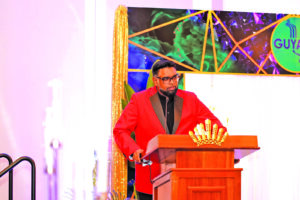
President Dr Irfaan Ali on Tuesday evening issued a sharp call to Guyana’s tourism sector, revealing that less than 10 per cent of available tourism investment incentives have been accessed, a signal, he said, of a deeper readiness gap that threatens the country’s push toward global competitiveness.
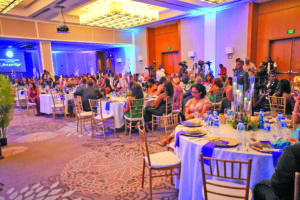
Addressing industry leaders at the Guyana Tourism Authority’s Tourism Awards and Gala 2025 held at the Guyana Marriott Hotel, President Ali moved beyond celebration to confrontation – calling for better-built proposals, strategic partnerships and stronger investor positioning, while announcing new state-backed support, including a youth-driven proposal-writing team to help businesses unlock incentives, form consortia and scale for international investment.
The Guyanese leader pointed out that business leaders often push for policy changes without first recognising or tapping into the incentives already laid out by the Government.
“THAG (Tourism and Hospitality Association of Guyana) spoke about more incentives that the sector needs, and I’m here to tell you that the sector is not making use of 10 per cent of the incentive that is available to the sector. As I speak to you tonight, there is absolutely not one outstanding investment application at Guyana Office of Investment…The question is, how are we preparing our business models to get the investments, the opportunities that are there, the incentive? Are we even writing up a proposal? And my brother from Wilderness will tell you that for years, you had persons who want to be in this sector and don’t even want to put up a proposal, don’t even want to invest to put a proposal together. And that is the role of TAG, the hand-holding role. Because if the problem is people are not making use of what is in the system, then what are we fighting for?” Ali said.
President Ali noted that the role of tourism advocacy bodies must evolve, and they must find new ways to support operators in building investment-ready business plans instead of primarily lobbying for incentives that remain unused.
He underscored that proposal development is not optional, warning that a winning tourism economy will only exist when operators view themselves as investable brands, with structured financial models and regulatory alignment.
With this in mind, the Guyanese leader announced plans to directly support young talent to help bridge the gap between ideas and investment-readiness.
“And I want to position to you tonight that I’m going to hire four young persons, and I’m going to challenge you to go to them with your ideas, let them help you write your business plan up, your investment plan, take it to go invest, get registered as a company, get registered with your TIN number, get registered under the regulations, and let us take it forward. There is absolutely no backdoor approach… More incentives is going to come. But there is so much that is there that is not utilized. Baganar will tell you. They went through the learning curve. Wanderlust can tell you. It’s how you classify your investment. Classification, simple things like classification of your investment, understanding the rules, how the rules apply, understanding the product that you’re promoting,” he explained.
The President emphasised that Government investment in tourism infrastructure is no longer aspirational but active, expansive, and disruptive, tied to national connectivity and multi-sector trade capacity.
According to the President, key tourism-aligned national projects include more than 15 hotels completed or under construction. Two new regional airports along with the expansion of CJIA Terminal 2. Thirty-two hinterland airstrips are scheduled for upgrades. A new cultural market at Palmyra. Major waterfront developments, including a marina. A new national museum, an art gallery, and upgrades to the zoo and botanical gardens. Four new ferries designed with tourism integration in mind. The Corentyne River Bridge, the New Berbice River Bridge, and the deep-water port project. Major road and infrastructure corridors linking Guyana to Brazil.
Despite incentive usage lagging, President Ali pointed to clear evidence that Guyana is already delivering measurable tourism results and growing international visibility.
He cited an 18 per cent increase in visitor arrivals between January and July 2025. He also referenced the global tourism economy, noting that 1.4 billion tourists travelled in 2024, driving massive consumer spending and employment. Guyana’s tourism positioning saw further elevation with a bronze-level award secured at the Japan Tourism Exhibition. The country has also earned at least five international tourism awards in the last five years and recently claimed a Bronze Award at the Japan Tourism Exhibition, reinforcing international recognition.
“We’re competing with the world,” he said. “And we already submitted a formal bid for a major global event in 2030. We’re going big. If we want to create a destination, we must fight for it.”
Discover more from Guyana Times
Subscribe to get the latest posts sent to your email.