The renewed regional focus on Mathematics performances presents an important opportunity for Caribbean education systems to reassess how Mathematics is taught, assessed, and understood. The challenge confronting several Caribbean territories at its core is the need to ensure that students acquire the mathematical understanding, reasoning, and problem-solving skills required to apply knowledge beyond the classroom.
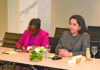
Discussions at the 52nd Meeting of the CARICOM Council for Human and Social Development (COHSOD) on Education, hosted by Guyana from August 12–13, are therefore timely. Education Ministers and regional education stakeholders, including the Caribbean Examinations Council (CXC), have placed Mathematics improvement back at the centre of the regional education agenda.
The recognition that several Caribbean countries are experiencing similar difficulties is significant. Rather than treating Mathematics performance as an isolated national concern, the regional approach creates space for Governments and education agencies to share experiences, examine successful interventions and develop strategies suited to Caribbean classrooms.
Education Minister Sonia Parag has appropriately highlighted the importance of moving beyond an examination-driven approach. Preparing students to pass an examination is necessary, but it cannot be the ultimate objective of Mathematics education. A student who can reproduce a formula for an examination but cannot understand when or how to apply that formula has not acquired the full value of the subject.
Mathematics should instead be presented as a tool for reasoning, decision-making and problem-solving. Students should be able to recognise mathematical concepts in practical situations, explain their reasoning, make connections between different areas of Mathematics and apply their knowledge to unfamiliar problems. Such abilities are increasingly important in a modern economy that depends on technology, science, engineering, finance and data-driven decision-making.
The regional conversation must therefore extend beyond the question of how to raise examination grades. Higher grades are important indicators, but sustainable improvement requires stronger learning outcomes. That means examining teaching methods, curriculum delivery, teacher support, classroom resources, assessment practices, and the extent to which students are mastering concepts at each stage of their education.
The emphasis on foundational learning is particularly encouraging. Weaknesses in literacy and numeracy at the primary level can become increasingly difficult to address as students progress through the education system. Early identification of learning gaps allows targeted interventions before those gaps become entrenched.
Guyana’s introduction of literacy assessments at Grades Two and Four, along with plans to introduce a numeracy assessment between 2026 and 2027, represents a constructive step in that direction. Effective assessment should not merely classify students according to performance. Its greater value lies in identifying precisely where students are struggling, and providing teachers and schools with information that can guide appropriate interventions.
Numeracy assessments, if properly implemented, can help establish a clearer picture of students’ strengths and weaknesses at an early stage. The resulting information can support targeted teaching, additional assistance for students requiring intervention and more informed decisions at the school and policy levels.
At the same time, assessment must be accompanied by adequate support. Identifying a learning gap without providing the resources, teacher training and instructional strategies required to address it will have limited impact. Mathematics improvement therefore requires a comprehensive approach rather than a single intervention.
The regional dimension of the discussion should also be strengthened as Caribbean countries share many educational challenges, including relatively small education systems, common examination structures and similar pressures on teachers and students. Regional cooperation can reduce duplication, encourage the sharing of successful practices and facilitate the development of approaches that reflect Caribbean realities.
The involvement of CXC in these discussions is particularly relevant as examination bodies, Ministries of Education, teacher-training institutions, and schools must work in greater alignment so that assessment reinforces meaningful learning rather than encouraging narrow preparation for examinations.
Improvements in Mathematics cannot be achieved through short-term initiatives alone. Strong foundations must be established early and reinforced consistently throughout primary and secondary education. Teachers must be equipped to explain concepts in ways that accommodate different learning needs, while students must be given opportunities to practise reasoning and application rather than memorisation alone.
The current regional focus provides a valuable opening to make Mathematics education more purposeful. Success should ultimately be measured by how confidently they can use Mathematics when confronted with real-world problems.
Discover more from Guyana Times
Subscribe to get the latest posts sent to your email.