

… says world can’t afford to take decades to understand importance of our biodiversity
The world needs come up with a mechanism to value and pay countries to protect and conserve their biodiversity resources far quicker than it did for the forest, according to Senior Minister with responsibility for Finance Dr Ashni Singh.
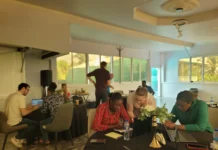
He made these remarks at the Arthur Chung Conference Centre (ACCC) on Saturday as the second Global Biodiversity Alliance (GBA) conference came to close. Held under the theme “Investing in Nature: Accelerating Biodiversity Finance for Sustainable Development,” the two-day summit brought together global leaders, researchers, financial institutions, private sector, indigenous communities and other key stakeholders to explore mobilising finances for nature protection.
During his closing remarks, Dr Ashni cautioned that nature cannot wait for as long as it did when the world was deciding on the value of standing forests.
“The world cannot afford to take the same length of time to get to the point where we understand the importance of our biodiversity and the importance of its preservation,” he asserted.
Recalling the journey to raise global awareness on the role of forests in the fight against climate change, the minister pointed out that it was found to be almost outlandish and folly when countries like Guyana were arguing to be paid for preserving its standing forests.
According to Dr Singh, “It took a lot of very hard, rigorous, invisible…technical work behind the scenes to articulate the argument that standing forests were providing a valuable service to the world, and that there were sound reason and basis on which those services should be remunerated. And we eventually won that battle.”
That victory, the Finance Minister stated, is reflected in Guyana’s Low-Carbon Development Strategy (LCDS) – pioneered in 2009 by then president and now Vice President Bharrat Jagdeo.
Under that strategy, Guyana began receiving payments for forest climate services through a 2009 US$250 million agreement with Norway to preserve its forest in order to offset global carbon emissions.
Intended destination
More than a decade later, the LCDS was expanded (now LCDS 2030) under the President Irfaan Ali Administration in 2021 and led to Guyana being issued with the world’s first jurisdictional REDD+ carbon credits under the ART-TREES standard. This saw the country securing the historic US$750 million multi-year deal with United States (US) energy major, Hess Corporation, in December 2022 for the sale of 30 per cent of those certified carbon credits.
Since then, Guyana has been able to expand those market opportunities and has earned some US$353 million to date from the sale of its forest carbon, which have also been sold to companies such as tech giant, Apple and as well as more than 20 global airlines.
Minister Singh pointed out that while getting here was the intended destination, this journey was longer than anticipated.
“There were a few believers, but there were many doubters. But we got there, and it took us some time to get there. It took us a lot longer to get there than we wanted, but we got there,” Dr Ashni recalled, adding “This vast and rich endowment of biodiversity assets that today’s generation has inherited, its value and the importance of its preservation and conservation, and even of equal importance…ensuring that its value, its economic value is recognised, ultimately priced, and remunerated – that’s the destination that we intend to get to. And we need, as a collective, to commit to ensuring that we get to that destination far more quickly than we did the last time around.”
According to the finance minister, the gathering of global stakeholders at the two-day GBA conference demonstrates a common commitment to not just engage in intellectual exhibitionism, but instead to devise real, practical, workable solutions to address and overcome this problem.
The Global Biodiversity Alliance, he outlined, is the perfect vehicle through which this can be done.
Learning from each other
In fact, similar sentiments were shared by Natural Resources Minister, Vickram Bharrat, during his closing remarks to the GBA conference on Saturday. He believes that instead of countries within the almost 150-member Alliance doing the work themselves, they can turn to expertise, experiences and best practices available within the membership.
“There’s so much that is taking place already in many member countries that we can learn from, that we can collaborate, that we can strengthen, that we can adopt to bring greater awareness to conservation and preservation of forests, restoration of biodiversity, and to meet that goal of 30 per cent by 2030 that all of us would love to see,” Bharrat stated.
According to the Natural Resources Minister, while significant progress has been made in preserving and conserving the world’s natural resources, there is still a lot more work to be done.
President Ali has already outlined a series of steps to undertake over the next 12 months aimed at translating ideas from last week’s conference into projects, investments and tangible results on the ground. These plans would put the Alliance’s membership of universities, research institutions, scientists and financial bodies to work as efforts continue to mobilise financing to protect biodiversity resources.
Already, the GBA has received a US$12.5 million pledge by a group of international conservation partners to be channelled into projects over the next year including the development of a conservation corridor, protected areas and indigenous territories.
In additionally, expertise from within the membership have also committed to lend their experience and knowledge to advance the work of the Alliance.
Discover more from Guyana Times
Subscribe to get the latest posts sent to your email.