

With the aim of making food more affordable for Guyanese families, the Government introduced a new plan on Friday that would make basic food items less expensive without short-changing farmers.
At the centre of this new initiative is a coordinated purchasing system that would stabilise prices for eggs, poultry, beef, and mutton during a three-month pilot programme.
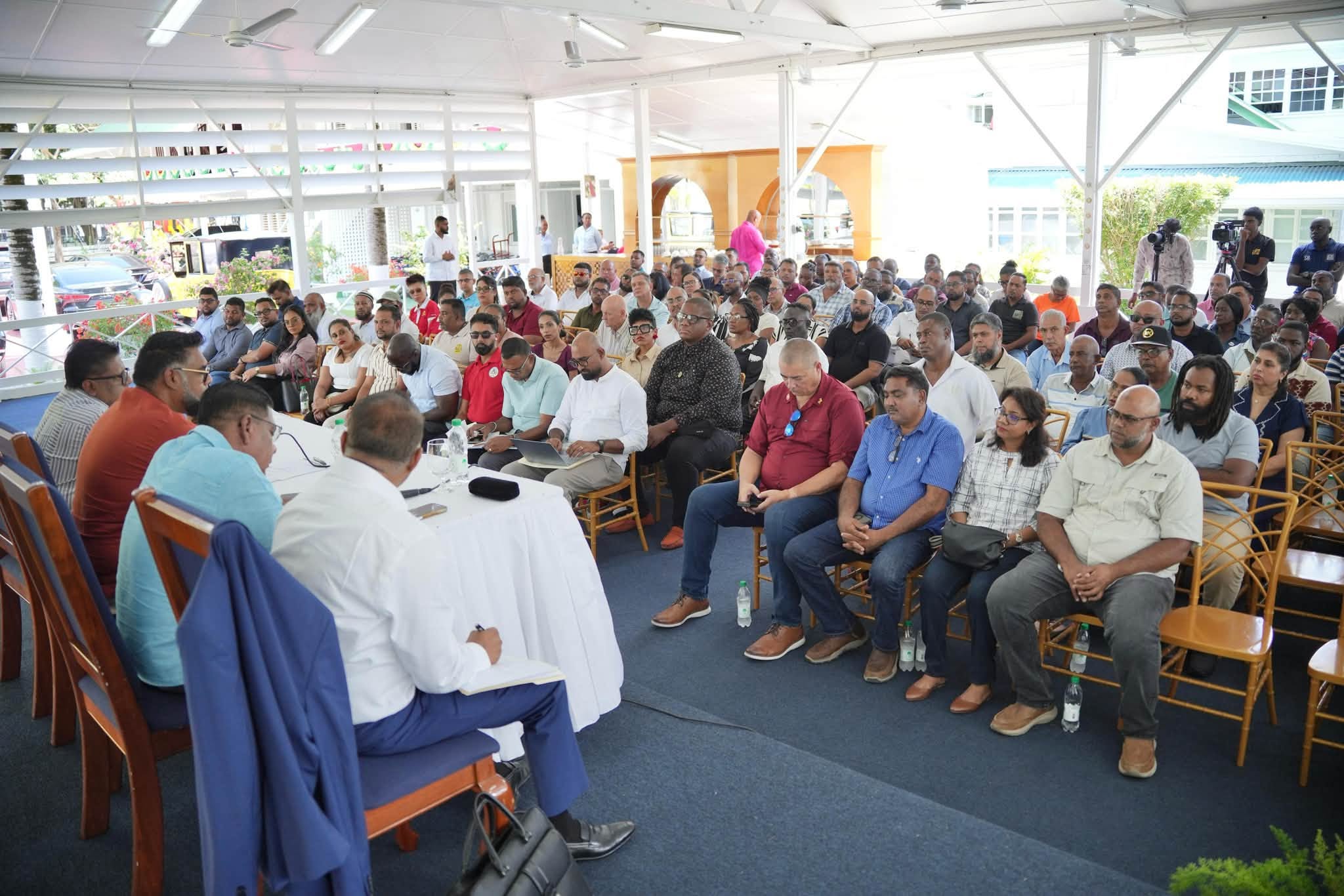
Launching this initiative on Friday at the State House, President Dr Irfaan Ali says this approach will still ensure farmers are protected.
“Our approach will be based on a simple principle: cheaper food must not come from squeezing the farmer. It must come from taking unnecessary costs out of the system and producing more… The [coordinated] system will pool demand from public institutions and allow interested wholesalers and retailers to participate instead of many small orders moving through different channels. We will create larger and more predictable orders, clear quality standards, firm delivery schedules and better prices,” he explained.
According to the Guyanese leader, purchasing is often fragmented, with consumers buying separately, the retailers negotiating separately, and farmers producing without always knowing the volume the market will require, and the buyers often do not know with certainty what will be available, when it will arrive, or at what price.
This uncertainty, Ali pointed out, creates waste, weakens bargaining power, and raises financing, storage, and transportation costs – issues that they intend to address through this coordinated purchasing system.
“We will be creating, through this mechanism, an even playing field. No big supplier, no individual, and no group will get licences while the retailers are placed with a different circumstance. There will be evenness across the board; that is why all of you are here today,” he said to stakeholders, including suppliers and supermarket owners at State House on Friday.
He went on to add that, “We need the middlemen to understand that they are not there to extract maximum wealth, but they are facilitators of a fair market price. We will build a food system in which farmers can invest with confidence, retailers can plan with certainty, and consumers can buy essential protein at a fair price. That is the partnership we are launching, and that is the result we intend to deliver.”
The Guyanese leader believes that through bulk purchasing, better prices can be negotiated for feed, veterinary supplies, chicks, breeding stock, packaging, refrigeration, and transportation.
This three-month pilot programme will be led by a committee consisting of producers, distributors, retailers, and state representatives.
President Ali made it clear that this new initiative would be voluntary.
“Let me be clear: Government is not taking over farms. Government is not taking over shops. Producers will remain free to sell outside the programme, and retailers will remain free to purchase through their normal channels,” he stated.
Moreover, he noted that the new system will also be open and transparent. In fact, the names of everyone who participates in this initiative will be published along with the maximum retail price that is agreed up on.
“The Government, Private Sector and producers working together will begin by consolidating the demand across the country. That demand will be published in advance. Farmers, cooperatives, processors, and consortiums will know the quantities required, the delivery periods, and the standards they must meet. Retailers that choose to participate will benefit from the negotiated wholesale price, but they must pass that savings to consumers.”
“Participating retailers will agree to transparent maximum mark-ups, display the programme price clearly and report the quantities sold. We will publish a regular price dashboard so the public can see the wholesale price, the retail price and the savings delivered in each region. For producers, contracts will not be awarded simply to whoever offers the lowest price on one particular day. Prices will reflect verified and efficient production costs, quality and reliable delivery,” the President explained.
Additionally, he pointed out that this programme will also see the establishment of a prompt payment system.
“A farmer should not deliver eggs, meat or poultry and then wait months to be paid. Delayed payments force producers to borrow at high costs, which we are also going to try to fix,” he assured.
In fact, President Ali added that the Government will be negotiating with the commercial banks to introduce a 30-day line of credit with a four per cent interest rate – much lower than the current rates.
“The system will, therefore, establish firm payment deadlines and track whether those deadlines are met. Retailers that participate will enter a clear pass-through agreement. If the purchasing platform lowers the wholesale cost, the consumer must see that reduction on the shelf. Participating outlets will display the agreed prices, and the Government and Private Sector will publish a regular price dashboard, showing farmgate, wholesale, and retail prices. This will allow the public to see whether costs are rising and whether the benefits of bulk purchasing are reducing costs at the household level,” he stated.
Moreover, the Government will be lending key support to stakeholders to ensure that this initiative is successful and is rolled out full-time.
Discover more from Guyana Times
Subscribe to get the latest posts sent to your email.