…new Chair calls for deeper CSME integration, stronger transport links
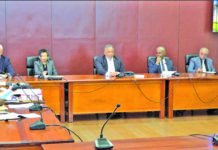
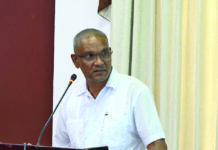
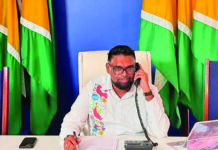
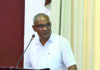
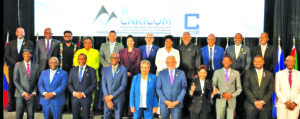
The Caribbean Community (Caricom) opened its 51st Regular Meeting of the Conference of Heads of Government in St Lucia on Sunday with outgoing Chairman, Prime Minister (PM) of St Kitts and Nevis Dr Terrance Drew, urging regional leaders to continue placing the interests of the Caribbean above national differences, while incoming Chairman, St Lucia’s PM Philip J. Pierre, committed to making Caricom more responsive to the everyday needs of Caribbean people. Addressing the opening ceremony, Drew reflected on his six-month tenure as Chairman of the 15-member regional bloc, saying Caricom had emerged stronger despite challenges and that the organisation’s future depends on preserving unity and strengthening regional cooperation. He reminded fellow Heads of Government that disagreements are inevitable but should never be allowed to undermine the regional integration movement. “There will always be difficult issues before the community. There will always be spirited debates. There will always be differing perspectives. That is natural. It must be expected, but it is also healthy. What must never become natural, however, is allowing those differences to weaken the institution that has served our people so well,” Drew said. He urged leaders to protect and modernise Caricom while resolving disputes through patience, consultation and dialogue. “Our responsibility is to protect this community, improve it where necessary, modernise it where appropriate, but never, ever lose sight of its immense value to our people,” he told regional leaders. Thanking his colleagues for their support throughout his chairmanship, Drew praised them for consistently putting the interests of the wider Caribbean ahead of individual national priorities.
“I want to say thank you. Thank you for your friendship, thank you for your wisdom, and thank you for your trust. Thank you for your willingness to place the interests of the Caribbean above our individual interests.” Describing his tenure as one of the greatest honours of his public life, Drew said Caricom remains indispensable to the region’s future. “It is indispensable to our security. It is indispensable to our economic prosperity. It is indispensable to our voice in international affairs. Most importantly, it is indispensable to the future of Caribbean people.” He said that while some had questioned Caricom’s resilience six months ago, the focus should now be on building an even stronger regional community. “I leave this chairmanship convinced of one enduring truth: unity and togetherness is not simply our highest ideal. It is our greatest strategic advantage.” Drew also highlighted several accomplishments during his tenure, including continued progress on reparatory justice through Caricom’s revised Ten-Point Plan, stronger regional collaboration in health, education and human development, and continued support for creative industries, migration initiatives and workforce development. He noted that the Community had strengthened cooperation on non-communicable diseases, health emergencies and the education of nurses and midwives while advancing programmes to equip young people with skills recognised throughout the region.
The outgoing chairman also pointed to the work of regional institutions, including the Caribbean Public Health Agency (CARPHA), the Caribbean Court of Justice (CCJ), the Caribbean Examinations Council (CXC) and the Regional Security System (RSS), saying these organisations quietly deliver benefits to Caribbean citizens every day. He said Trinidad and Tobago’s successful election to the United Nations Security Council (UNSC) demonstrated the value of Caribbean solidarity, noting that the country’s campaign benefited significantly from the united support of Caricom member states. “When Caricom stands behind one of its own, our collective voice commands respect on the world stage,” Drew said.
Trade imbalances
Turning to regional trade, Drew acknowledged that trade imbalances still exist among member states but argued that intra-regional commerce continues to strengthen Caribbean economies by supporting businesses, workers and families throughout the region. He encouraged leaders to continue strengthening productive sectors while maintaining the broader objective of collective regional growth. Drew also paid tribute to Caricom Secretary-General (SG) Dr Carla Barnett and the Secretariat, commending their professionalism and commitment to implementing the decisions of Heads of Government while maintaining the Secretariat’s impartiality. He then formally handed over the chairmanship to St Lucia’s PM Philip J. Pierre.
What more can Caricom do?
Assuming the role of Caricom Chairman on July 1, Pierre said he takes office at a time when the Caribbean is facing geopolitical tensions, rising living costs, climate change, technological disruption and growing security concerns. He said Caricom must now move “from conference rooms to communities, from rhetoric to reality, from communiqués to results.” “Our people are asking a serious and legitimate question, what more can Caricom do for me?” Pierre said.
“The question is not an attack on this community, but a genuine appeal for solutions.” Pierre said every major regional decision should be measured by one standard—whether it improves the lives of Caribbean people. “It is not enough for us to agree on principle; we must implement in practice. It is not enough for us to speak of integration; we must make integration work for the ordinary citizen.”
He identified unity as the foundation of his chairmanship, warning that regional divisions only weaken Caricom’s influence internationally. “The world has often benefited from Caribbean disunity. Larger powers and larger markets can more easily engage a divided Caribbean than a united one. But when the Caribbean speaks with one voice, when we act together, when we negotiate as a bloc, our collective influence is far greater.” Pierre pledged to ensure that every member state feels heard and represented. “Every voice counts. Every nation matters. Every citizen must be able to see themselves reflected in the work of Caricom.”
He also identified citizen security as one of the Community’s most urgent priorities, pointing to violent crime, illicit firearms trafficking, organised criminal networks, cybercrime, gang activity and weaknesses within criminal justice systems as shared regional challenges. “No member state can address these challenges alone,” Pierre said, calling for stronger cooperation among law enforcement agencies and greater investment in education, employment, sports, culture and community development to address the root causes of crime. Climate change also featured prominently in Pierre’s address as he renewed Caricom’s call for climate justice and greater international support for vulnerable Caribbean states. He said Caricom would continue advocating for fair access to climate financing, loss and damage support, debt relief linked to climate vulnerability and reforms to international financial systems that better reflect the realities facing small island developing states. Pierre also reaffirmed Caricom’s full support for Guyana’s bid to host the United Nations (UN) Climate Change Conference (COP35) in 2030.
Deeper implementation
On economic matters, he called for deeper implementation of the Caricom Single Market and Economy (CSME), greater regional transportation links, expanded agricultural production and stronger food security to reduce the region’s dependence on imported food. The incoming chairman also highlighted the importance of artificial intelligence (AI) and digital transformation, saying Caricom must develop a harmonised regional approach to AI while ensuring Caribbean workers are equipped with the skills needed for emerging industries. Youth development, he added, must remain central to Caricom’s agenda, stressing that young people expect regional integration to create jobs, improve entrepreneurship opportunities and make free movement easier across member states.
New associate membership
Meanwhile, Caricom also announced an expansion of its Associate Membership with the formal accession of Martinique. The French overseas territory officially became Caricom’s seventh Associate Member on June 16, 2026, after the Government of the French Republic deposited the required Instrument of Accession, allowing the Agreement on the Privileges and Immunities of Caricom to enter into force. Martinique is participating in the 51st Regular Meeting of the Conference of Heads of Government, which runs in St Lucia from July 5 to July 8.
Discover more from Guyana Times
Subscribe to get the latest posts sent to your email.