


…as CBU engages young creators to push regional content
President Dr Irfaan Ali has challenged Caribbean media practitioners to utilise technological tools to highlight stories from across the Caribbean to the world rather than being threatened by them.

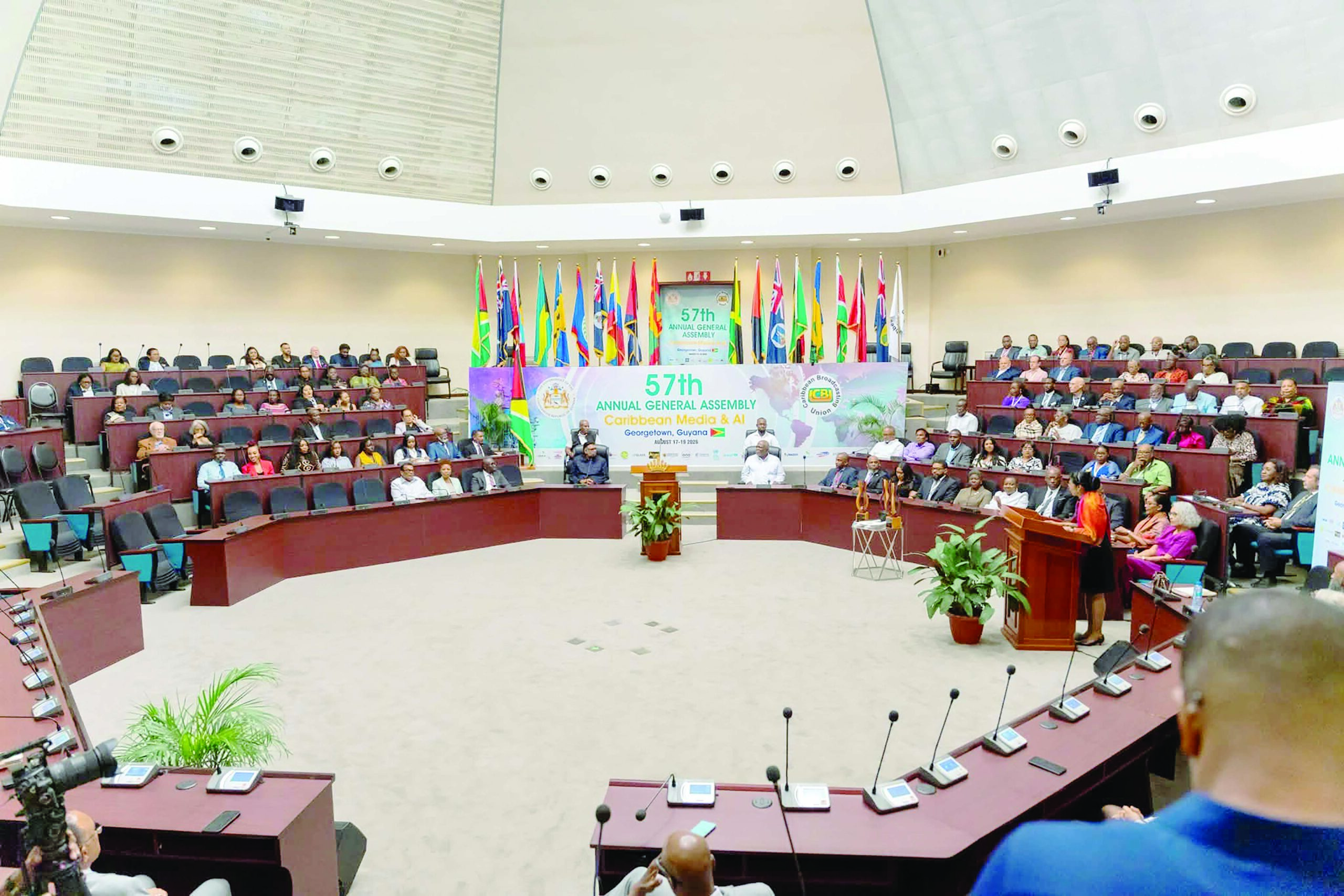
He made these remarks on Tuesday evening at the opening of the Caribbean Broadcasting Union’s 57th Annual General Assembly (AGA) held in Georgetown under the theme “Caribbean Media & AI”. The event brought together broadcasters, Journalists, content creators, policymakers and media executives from across the Region.
According to President Ali, technology has changed how the public create, consume and trust news and information.
“We are no longer competing only with the television station down the road, we are competing with the entire world. We are competing for the attention of a young Caribbean person against a video produced in LA, a podcast produced in London, a TikTok created in Ghana, a Netflix series produced in South Korea, and a YouTube influencer broadcasting from somewhere many of us may have never heard of before…
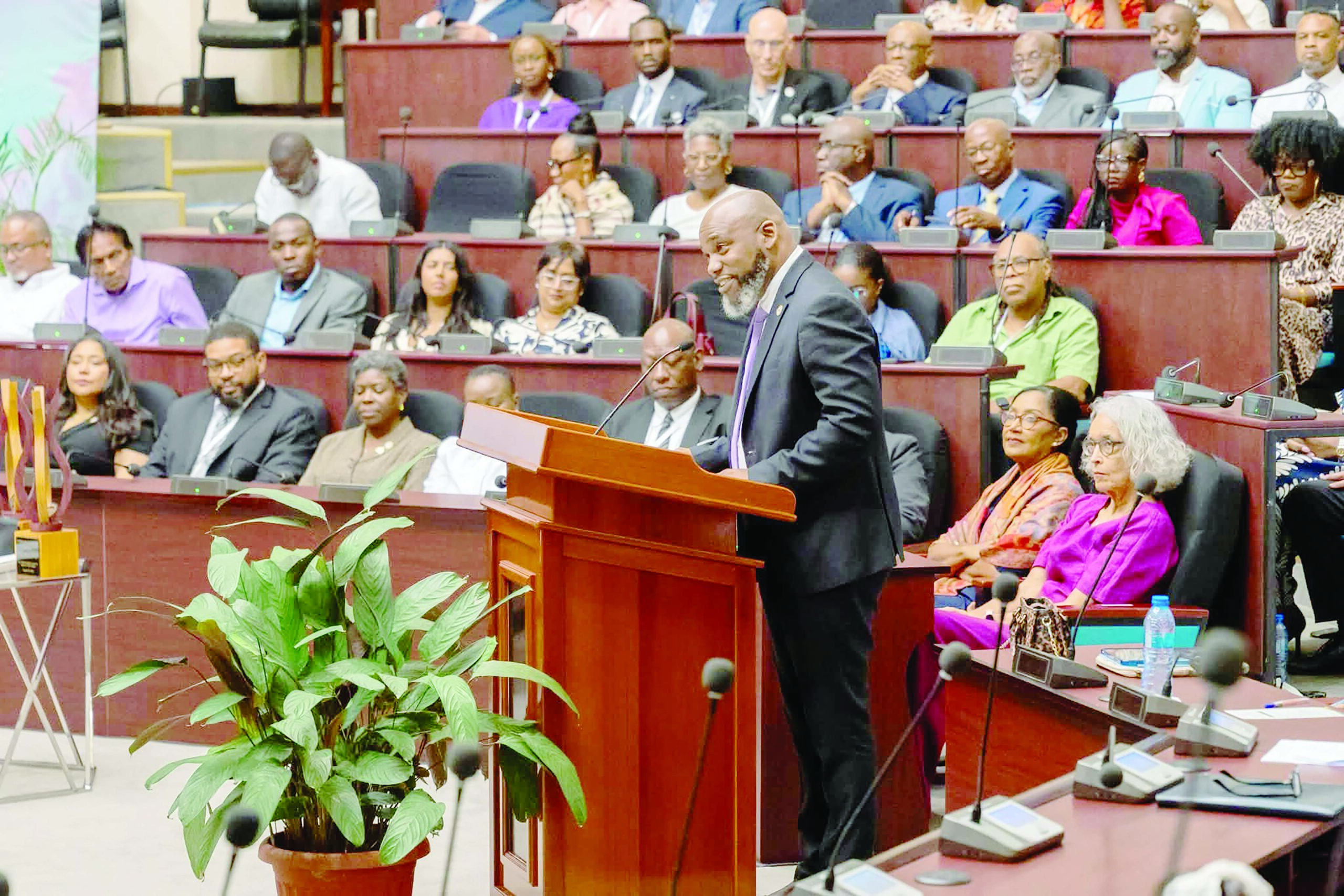
“And how many of the major global influencers are coming into the Region and telling our story from their eyes and their lens? And so, the challenge is not simply technological. It is also cultural. What happens when the stories our children consume every day increasingly originate outside… What happens when the culture of the screen becomes more influential than the culture of the home, the community, and the school? There are questions about the future of Caribbean identity,” he asserted.
To this end, the Guyanese Leader pointed out that instead of resisting technology, the regional broadcasters must utilise tools such as Artificial Intelligence (AI) to push more Caribbean content not just within the Region but to the global audience. This, he highlighted, requires changing the way information is delivered to the audience, especially young people within the Region.
“The largest segment of the [Caribbean’s] population are young people, and we have to be able to communicate to that segment… The viewer is moving, and if the viewer is moving, the broadcaster must move too. We cannot complain that young people are not watching television and then continue producing television as though it was 1995. We must see audiences where they are.
“But we should not simply imitate the global platforms. We must use their technology to distribute our content. The answer to globalisation is not cultural isolation, it is cultural confidence. Let us have more West Indian content on global platforms,” President Ali stated.
Pointing to Caribbean artistes who have sold out stages around the world, the Head of State contended that the Region has the culture and product, and if it does not showcase these to the world itself, it would risk others coming to do so.
“The Caribbean Broadcasting Union was born from the recognition that the Caribbean needed to tell its own story. That mission has not disappeared, it has become more urgent. We now have more ways of communicating than at any time in human history. But having more ways to communicate does not necessarily mean that we are communicating more meaningfully.
“We have more content, but we do not have more Caribbean content. And we have more technology, but are we using that technology to strengthen the Caribbean identity? Or to dilute it? That is a challenge. Before this assembly, we should not fear technology, we should master it. We should not reject AI. We should understand it, regulate it wisely, and use it intelligently. We should not retreat from the global digital platforms. We should use them to take Caribbean stories to the world,” the Guyanese Leader emphasised.
However, while noting that technology brings extraordinary possibilities, President Ali cautioned about the dangers it poses to the Region, especially Caribbean media. He said AI should be used to merely assist and not replace the human experience in broadcasting.
In fact, similar sentiments were expressed by CBU President Anthony Greene, during Tuesday’s opening ceremony held at the Arthur Chung Conference Centre (ACCC), Liliendaal, Greater Georgetown.
No technology can substitute
According to Greene, no technology can substitute for a sustainable business model, trusted journalism or the resources required to report consistently from and for Caribbean communities.
He said, “Innovation matters but innovation without viability cannot secure the future of Caribbean media.” This, the CBU President said, is evident in the sobering fact that nearly half a dozen regional media outlets have ceased operations since July 2025. He argued that media viability is not just a commercial concern but one of public interest.
To this end, he noted that the CBU has sought to make the corporation more practical, having recognised that meaningful Caribbean content is not only produced within established radio, television, print and digital newsrooms, but also created by independent Journalists, video editors, podcasters, producers, and other media professionals.
“The secretariat is now formulating a membership campaign with a particular appeal to media professionals under the age of 25. We want emerging creators to see the CBU as a place where they can connect, learn, uphold strong standards and contribute to the future of Caribbean media. The platforms may change, but the truth is, the need for credible, responsible and distinctly Caribbean storytelling remains paramount,” Greene stressed.
In addition to approving a new category of individual membership – Advance Member, the CBU has also introduced, for the first time, categories for students of media and communication across print, digital, television, radio and still photography.
Moreover, the Union has also taken practical steps on AI, updating the rules of the Caribbean Media Awards to allow for disclosures and placing limits on the use of AI-generated materials. Additionally, there is a media industry overview being undertaken by the CBU to ascertain the strengths and weaknesses, while also identifying areas where investments, policy support, and collaboration are urgently needed.
“Over the course of this year’s General Assembly, I hope we can speak frankly. And it is in our interest to share what is working, acknowledge what is not, and resist the temptation to treat technology as either a miracle or menace,” the CBU President told stakeholders gathered in Georgetown.
Discover more from Guyana Times
Subscribe to get the latest posts sent to your email.