


By Jarryl Bryan
Utility companies are an essential part of everyone’s day-to-day lives. These companies, after all, are responsible for the electricity we use, or communication or even the water we drink and use. Which is why when they fail to deliver, there are serious repercussions in thousands of households.
Over the past months, however, there has been an inordinate amount of power outages or “blackouts” as we are accustomed to say, which the Guyana Power and Light (GPL) has had to explain to customers. These incidents appear to have intensified since the almost complete exit of Finnish company Wärtsilä from the market providing energy for GPL to distribute.
Power Producers and Distribution Incorporated (PPDI) is the company that took over where Wärtsilä left off. Asked whether there have been any incidents of sabotage since PPDI took over management of the Wärtsilä engines, Chairman Mark Bender said that this was not so.
According to Bender, PPDI as a company uses various methods to stave off such occurrences. He cited several examples, including a regime of checks and balances designed to weed out rogue employees.
“We have constant monitoring,” Bender explained to this publication. “We have training, constant assessment of workers. I mean it’s a possibility, but I don’t think it’s something we consider a major weakness.”
With sabotage being ruled out, engine failures were also not being factored in. When this publication recently visited PPDI’s plants at Kingston and Vreed-en-Hoop, Chief Executive Officer Aaron Fraser, related that there have been no engine failures that would have affected power generation and by extension, GPL.
“The engines are actually more available this year than they were last year. There haven’t been any incidents with engine failure,” he had said, adding that questions regarding failures in GPL’s distribution network would be the responsibility of GPL.
The officials acknowledged that both companies have a shared overall responsibility for ensuring a stable supply of electricity. In recognition of this, Bender had noted that technical experts from both sides have been meeting to iron out solutions.
“We don’t want to get into GPL’s domain. The two companies are joined at the hip. It’s one operation, but separate. We, just like GPL, have the same objective; to ensure a stable and reliable supply of electricity to the consumers,” he had said.
“GPL has certain responsibilities, we have certain responsibilities. But there is constant interaction between the two companies; there is a monthly joint operation meeting. There are constant discussions between the technicians.”
GPL
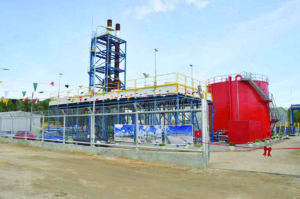
GPL Public Relations Officer, Shevion Sears, was recently asked about this possibility. However, she declined to comment, citing on-going investigations. What GPL has commented on, however, is that several engines are down for maintenance, hence causing a power generation shortfall.
This was one day after GPL lost some 2.3 Mega Watts of power, due to a fire at the Onverwagt power station last week. According to information released by the company, the fire occurred at approximately 21:42hrs on Thursday last.
It is understood that a failed connecting rod on the Number 5 Unit punctured a block and resulted in the fire at the West Coast of Berbice sub station.
“The quick response of the Guyana Fire Service averted major damage to equipment housed at the station,” a release from the company stated. “GPL is currently assessing the damages and an investigation will be conducted.”
It isn’t the first time that a fire and accident would have struck GPL. Earlier in August, there was another fire at GPL’s Vreed-en-Hoop sub-station, resulting in power outages and a damaged transformer.
Only last month, after much outcry from citizens due to power outages, the company had stated that “a botched tree trimming exercise and a burnt jumper” were among the reasons for another spate of electricity woes.
GT&T
Nor are GPL customers the only ones at the mercy of saboteurs. Guyana Telephone and Telegraph (GTT) has actually lived through these experiences. Charges have in fact been instituted against those responsible. It was only recently that a man was caught and charged for the theft of GTT’s fibre-optic cable. Ricky Singh, 22, of Lot F Grove, East Bank Demerara (EBD) appeared before Magistrate Annette Singh and denied being the vandal.
The charge against him alleged that between July 22 and 24, 2017, at Soesdyke, Linden, he vandalised and stole a fibre-optic cable belonging to GTT. Singh pleaded not guilty to the charge and was granted bail in the sum of $350,000.
During the month of July, criminally minded persons had launched an attack on the company, with over 10 cases of sabotage on its cables being recorded within the month. As a result of the vandalism, Linden, Ituni, Kwakwani, Mabura, Mahadia, Troy Mining and Bartica communities were affected.
On July 24, GTT workers discovered that the company’s Blaze fibre-optic cable at one location was sabotaged just one day before it was launched and in February, similar acts of vandalism were carried out when the company had just launched its high speed LTE broadband in Essequibo. The company’s estimated losses amounted to some $50 million.
Chief Executive Officer (CEO) of GTT, Justin Nedd had dubbed the attacks a destruction of GTT’s communication infrastructure by persons who had clear motives. He even called on the Guyanese populace to lend their assistance in aiding the capture of the person/s involved, offering a $10 million reward for same.
“This is being done by people who know what they are doing. This is an attack on the people of Guyana and I want to say that this is an attack of 22,000 households that we will bring 50 megabits per second internet speed to in 2017” said Nedd.
Telecommunication’s Minister, Cathy Hughes had also called the situation sad and disclosed that the perpetrators when found will face the full brunt of the law.
Discover more from Guyana Times
Subscribe to get the latest posts sent to your email.