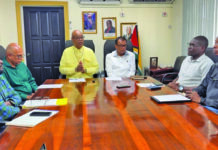


President Dr Mohamed Irfaan Ali has announced a transformative plan aimed at easing the burden on farmers—particularly those who are renting land—by opening 20,000 acres of land in three different agricultural clusters in Region Two (Pomeroon-Supenaam).
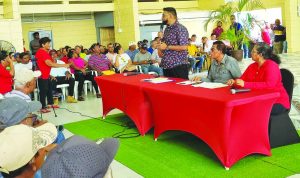
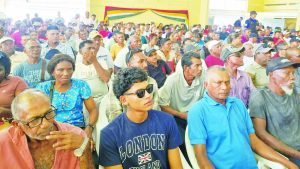
The announcement was made during a meeting with rice and cash crop farmers, and fisherfolk, at the Anna Regina Secondary School auditorium.
Speaking directly to hundreds of farmers and community stakeholders, President Ali said that the Government is taking bold steps to support both small and large-scale farmers who face mounting challenges, especially with land access and rental costs.
Many of these farmers are currently renting land under strenuous conditions, leaving them with little to no security or long-term control over their farming operations.
The President emphasised that a critical part of transforming agriculture in the region involves making land ownership a reality for farmers. He described land ownership as an “urgent matter” that must be addressed to empower those who feed the nation.
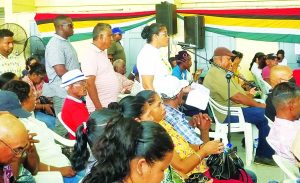
“Let me begin by talking about a critical issue facing Essequibo: that is land ownership… Many of our farmers, especially those planting 30 acres or less, over 1,000 of them do not own the land they cultivate. Instead, they are renting land from larger farmers or through arrangements tied to private entities. This is a problem we must address immediately,” the Head of State said.
President Ali noted that while the Government cannot arbitrarily reclaim lands already owned, it will instead create new opportunities through a massive investment in land development. He announced that the Government will open up acres of new land in the region. This move is expected to greatly reduce farmers’ dependence on leased land, and provide a foundation for long-term success.
“We cannot simply take away land from existing owners, but we can create new opportunities. That’s why, in the coming months, we will be investing in opening up at least 20,000 acres of new land across three agricultural clusters in Essequibo,” he declared.
The President made it clear that this initiative goes beyond merely making land available. The Government will also invest in infrastructure and resources to make these new farmlands viable. This includes building access roads, installing irrigation systems, and providing planting materials to support farmers from day one.
“This initiative goes beyond creating physical access… We will identify farmers as the main beneficiaries—our key partners. The Government will make capital investments to prepare these lands, provide seed paddy, and create a sustainable foundation for long-term farming success,” he added.
In addition to eliminating rental costs, the programme is designed to instil a deeper sense of ownership and economic empowerment. The President assured farmers that this approach would allow them to become landowners, not just tenants—ultimately giving them more control, security, and dignity in their work.
“This will eliminate rental costs, provide land ownership, and give our farmers the dignity and opportunity of owning and cultivating their own land… This is the first urgent matter we are tackling,” he said.
The President also announced that machines such as combines, tractors, ploughs, and other equipment in these land clusters, would operate under a new model of farmer-managed systems, where farmers can work collectively to manage the equipment and resources for shared benefit. This cooperative approach aims to build resilience, increase productivity, and reduce dependency on private millers or external operators.
Farmers across Region Two shared their appreciation for the President’s announcement, highlighting that high rental costs have long affected both small and large-scale cultivators. Many said the proposed opening of thousands of acres of land in different agricultural clusters will not only ease the financial burden but also allow them to better plan and invest in their farms.
“This move will bring real relief… When you’re paying high rent every crop, it’s hard to expand or even break even. Owning the land we farm will give us more money in our pocket and a chance to grow,” said Ravi Persaud, a cash crop farmer.
Also attending the meeting were Minister of Agriculture Zulfikar Mustapha, Regional Chairperson Vilma De Silva, Regional Vice Chairman Humace Oodit, Regional Executive Officer Susana Saywack, Director General of the Ministry of Agriculture Ricky Ramraj, among other regional officials.
Discover more from Guyana Times
Subscribe to get the latest posts sent to your email.