


The Government has launched a $35 million programme in Black Bush Polder (BBP), Region Six (East Berbice-Corentyne), to provide farmers with double-lock cupboards for the safe storage of pesticides and other toxic agricultural chemicals, as authorities move to address longstanding concerns about suicide and unsafe chemical access in the farming community.
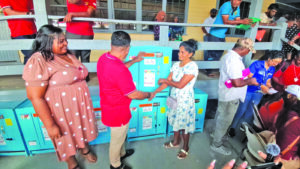
Agriculture Minister Zulfikar Mustapha announced the initiative during a farmers’ outreach on Saturday at Mibicuri, Black Bush Polder, where he said every farmer in the area would receive a cabinet designed to prevent chemicals from being easily accessed or misused.
The initiative comes against the backdrop of Guyana’s long-standing struggle with suicide, particularly in rural agricultural communities where poisonous chemicals are widely used and often stored in homes and farm buildings.
World Health Organisation-linked data had previously placed Guyana among the countries with the highest suicide rates globally, with the country recording a rate of 44.2 deaths per 100,000 people in 2012. While more recent figures show a decline, Guyana remains among the countries with the highest suicide rates worldwide. Public-health discussions and previous studies have also repeatedly identified Region Six as a major area of concern, with Black Bush Polder specifically highlighted because of the easy accessibility of agricultural chemicals.
A 2012 survey conducted by this publication in the community found that 20 per cent of persons interviewed had contemplated suicide, while pesticide poisoning continues to be identified as one of the most common methods used in suicide and attempted suicide cases in Guyana.
Change long-held perceptions
Addressing farmers during the outreach on Saturday, Mustapha said the initiative is part of efforts to change long-held perceptions surrounding Black Bush Polder and to reduce easy access to toxic substances.
“Black Bush is still the suicide capital in Guyana. We have to change that perception,” Mustapha told farmers before warning that.
He said every farmer in the area would receive a storage cabinet equipped with two locks to ensure chemicals are securely stored.
The minister explained that the cabinets were specifically designed with a dual-lock system so that no one person would be able to access the chemicals alone. He encouraged farmers to have different family members keep separate keys, explaining that the measure was intended to reduce impulsive access to poisonous substances during moments of distress. According to Mustapha, the programme will cost approximately $35 million in Black Bush Polder alone, with every farmer in the community expected to benefit from the initiative.
Mustapha said the initiative is being implemented through the Pesticide and Toxic Chemical Control Board, which was also represented at the outreach by its head, Trisha David. According to him, the Board has intensified testing and monitoring of chemicals and fertilisers entering Guyana, while also working to gradually phase out more hazardous chemicals in favour of products considered safer and more environmentally friendly. He said authorities are also pushing greater awareness about the proper handling and storage of pesticides, including the use of personal protective equipment during spraying and chemical application.
During his address, the Agriculture Minister also warned farmers about the long-term health dangers associated with unsafe chemical handling practices. He noted that many farmers continue to spray crops and handle pesticides without proper protective gear before eating or touching food with contaminated hands. According to Mustapha, prolonged exposure to chemicals can lead to serious health complications, including cancer, while stressing that safer handling practices are necessary not only to protect farmers but also their families and surrounding communities.
Save life
“We are doing this thing to save life,” Mustapha told farmers while explaining the purpose behind the cabinets’ dual-lock system.
“That is why we build it in a way that two family members can keep the keys, so that no one person can open it alone.”
The minister urged residents to make full use of the cupboards and to avoid leaving pesticides and other chemicals easily accessible around homes and farms.
Phase out
According to Mustapha, authorities are also moving to gradually phase out some of the more hazardous chemicals still being used in agriculture while encouraging safer and more environmentally friendly alternatives. He added that farmers would continue receiving training on the proper use, handling and storage of pesticides and other agricultural chemicals.
Discover more from Guyana Times
Subscribe to get the latest posts sent to your email.