


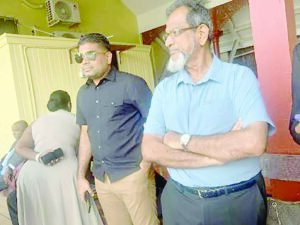
Nearly three months after hearing lengthy arguments in the extradition case involving US-sanctioned businessmen Azruddin Mohamed and his father, Nazar Mohamed, the Caribbean Court of Justice (CCJ) is set to deliver its ruling on July 29.
The appeal challenges aspects of the extradition process initiated against the father and son.
The decision will determine whether the judicial review challenge to the Authority to Proceed (ATP) issued by Home Affairs Minister Oneidge Walrond can succeed.
In the context of extradition, an ATP is the formal decision issued by the Home Affairs Minister authorising the commencement of extradition proceedings in Guyana after a request has been made by a foreign State.
The validity of the ATP is among several issues raised by the father and son in their challenge to the extradition proceedings initiated at the request of the US.
The CCJ had reserved its judgement after several hours of submissions from Attorneys representing both the Mohameds and the State. It also ordered that the interim stay granted in March remain in force, effectively freezing the committal proceedings before Chief Magistrate Judy Latchman in the Georgetown Magistrates’ Courts until its ruling is handed down.
During the hearing, Attorneys for the Mohameds, including Senior Counsel Fyard Hosein and Senior Counsel Roysdale Forde, maintained that their clients were not seeking to prevent their extradition to the US, where they face allegations including fraud, tax evasion, wire fraud, mail fraud and money laundering linked to their gold trading operations.
Instead, they argued that the ATP issued by Minister Walrond was tainted by apparent bias and should have been issued by another public official.
“We’re not saying that this is the end of the extradition at all or the request… What we are saying is that another official who is not biased could do it,” Hosein told the court.
The defence argued that the speed with which the ATP was issued created the appearance that the decision had been predetermined and questioned whether the process met the required standard of fairness. However, under questioning from the bench, Hosein acknowledged that no procedural illegality had been identified beyond the allegation of bias.
Forde further argued that, even if bias were established, Guyana’s Interpretation and General Clauses Act allows the ministerial function to be delegated to another public officer, thereby preserving the extradition process.
Appearing for the State, Senior Counsel Douglas Mendes rejected the bias claims, arguing that the Minister’s role in issuing an ATP is administrative rather than adjudicative.
He maintained that the Minister is required only to determine whether any legal obstacle exists to prevent the extradition process from commencing and is not tasked with assessing evidence or determining guilt.
Attorney General Anil Nandlall, SC, also defended the extradition framework, describing it as a unique process rooted in Guyana’s international treaty obligations.
He argued that the Minister’s role is executive in nature and therefore does not attract the full application of judicial bias principles.
The defence also relied on public statements allegedly made by senior Government officials, including Vice President Dr Bharrat Jagdeo and Nandlall, arguing that they reinforced the appearance of prejudgment. The State, however, maintained that any concerns about fairness could be addressed through the judicial process as the extradition proceedings progress.
The CCJ’s ruling is expected to determine the way forward in the judicial review challenge and whether the extradition proceedings can resume in the Georgetown Magistrates’ Courts.
Discover more from Guyana Times
Subscribe to get the latest posts sent to your email.