



Fuel prices across the Caribbean in April 2026 were among the highest globally, with gasoline averaging between US$5 and US$7 per gallon in most countries. However, Guyana stands out as the only nation below US$4, primarily due to deliberate Government policy interventions and not because it produces crude oil, President Irfaan Ali says.
The Government states it has a plan to not only cushion global shocks for locals, especially farmers, but also to ensure that agricultural productivity increases and the cost of production doesn’t climb. But it needs the support and willingness of the populace to bring it to fruition. “Part of the strategy that we have over the next five years also includes maximising or optimising the opportunity to earn from your land…” President Ali said.
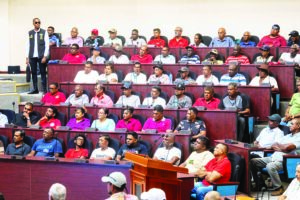
Many farmers here believe that a war taking place thousands of miles away has nothing to do with them and their counterparts in Essequibo, Berbice, the Rupununi, and other areas across the country. They are now learning that the current tensions involving the United States and Iran are already affecting Guyana and the Caribbean in a very real way through fuel price volatility, supply chain delays, and anxiety about the potential outcome.
“The war between the US and Iran has impacted the agri-sector. The high fuel prices and fertilisers are taking a toll…we are even feeling it on household items,” Mahicony Branch Road farmer Roopnarine Etwaroo told the Guyana Times.
“We welcome the help from Government. The support will truly help farmers because many don’t have the finances to go back to cultivation. This assistance is direly needed,” he added.
Another rice farmer, Anil Persad from Berbice, who grows primarily rice, said that while he is aware of the situation in the Middle East, he did not expect it to have the huge impact it is having in Guyana.
“I love farming. My grandfather was a farmer, my father was a farmer and I am a farmer. Many other crops deh but I love rice. It can make or break you but I still love it. Rice ah take the hardest hit now from this war. You see I know ‘bout the war but never think like it would mek things get so dear,” he said.
“Learning that we have it so much better than dem other countries feels good but I still sorry for them because me know what it is to lose crop and can’t work,” he added.
“No, I ain’t been know that the war could impact we hayso,” farmer Kishore from East Berbice (only name given) said on Friday when asked about the knowledge and impact of the war. “But my daughter in-law tell me this thing serious and that is why the price for fertiliser and fuel gone up… I now see why,” he added.
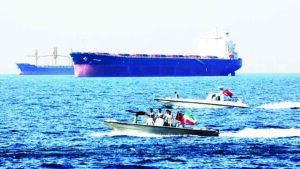
Reality of global conflicts
President Irfaan Ali says that the Government understands the reality of global conflicts affecting the region and how that can impact countries like Guyana, where agriculture is a key industry, as “when fuel is disrupted, agriculture is disrupted”.
“We are facing global shocks that are exacerbated by the ongoing Iran war and its tremendous impact on import costs, fertiliser, transport fuel, and all of these things, and of course the market and cost for rice with the weather,” he told reporters shortly after announcing a $3B war cushioning initiative for farmers on Friday.
He also noted that Guyana is especially vulnerable because it still relies on imported fuel products. Even though oil is produced offshore, the country depends on refined fuel from abroad. When global supply is disrupted, local supply becomes unstable, and shortages appear faster.
In Guyana, unlike some other countries, the Government, as the President points out, has catered to cushioning the effects of global changes through initiatives such as the recent $3B subsidy to rice farmers, subsidising the taxes on fuel, and the implementation of the $2B national fertiliser distribution programme, where all eligible farmers receive the plant booster.
It doesn’t stop there; plans are forging ahead for this country’s first fertiliser plant, as the Government seeks to build a US$300M facility at Wales.
The Government is also analysing the possibility of this country having its own modular oil refinery and using some of its crude in this process. So should there be a global oil supply chain disruption, Guyana and its regional partners would not be as affected.
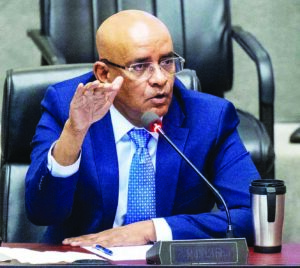
The President and Vice President (VP) Dr Bharrat Jagdeo reasoned that the effects of the war move quietly but steadily, from the global oil market to the fields, and finally to the dinner tables of Guyanese. It is why they underscored that while they have no control over when the war ends, they are putting measures in place to ensure that farmers here are familiar with the current global events and simultaneously help equip them with resources to cushion the impact on costs so that locals do not suffer as many other nations currently do.
The global supply of fuel drops
Jagdeo on Friday explained to farmers that much of the world’s oil moves through a narrow passage known as the Strait of Hormuz, located in the Middle East, and oil shipments slow down or stop when conflict threatens such routes.
When that happens, the global supply of fuel drops, and prices begin to rise. Countries like Guyana, which depend on imported fuel even though they produce oil, can feel the impact quickly, he noted. And with fertiliser being a by-product of natural gas, he bemoaned the increase in world prices, which he estimated have increased by more than 70 per cent. He also pointed out that in Guyana there are already no taxes on fuel, as the Government has done all it possibly could, but it has no control over global fuel costs.
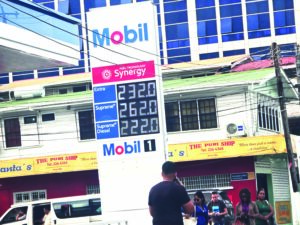
The VP further added that farmers here also have to prepare for realities but can be assured that the Government will continue to explore and implement measures to cater to the country’s needs.
If the current conflict continues, the situation could become difficult.
Farmers will also have to prepare now to avoid long periods of fuel shortages, higher input costs, or lower overall production to ensure that, whatever the situation, food will be available locally and pressure on both themselves and consumers is mitigated.
Throughout the country, they will need to be more careful with how they use fuel and resources in the coming months. Planning planting schedules, reducing waste, and working together in communities may help ease some of the pressure.
In recent weeks, Guyana experienced fuel shortages due to supply chain delays. Some gas stations were reported to have limited supply, and others said if demand trends continued, they would have to close temporarily until shipments arrived.
This situation, many drivers on the coast lamented, is an inconvenience, but for farmers, it strikes at the heart of daily operations.
“This is an inconvenience to have to be here at this hour filling up. This van uses diesel, but the price is still higher,” Mark Joseph said when he was approached by this newspaper at the Guyoil Gas Station on Sheriff Street last Tuesday night.
Who is more impacted?
Questioned on whether he believes the drivers on the coast or local farmers will be more affected by fuel increases, he was quick to respond, “Drivers in town, of course!” We can’t go to work, take the children to school, or anything!”
But farming depends on fuel more than many realise, and modern farming in Guyana relies heavily on fuel. Tractors must plough the land, pumps must bring water to crops, and machines must harvest what is grown. Even getting produce to the market depends on trucks, cars and minibuses that run on fuel, pointed out.
Guyana’s President reasons that when fuel becomes scarce or expensive, everything slows down. A farmer may delay ploughing because diesel is not available. Irrigation may be reduced, which affects crop growth. Harvesting may take longer, increasing the risk of crops spoiling in the field. Each delay reduces income.
Fuel problems do not stop at the farm gate, he is quick to note, as equally important is fertiliser, which many farmers depend on, which is “also tied to the global energy system”.
It is produced using natural gas and other petroleum products, he pointed out, so when fuel prices rise or supply is disrupted, fertiliser becomes harder to get, and thus prices increase. For farmers, this means spending more money to grow the same crops or using less fertiliser and accepting a smaller harvest. Either way, the outcome is not favourable, the President posited.
Some farmers complain that moving crops is becoming more expensive, as after they are grown, they still have to reach the market, and the bulk of their markets are in Region Four (Demerara-Mahaica).
A farmer who once made a modest profit may now find that much of that profit is eaten up by fuel expenses.
At the same time, buyers and vendors face higher costs as well. This often leads to higher prices in the market. While it may seem like farmers benefit from higher prices, the truth is more complicated. When costs rise at every stage, farmers are often left with very little gain. “Many people think that farmers are super rich. By the time you take out for this and that, you don’t get much left,” Persad said.
“That is why I am glad most people choose the cash subsidy this time,” he reasoned. As farming becomes more expensive, food prices begin to climb. This affects everyone, including farmers themselves. Higher prices for basic goods can strain households and reduce purchasing power in rural communities.
National support
President Irfaan Ali has underscored the strong role of national support. On the Government’s side, there will be ensuring, as much as is practically possible, a stable fuel supply, helping farmers manage rising costs, and protecting food production if the situation continues.
He reiterates that the US and Iran war is more than a distant geopolitical issue. It is a practical, everyday challenge that is already affecting farming in Guyana. The link between global conflict and local agriculture may not always be visible, he says, but it is very real. When fuel becomes uncertain, the entire farming system feels the strain, and that strain can eventually reach every household.
Meanwhile, the Government is strategically dealing with the current crisis. “We have spent an enormous sum of money on farming,” the VP said as he stressed that in an ever-changing technological era, the Government will also be using AI and modern tech such as drones to ease the burden on farmers.
Discover more from Guyana Times
Subscribe to get the latest posts sent to your email.