


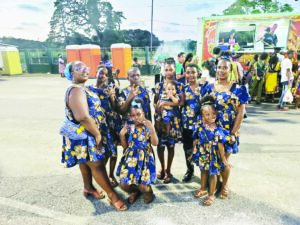
The National Park came alive with bold African prints, colourful head wraps, and smiling families as the 2026 Emancipation Day celebrations unfolded, with garments acting as reminders of history and the enduring pride of African heritage.
The celebrations began well before the gates officially opened, with members of the African religious community gathering at the park for prayers and blessings, setting a spiritual tone for the day’s observances – this was according to the African Cultural and Development Association (ACDA).
From as early as 05:00h, the venue was already buzzing with activity as vendors arrived with their food, exhibitors set up their displays, and organisers made final preparations ahead of the official opening at 10:00h.
Families were welcomed with a free children’s village, where youngsters enjoyed face painting, drumming, poetry, storytelling, and complimentary meals while learning about African culture in an interactive setting.
By 13:00h, the main stage came alive with performances, featuring more than 26 acts that kept patrons entertained throughout the day. Even as the afternoon heat gave way to cooler evening temperatures, visitors continued streaming into the venue to catch the remaining performances, including appearances by artists from Jamaica.
The aroma of traditional African cuisine filled the air as vendors served a variety of dishes, adding another layer to the cultural experience.
One of the most striking sights throughout the day was the number of young people proudly dressed in African attire, reflecting a growing appreciation for African heritage among the younger generation.
This year’s celebration also carried added significance as Guyana commemorated 400 years since the arrival of Africans in the country.
Visitors were able to explore an educational display highlighting the 27 African ethnic groups brought to Guyana, tracing ancestral roots to present-day countries, including Nigeria, Angola, the Congo, and much more.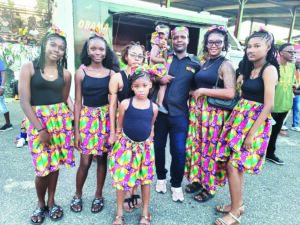
Guyana Times caught up with various families, who shared what this year’s Emancipation celebrations meant to them. Sofine Allen, who is expecting a child, said attending the event each year has become a tradition she intends to continue with her growing family.
“Every year I try to come out, and even my unborn child I’ll bring here too, because I always want to immerse myself and see the beautiful fabrics, clothing and patterns. I get inspiration for outfits for next year. I recently even purchased these earrings from a leather vendor. I personally don’t know how to make conkie and pone and these things. Eventually I will learn, but I always want to come out here and buy.”
For Allen, the celebration has a lot to do with family.
She said preserving culture for her upcoming generation is important, and believes traditions should be passed from one generation to the next. Allen added that she hopes to learn how to prepare traditional dishes such as conkie and pone from her grandmother before passing those skills on to her own children.
Another patron who came along to the festivities with a group of friends whom she considers family said her outfit was inspired by an African woman living in Guyana, who helped her embrace traditional African fashion.
“I wanted to do authentic African fashion, so I’m wearing a gele. It’s traditional to Nigeria. A Yoruba woman from Nigeria here in Guyana actually did it for me. This is an Ankara print. It is from a Cameroonian company, and so I just like to do the authentic thing. I don’t want to see Hawaiian prints and these floral prints on Emancipation Day. I want people to know what they’re wearing. I want that when they ask me, ‘What are you wearing?’ I can tell them where it’s from and what it represents.”
According to her, “emancipation means freedom, and defending the freedom that our ancestors worked so hard for us to have. It means being free to talk about the things that matter to me, to be who I am as a Black woman.”
She said that, unlike in previous years when many persons opted for denim and T-shirts, more people are now recognising that African prints represent more than fashion – they are deeply connected to culture and identity.
She also praised attractions such as the face-painting activities, saying she was pleased to see the level of public participation and enthusiasm displayed throughout the event.
Guyana Times also caught up with the President of the African Welfare Convention, Haminston Wilson – one of Guyana’s oldest African organisations.
At the organisation’s booth, visitors browsed a variety of handcrafted items and African-themed books, all aimed at promoting African history, culture, and knowledge.
Wilson explained that the exhibits were intended to educate the public while encouraging a deeper appreciation for African heritage and identity.
He said emancipation remains one of the most significant observances for people of African descent, as it serves as a reminder of their history and the struggles of their ancestors.
According to Wilson, remembering one’s roots is essential, noting that people who forget where they came from are more likely to repeat the mistakes of the past.
He also encouraged African-Guyanese families to learn more about their culture and embrace it with pride.
“Well, I would say they should do everything within their power to get to know the culture and live the culture. Now, when we see ourselves as who we should see ourselves, we would see ourselves as champions. We are not down there; we are up here as champions.”
“The African Welfare Convention is a place where we normally have courses teaching people to sew and other skills. So, out here, we feel that this is our place to showcase who we are, what we have, and what we’re hoping to be in the years to come.”
As the sun began to set over the National Park, the rhythmic beat of African drums, the aroma of traditional cuisine, and the vibrant display of African fashion were present.
While this year’s Emancipation celebrations honoured the past, organisers were already looking ahead.
Plans are underway for a major homecoming celebration next year, with hopes of welcoming internationally recognised figures of Guyanese and African heritage back to Guyana for what is envisioned as an even larger celebration of culture, history, and identity.
Discover more from Guyana Times
Subscribe to get the latest posts sent to your email.