

Guyana’s boxing campaign at the 2026 Commonwealth Games in Glasgow, Scotland, has been dealt a devastating blow after the country’s boxers were rendered ineligible to compete owing to their mandatory, once-in-a-lifetime, genetic sex test results not being returned before the start of the competition.
Among those affected is Youth Commonwealth Games silver medallist and Olympian Keevin Allicock, who had been preparing to make his second consecutive Commonwealth Games appearance.
Allicock travelled to Glasgow on Monday alongside Shakquain James, Emmanuel Pompey and Akeelah Vancooten, with veteran Coach Lennox Daniels leading the delegation.
However, despite completing all the required procedures well ahead of the Games, the Guyanese boxers were unable to enter the competition because the laboratory results did not arrive in time.
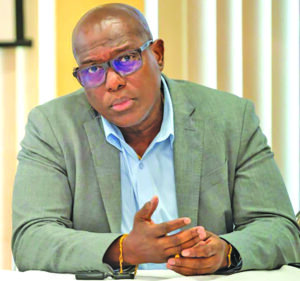
President of the Guyana Boxing Association (GBA), Steve Ninvalle, expressed profound disappointment over the unfortunate development, insisting that his association and the Guyana Olympic Association (GOA) fulfilled all obligations within the prescribed timeline.
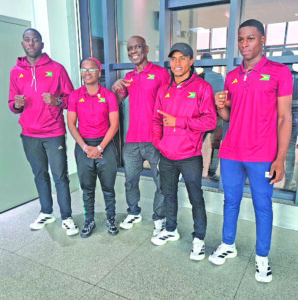
According to Ninvalle, the genetic samples were collected approximately four weeks before the Commonwealth Games at Eureka Laboratory in Georgetown before being shipped to the United States for analysis, a timeframe the GBA believed was more than sufficient for the results to be processed and returned.
Even with the Commonwealth Games Federation and World Boxing trying to assist every step of the way, the results still failed to arrive before yesterday’s deadline, ultimately preventing Guyana’s pugilists from stepping into the ring.
“We did everything that was required of us, and we did it within the stipulated timeframe,” Ninvalle said.
According to Ninvalle, “It is extremely disappointing because these athletes trained tirelessly, sacrificed for months and travelled all the way to Glasgow with the expectation of representing Guyana. Unfortunately, something completely beyond our control has denied them that opportunity.”
He explained that the testing requirement is a once-in-a-lifetime procedure for every boxer.
“The positive side is that once these results are received, these athletes will never have to undergo this test (which cost over US$2000 each) again. It is done only once during a boxer’s career,” Ninvalle noted.
Ninvalle added that the association is also anxiously monitoring the status of Guyana’s boxers preparing for the upcoming Central American and Caribbean (CAC) Games, since their samples were submitted as part of the same batch.
“We’re obviously concerned because those tests were done in bulk, so we’re monitoring that situation very closely. We certainly don’t want another group of athletes to be affected by delays that are outside of our control.”
Despite the setback, Ninvalle remains optimistic that the long-term impact will be positive once the results are eventually received.
The GBA President further added that “once the certification is in place, the boxers will be eligible for future competitions without having to repeat the process. We intend to have them competing at virtually every international event for which they qualify.”
Meanwhile, Allicock said that while he was looking forward to challenging for a medal at the Games, his focus is on ensuring the boxers who were making their debut don’t see the missed opportunity as a hurdle in their careers.
“We had a good meeting with Mr Ninvalle, and I am confident that he and the GBA did their best,” Allicock said after the team sat down with the GBA President in the lobby of the Moxxy Hotel in Glasgow.
“Just as the President said, it’s not the end of the road. I’m here to tell them you will always have stumbling blocks in this sport, but how you overcome them will determine your future in boxing,” the always confident Allicock expressed.
The mandatory testing stems from World Boxing’s Sex Eligibility Policy, which was recently introduced.
Under the policy, all competitors aged 18 and older must undergo a polymerase chain reaction (PCR) genetic test to verify their biological birth sex before participating in sanctioned competitions.
The test, which can be conducted using a mouth swab, nasal swab, saliva sample or blood sample, detects the SRY gene, which identifies the presence of Y chromosome genetic material. Under the regulations, only athletes determined to be male at birth are eligible for the men’s category, while only athletes determined to be female at birth may compete in the women’s division.
National Federations are responsible for ensuring that athletes complete the testing and submit valid certification. Failure to provide the required documentation results in automatic ineligibility.
The sport’s governing body, World Boxing, says that the recently introduced policy is intended to protect athlete welfare and preserve competitive fairness while strengthening governance in amateur boxing after the IOC withdrew recognition from the International Boxing Association (IBA).
Over the years, Guyana has won five Commonwealth Games boxing medals: one gold and four bronze.
The country’s finest achievement came in 1978, when Winfield Braithwaite captured gold in the light welterweight division in Edmonton, Canada. The most recent medal followed in 1990, when Wesley Christmas secured bronze in the bantamweight division in New Zealand.
Discover more from Guyana Times
Subscribe to get the latest posts sent to your email.