

Guyana Power and Light (GPL) is advancing a US$422 million investment to strengthen and modernise the country’s electricity infrastructure, with several new substations now 60 per cent complete and a state-of-the-art National Control Centre nearing completion. This was revealed following an inspection by the GPL Board of Directors and media operatives on Friday. The media visited the
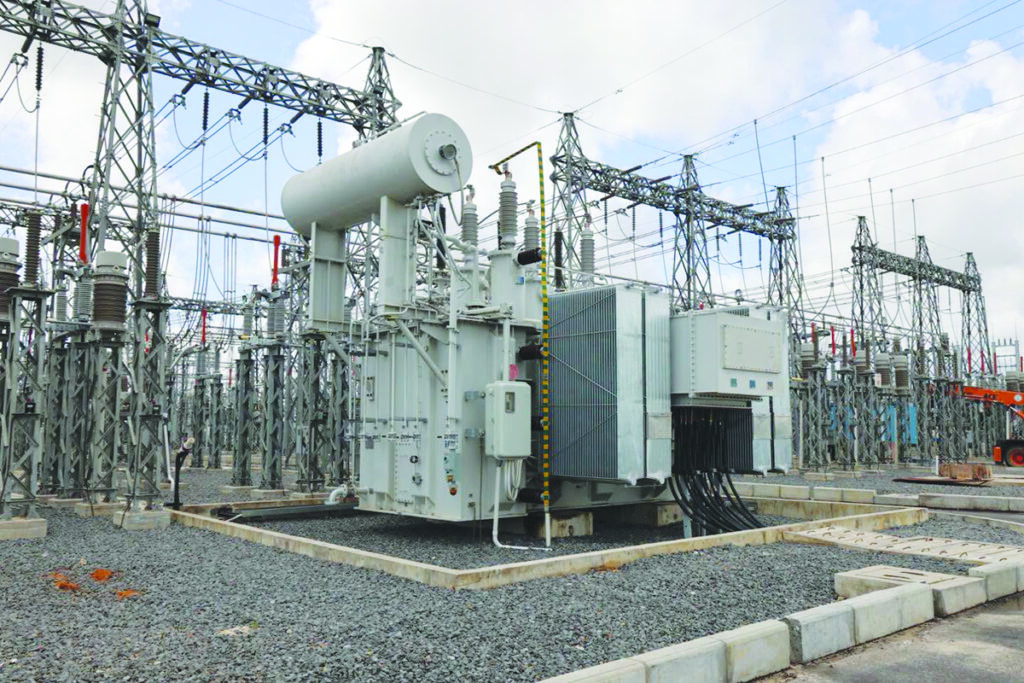
Goedverwagting Substation, which will accommodate 230 kilovolt (kV) and 69 kV infrastructure and serve as a key point in the expansion of GPL’s high-voltage transmission network. The facility will support the evacuation of bulk power from the 300 megawatt (MW) natural-gas-fired power plant at Wales, West Bank Demerara (WBD) and enable transmission across the network. The new 230 kV transmission infrastructure will extend from Goedverwagting to Region Six, significantly increasing network capacity. The media also visited the sites at Enmore, Château Margot, East Coast Demerara (ECD) and Columbia, West Berbice substations.
Transmission lines
The tour also included sections of the route for the new transmission lines. These works include approximately 155 kilometres (km) of 230 kV double-circuit transmission lines to interconnect the Goedverwagting Substation with a new substation at Williamsburg, Region Six and approximately 167 km of 69 kV double-circuit transmission lines to replace existing infrastructure along the railway embankment. Significant progress has already been achieved along the transmission corridor. Several monopoles have been erected to accommodate the 69 kV transmission line, while construction of the bases for the 230 kV transmission line is ongoing. The media visit provided an opportunity to highlight GPL’s ongoing investments to expand and modernise the electricity network. These investments are intended to increase transmission capacity, accommodate additional generation, advance smart-grid capabilities, strengthen network resilience and improve the reliability of electricity supply across Guyana.
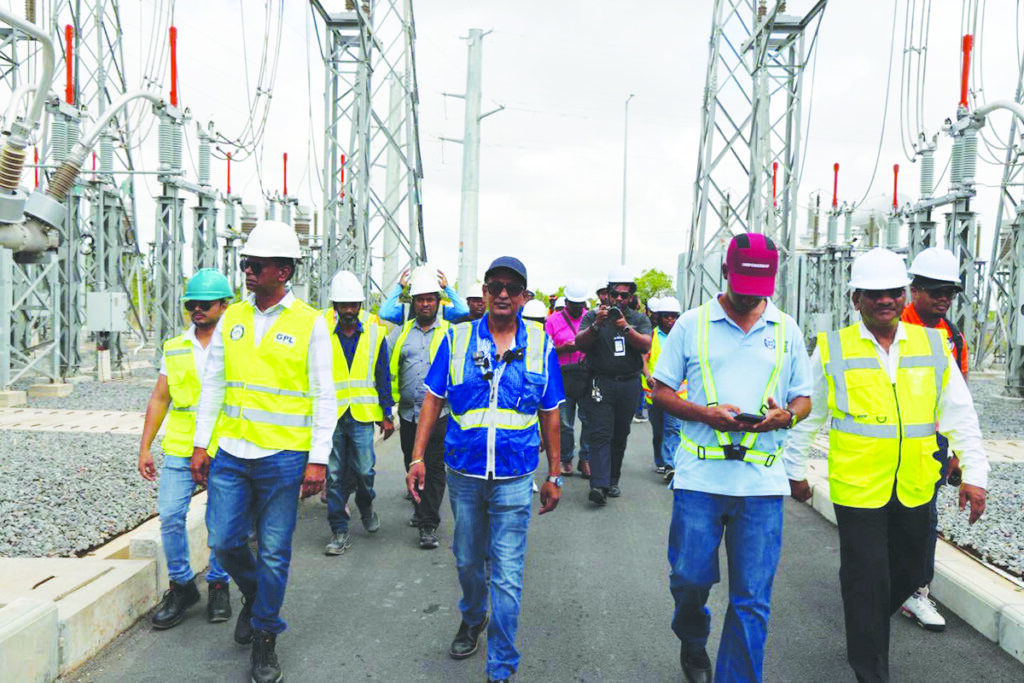
According to GPL Chief Executive Officer (CEO) Kesh Nandlall, equipment and towers are on their way to the project site of the Château Margot Substation. “You will [soon] see the towers coming in and towers going out. So, towers will come in, drop off 6 to 9, it will break it down to 13.8 kV for distribution level. And then it will continue out back so that we have redundancy. So, drop off the power and the power continues towards Columbia. And it will drop off in the other areas as we will see.” Nandlall said foundation work has already been completed in some areas, while work continues at other sections of the substations. “The foundation work has already been completed here, and foundation work is now, well, not fully completed, but they are ongoing as you can see. And this will now bring resilience to this part of the East Coast, including industrial sites that are going to commence.
This substation will provide electricity to new customers and also to existing customers where we have feeders that are taxed at the moment.” Meanwhile, Bharat Harjohn, Deputy CEO, Strategic Operations, explained that electricity is generated at power plants at a lower voltage before being stepped up for transmission across the national grid. He explained that, for example, power generated by turbines at the Gas-to-Energy (GtE) plant will be produced at 13.8 kV. However, to transmit the electricity over long distances while reducing losses, the voltage must be increased to 230,000 volts. Harjohn noted that customers do not use electricity at such high voltages, as residential and commercial customers require much lower voltage levels depending on their needs. He explained that substations and transformers are therefore used to step down the voltage to levels suitable for homes, businesses and industrial facilities, including 120, 220 and 480 volts. In some instances, substations perform the opposite function by stepping up the voltage for transmission. Harjohn said this process of stepping the voltage up or down is achieved through the use of transformers.
Discover more from Guyana Times
Subscribe to get the latest posts sent to your email.