


…Pres Ali tells Private Sector to pay attention to regional opportunities
As Guyana continues to build its energy sector, President Dr Irfaan Ali has underscored the importance of the country being positioned as a central hub given the competitive nature of the industry within the region.
“It’s a very active energy landscape in the region, and it will be competitive. It will require a lot of negotiations and integration, but definitely, Guyana, we must position ourselves centrally to this hub that is being created across the region,” the Head of State noted.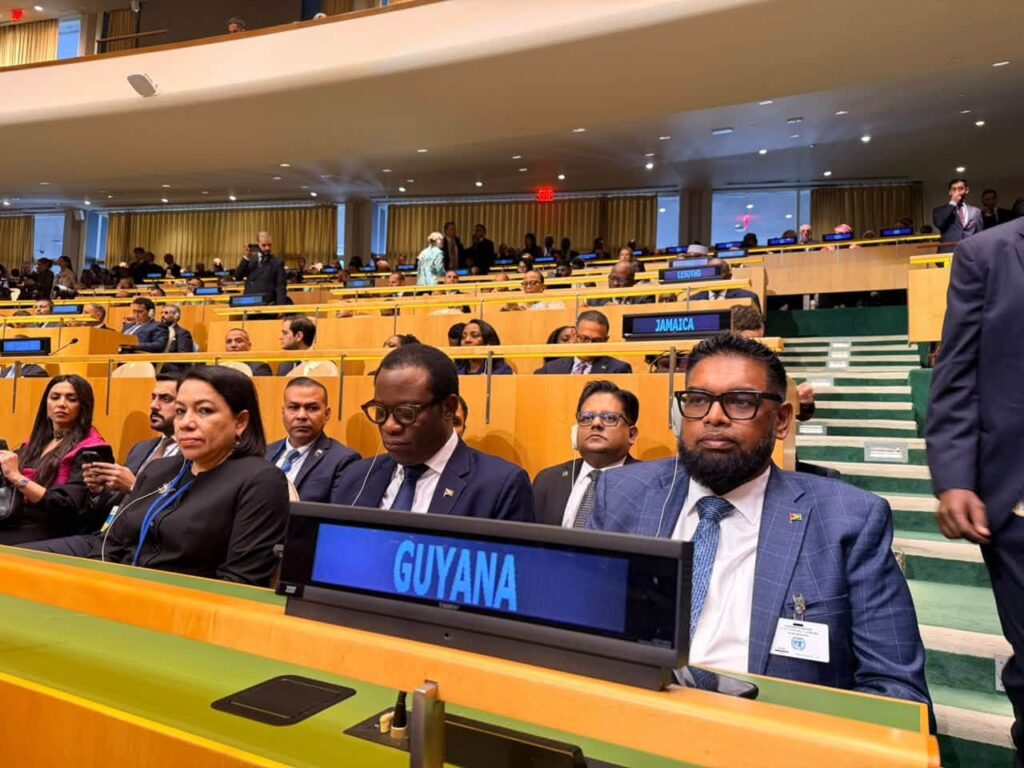
He made these remarks during a recent interview on Guyana’s energy future, where he discussed a wide range of issues from electricity supply and its growing demand locally to oil and gas, renewables, energy security and long-term development.
According to President Ali, his view for the country is to eventually become a net producer of energy, not only for domestic use but to also supply neighbouring countries.
For years, the Government has been eyeing the largely untapped Northern Brazil market, which will open up a host of opportunities across multiple sectors, including transport, logistics, and energy.
Guyana has already been driving the development of a regional energy corridor that would connect northern South America and the wider Caribbean to link offshore gas resources, pool markets and build shared infrastructure.
Private Sector opportunities
But while conversations have begun with Suriname to potentially pool natural gas resources and further expand ties with Brazil and Trinidad and Tobago, the Guyanese leader highlighted the recent developments in the energy around the region – something which he says the Guyanese business community should keep an eye on.
“The region is getting very active when it comes to the energy sector, and I hope our local Private Sector and Guyanese are paying attention. You have new exploration going on in Trinidad and Tobago. You have the possibility of a large-scale gas project at Dragonfield between Venezuela and Trinidad. You have an agreement that has been signed, apparently – I’ve not seen it – between Venezuela and Suriname.”
“We are also discussing how the refinery can be integrated with investment from the Dominican Republic [and] Barbados, having a play in it also for refined products and their own energy security, and wider integration with the rest of the Caribbean. We also have to look at where gas would play in all of this. The refuelling port for cruise ships, where a refuelling port is best positioned, how do we be part of that business opportunity that comes from that?” the President noted.
He went on to underscore the importance of regional energy integration and the many possibilities for investments, especially in the maritime and shipping industry. The Guyanese leader added too that there are also interests for bilateral development.
“These are all investors and investments that are available. People are ready to discuss with us, and we’re going to pursue as much of it as possible. And our objective is to create as many opportunities as we can for Guyanese,” he stated.
Suriname cooperation
Already, Guyana has a cooperation framework with Suriname that spans not just energy and natural resources but also environmental services, biodiversity services, bauxite, and infrastructure for connectivity.
In fact, President Ali held a virtual meeting with his Surinamese counterpart, President Jennifer Geerlings-Simons, back in May to advance bilateral cooperation, including in the oil and gas sector.
Following an in-person meeting in Nickerie, Suriname, back in September 2026, the Guyanese Leader says a reciprocal meeting is expected to be held in Georgetown. He said a date will be finalised soon for that follow-up meeting in order to advance cooperation between the two neighbouring countries.
While Suriname is gearing up for its first offshore production in 2028, Guyana started producing light sweet crude in the offshore Stabroek Block in 2019.
United States-based ExxonMobil, along with its coventurers, currently has Floating Production Storage and Offloading (FPSO) vessels operating in the Stabroek Block: Liza Destiny (Liza Phase One Project), Liza Unity (Liza Phase Two), Prosperity (Payara Project), and One Guyana (Yellowtail Project), which together are producing approximately 900,000 barrels of oil per day.
The US oil major is now preparing to fire up its fifth offshore project, the Uaru Development, later this year with the Errea Wittu FPSO, which will take the country’s output to more than one million barrels per day by year’s end.
In the prolific Stabroek Block, ExxonMobil holds a 45 per cent interest, while co-venturers Chevron has a 30 per cent stake and CNOOC the remaining 25 per cent.
Discover more from Guyana Times
Subscribe to get the latest posts sent to your email.