

Guyana is making significant investments in its healthcare system to expand access to primary healthcare services, encourage regular screenings for early detection of diseases, and strengthen specialised healthcare facilities to provide treatment and care for patients requiring advanced medical attention.

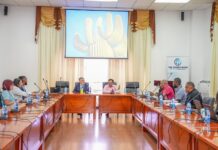
Health Minister, Dr Frank Anthony, highlighted these efforts during a Devex Impact House session held on the sidelines of the United Nations General Assembly (UNGA) a few weeks ago.
In fact, he noted that there are currently approximately 400 primary healthcare facilities across the country, providing free essential medical services to the population.
To further encourage more individuals to access primary-level healthcare, the Health Minister informed of innovative programmes such as the universal healthcare voucher initiative launched by the government in March 2025.
Valued at $10,000, the vouchers are available, free of cost, to citizens. The initiative is intended to promote early detection and prevention of non-communicable diseases (NCDs).
According to Dr Anthony, the programme is working well and “in 2025, we saw more than 100,000 persons using the vouchers and I think that’s a good response”.
Additionally, he pointed to the government’s school screening programme, which provides essential preventive health checks at least once during nursery, primary, and secondary school stages, in order to detect health issues early.
“We have about 280,000 children in our school system in Guyana and so far, we’ve been able to screen 100,000 children. And so that too, if we find somebody with whatever health challenge, we’re able to bring them into the system and work on fixing them,” the health minister noted.
He emphasised that the main objective of these initiatives is to help diagnose health complications earlier in order to prompt faster intervention, treatment and care, to help individuals live healthier lives.
In fact, in a social media post on Sunday, Dr Anthony reflected on his participation in the session, noting that “Guyana’s message was clear: we must shift from treating illness late to preventing and detecting disease early”.
“That means stronger primary health care, earlier screening for hypertension, diabetes, kidney disease, cardiovascular disease and cancers, and ensuring patients receive coordinated care from diagnosis through treatment. In Guyana, we are building exactly this kind of health system. Our greatest success will not be how many people we treat for advanced disease, but how many people we prevent from ever reaching that stage,” he expressed in his social media post.
Tertiary healthcare system
In addition to these efforts, Dr Anthony also pointed to the need to simultaneously build out a strong tertiary healthcare system.
“Even if you have the best primary healthcare, you are going to have people who would need secondary and tertiary care, and therefore, you need to have hospitals in place so that when people really get sick, that they can access that level of care,” he noted during the international forum.
“At the same time, we’re not losing track that we need to focus on prevention and primary healthcare and extend the level of care that we are giving to our population,” he added.
Anthony noted that these investments were a no-brainer for the People’s Progressive Party/Civic (PPP/C) administration, emphasising the importance of building resilient healthcare systems in the wake of the COVID-19 pandemic.
“After COVID, I think everybody realised that it’s important to invest in the health sector and we need to build a resilient health system. So, for us, we recognised that and we set about ‘how do we improve the system?’ and we’ve made massive investments over the last three years in expanding primary healthcare, expanding our hospital infrastructure, expanding our laboratories and building human capacity. Over the last three years or so, we probably added maybe 3000 or more professional healthcare workers into the system and expanded the level of care we can deliver,” the minister highlighted.
He also underscored the importance of governments working with international partners, adding too that global support must have long-term impacts.
“I think it’s very important that international partners, whether it’s multilateral institutions or bilateral partners, that we leverage those to help us to build capacity. I think that is very important, sometimes you might have institutions that come in and they do a project but when the financing comes to an end, the project comes to an end. That’s not what we want. What we need is partnerships that can to build local capacity so that after the funding finishes, we’ll be able to sustain it and that’s helping us to build more resilient systems and we have right now a number of partners who are working with us in that way and it’s really making a difference to us,” Dr Anthony said.
He also addressed the issue of human resources challenges in the healthcare system, pointing to how international partnerships can help.
“I know for a lot of countries, they have human resource challenges and we have worked with Brazil, for example, in developing a hybrid training model for nurses, and so far, that has been working really well for us. About a month ago, we graduated close to 660 nurses that are now employed by our system. Prior to that, we had nurses that were being trained and basically leaving but because of the hybrid programme and other measures that we’ve put in place, we see more people wanting to stay,” he noted.
Discover more from Guyana Times
Subscribe to get the latest posts sent to your email.