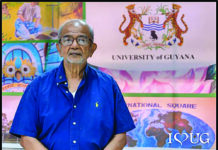


When 15-year-old Nitya Narine decided to sit 27 subjects at this year’s Caribbean Secondary Education Certificate (CSEC) examinations, the number was not chosen at random. Years earlier, 27 had been the number attached to another significant achievement in the Tagore Memorial Secondary School student’s life, the number she carried when she won a national spelling bee competition. It became something of a lucky number and, according to her mother, helped turn what had initially been thoughts of sitting about 25 subjects into an extraordinary 27-subject challenge. That challenge has now resulted in Narine securing 26 Grade Ones and one Grade Two in the preliminary 2026 CSEC results, placing her among the country’s most outstanding performers.
But for Narine, the decision to undertake a workload more than twice that of her regular Science stream was also about testing what she believed she was capable of and doing something special for her school. “I thank God for having blessed me with my academic abilities. And I always believed that I had the potential to do extremely well, judging by my performances throughout the years,” Narine said during an interview. She explained that once she had established the goal, she believed hard work could make it achievable. “I believed that if I had set my goal and worked extremely hard towards it, then my results would have been satisfactory, which was indeed what I had done. And I achieved, and I’m proud of myself, and I thank everyone who had helped me along the way.”
Then came another motivation.
“The 27 subjects were because I believed I could have done it. I wanted to do well, and I wanted to put my school on top,” she said. Narine was enrolled in Tagore Memorial’s Science stream, where she said the regular programme consisted of 12 subjects. Pursuing 27 therefore meant taking on another 15 beyond that programme. Her mother, Fariza Narine, revealed that there was also a sentimental reason her daughter settled on that particular number. “I think when she won the national spelling bee competition, her number was 27. On her clothes, she was number 27,” the proud mother recalled. “I think that motivated her to go 27 subjects because she won and she won it big. And it was a proud achievement for her. She felt very accomplished when she won that, and I think that motivated her with the number 27.” “But then she said she would like to do the 27 to match her number there. Like a lucky number; it’s like a lucky number for her.”
Years of preparation
Writing 27 subjects was not a decision Narine made on the eve of CSEC. “This was a goal that I had established a while now, so that means that throughout high school I have been studying for it,” she explained. Her preparation involved paying close attention in class and reinforcing what she learned when she returned home. Whenever she encountered difficulty, she sought assistance from her parents or turned to educational resources online. “I had all my textbooks, my past papers. Yes, and that’s how I studied,” she said. On average, Narine said she studied for five to six hours each day and followed a study timetable. The scale of her undertaking also meant that the family sometimes had to seek academic assistance beyond Tagore Memorial. Her mother said teachers at other schools were among those who helped both Nitya and her niece, who also studied with the family.
“We are very grateful for the numerous persons who would have assisted both girls, not only at Tagore Memorial Secondary, but many other schools would have assisted because 27 subjects, we had to go beyond the school for help,” Fariza said.
Narine also had the benefit of a study partner. She and her cousin worked together on subjects they shared, including going through compiled past papers. “It was comforting,” Narine said. “Sometimes when I didn’t understand a topic, and she understood, I asked her to help me. She’s brilliant, and she’s helpful… and I’m grateful I had a study buddy.”
4 examinations in one day
The true extent of the challenge became even clearer when the written examinations began. Narine’s written examinations ran from May 5 to June 9, and she recalled having examinations on consecutive days, although there were some afternoons when she had no paper.
On some days she sat three examinations. On one day, she sat four. For some of those papers, she said, there was only about a 15-minute break before she had to begin the next examination. “That was a bit of a challenge, but I did manage,” she recalled. Despite the gruelling schedule, Narine said anxiety did not overwhelm her.
“I feel like it was too quick to really feel anxious,” she explained. Her preparation gave her confidence. “From before, when I prepared, and I was confident in myself, there wasn’t really any anxiety because I know how I studied enough and I studied my best, the best that I could have done.” There was, she acknowledged, some nervousness. “But when you open a paper and say, ‘Yes, I studied this, I know what I have to write,’” that confidence returned.
‘You think it is too much?
For Fariza, however, supporting her daughter’s ambition also meant ensuring that the teenager did not feel compelled to continue simply because the family expected it. Both of Narine’s parents are involved in education, and her mother said there were conversations at home about whether 27 subjects were becoming too much. Fariza recalled occasions when her daughter would lie with her on the bed at night and she would ask directly whether she wanted to reduce the workload. “I would ask her, I said, ‘You think it is too much? Would you like us to take out one, take out two? So bring the list and let’s take out one subject, take out two subjects if you feel that that is too much.’” Her daughter’s answer remained the same.
“She said, ‘No mom, I want to do this.’” Fariza said she reassured Nitya that neither parent would be disappointed if she changed her mind. “I said, ‘If you feel that way, please don’t feel that we are pressuring you. And if you would want to take out one or two subjects, please know that we are with you, that we are okay with that.’ But she said no, she is going to do it.” For Nitya, growing up with a teacher for a mother and an education officer for a father was never intimidating. “That was more encouraging than intimidating. My parents are the two people who I look up to the most. They’ve always been my biggest support system,” she said.
“Whenever I needed help, I went to them.”
Signs from an early age
Fariza said the signs that her daughter possessed unusual academic ability appeared long before CSEC, in fact, before she had even begun formal schooling. She recalled Nitya being around two years old when the child surprised her while they were on a bed together. “Mama, I could write my name,” Fariza remembered her saying. She told her to go ahead. “Then she wrote her name, N-I-T-Y-A, and she never really started that, so I said, ‘Wow, this is brilliant.’” Another surprise came while Fariza was bringing her daughter home from daycare. The child announced that she could spell her name. Fariza expected her to spell the relatively short “Nitya”. Instead, she continued with “Vaishnavi”. “So from then on, I said that this is a brilliant child,” her mother recalled. The family subsequently nurtured that ability, providing resources and helping whenever she encountered something she did not understand. “And then she’s willing to learn.
That is one thing about that child. She’s willing to learn,” Fariza said. That ability would become increasingly evident as she progressed academically.
NGSA in Grade 5
In 2021, while still in Grade Five, Narine sat the National Grade Six Assessment (NGSA) and earned a place at The Bishops’ High School. Remarkably, she said the decision to attempt the examination was made only about three weeks before it was due to be written. There was initially some doubt when her parents asked whether she wanted to try it. “I thought about it for a while, they helped me, and then I was like, ‘Yes, I’m confident I can do this.’ And yes, I went ahead and wrote it.” Despite the workload associated with 27 CSEC subjects, Narine rejects the notion that academic success required her to abandon everything else in her teenage life. She said she did not have to give up her phone or social media. Neither did she abandon her hobbies. The key, she explained, was beginning early and maintaining discipline. “I did not have to sacrifice anything because, remember, I started a while back. So, because I started from early, there was more time for myself as well,” she said. “I didn’t have to give up anything. I didn’t have to give up my social media, my phone, anything.” There were rules, however. Whenever it was time to study, the phone went away.
Breaks were incorporated into her timetable, and those were periods when she could use her phone. Narine also ensured that despite studying late, she got sufficient sleep. “I was pretty disciplined,” she said. That balance also allowed her to continue painting and drawing, two of her favourite activities. “I had time for my hobbies, for example, painting and drawing because I love art.” It is that approach she now recommends to students preparing to enter Fifth Form. Narine advises them to identify what they want to achieve, establish their goal early and work consistently towards it. But she also cautions against allowing academics to consume their lives. “They should make time for themselves so that studying does not feel like a burden on them, because that would make their preparations easier for them,” she said.
Law is next
Having completed an extraordinary CSEC undertaking at just 15, Narine is already looking towards her next academic challenge. She has applied to the University of Guyana (UG) and plans to pursue studies in law. “I find the law to feel quite admirable,” she explained. “I like everything there is about law. I like fighting for justice, for all the good.” She also enjoys speaking, public speaking and interacting with people, and believes another of her strengths could serve her well in the legal profession. “I also have been commended on my memory. I believe that’s good for being a lawyer as well.” Her parents have no intention of steering her towards their own profession. Fariza said the family is pleased that Nitya has chosen a different path and, more importantly, one that she selected for herself. “We feel proud because she’s going to do something different from us, and we would want that for her,” she said. “Education is a beautiful field, but I think it’s her desire to go into law. We are going to support her, and we’re happy that she chose something that she wants and not that we are forcing her to do or go into our field.” For Fariza, the 26 Grade Ones and one Grade Two represent the culmination of years of work she watched at close range. “I’m very, very happy. I’m very excited. I’m very proud of her,” she said. “She has studied hard, many nights, many days. So, I am very proud of her.” For Nitya, however, the achievement is perhaps best captured by the simple belief that led her to choose that unusually ambitious number in the first place, she believed she could do it.
Discover more from Guyana Times
Subscribe to get the latest posts sent to your email.