

A pageant runway may stretch 40 to 80 feet, with bright lights, cheering crowds, and all eyes fixed on the woman making her way across the stage. But for Alliah Simon, her first runway looked nothing like that.
It was the winding paths of the place where she was raised, surrounded by towering trees and the lush greenery of the forest, where she could run barefoot, swim in the creek, and let her curiosity lead the way.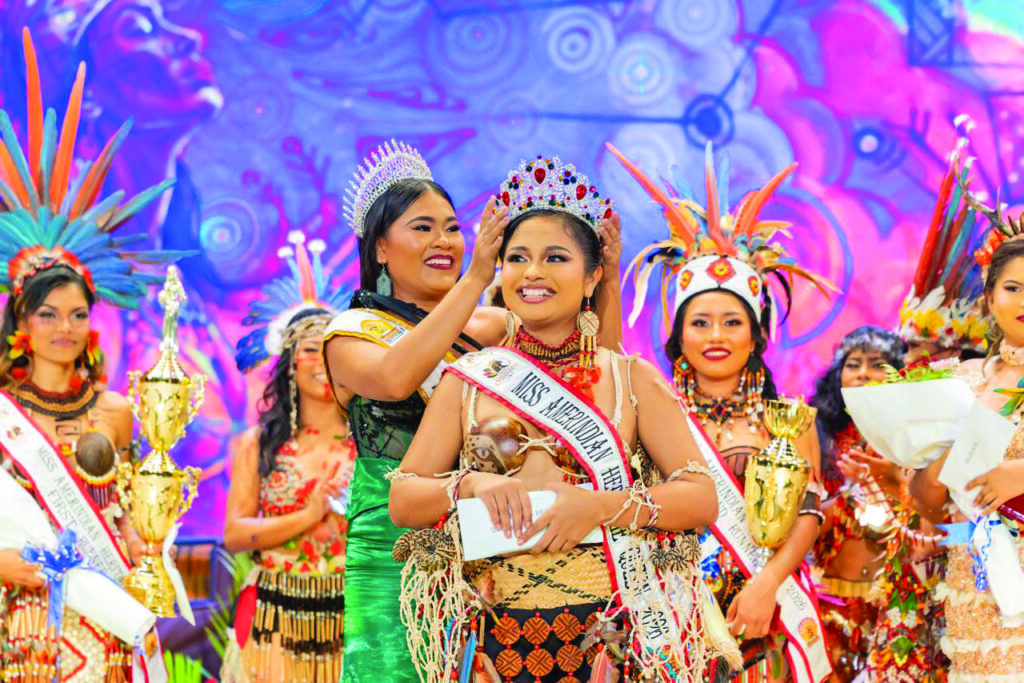
Before the gowns were fitted, the heels slipped onto her feet, and the loud applause filled the room, nature was her world.
This is, in fact, the plain truth for the newly crowned Miss Amerindian Heritage Queen 2026. Her victory marks the first time in the 25-year history of the pageant that Region Four has captured the crown. Simon, who is a public relations and project management coordinator, is also pursuing an MSc in project management.
The pageant forms part of a month of activities dedicated to showcasing Guyana’s Indigenous heritage, traditions, talents and contributions to national development.
The 23-year-old spoke to Guyana Times just days after winning the competition. During a telephone interview on Saturday, she revealed that preparing for the national pageant was quite a challenge, particularly given her natural affinity for the outdoors.
According to Simon, she had to master everything from walking in heels to maintaining the right posture and carrying herself on stage.
Accustomed to a more down-to-earth lifestyle, she said the demands of pageantry were a departure from her natural personality, making the transition particularly challenging.
Lover of Nature
Interestingly, Simon’s love for nature was accompanied by an early interest in biology, a subject that would eventually help shape her career aspirations.
As a high school student, biology was her favourite subject, although she admits she had little idea what she wanted to do with her life. It was only after enrolling at university to pursue a degree in biology that the pieces of her varied interests slowly began to fall into place.
While her first two years were spent exploring the fundamentals of the subject, it was in her third year, when she encountered courses in conservation, that she discovered where her true passion lay. From there, her focus shifted towards conservation and environmental management.
“I would much rather go and swim and jump in a creek and go in the forest, barefoot and all of these things. So, putting me in a six-inch heel was quite a challenge. I had to learn how to do it, and huge credit to the previous Miss Region Four. As well as my pageant coach. They really shaped me to be a pageant queen. So, huge credit to them.”
She added, “Before the national leg of the pageant, it was a bit more challenging, because everything was so new to me. I had to literally learn how to walk in heels, fix my posture and all of these things. So, that was a bit challenging, because it’s completely unlike me and who I am as a person. I’m a very down-to-earth kind of person.”
Although Simon had attended the Indigenous pageant as a child, she said she never developed an interest in pageantry. Following the previous competition in 2024, she was approached by several people who encouraged her to participate and represent her village, the only titled Indigenous village in Region Four. However, she declined the opportunity at the time, as pageantry was not something that particularly interested her.
Family Support
This year, however, the encouragement came from her family, who believed her work in youth empowerment, environmental preservation and conservation made her a suitable representative for her community.
Simon explained that, at 23, she also recognised that she had limited opportunities to participate in the competition, given its age limit of 25. She therefore decided to take up the challenge, viewing it as an opportunity to serve her community.
Her journey began at the regional level, where she represented her village. She said that stage was not particularly challenging, as the process consisted mainly of interviews, with insufficient participants to stage a full pageant.
Simon spent three years of primary school in Linden before moving on to President’s College, where she lived as a boarding student for five years. Those were formative years, she said, and the institution played a significant role in shaping the young woman she is today.
Growing up away from her Indigenous village meant Simon missed out on some of the experiences that connect many Indigenous children to their heritage, including trips to the farm, the rhythms of village life and the everyday traditions passed down through generations.
However, she said her university studies and wider exposure to Indigenous issues allowed her to appreciate her heritage in a new light. That awakening prompted her to make a deliberate effort to learn more about her own culture while also exploring the rich traditions of other Indigenous communities across Guyana.
Identity
Her story, which is still unfolding, has become about much more than one young woman’s personal journey.
For Simon, understanding her identity and heritage is an important step towards empowering young Indigenous people and encouraging them to speak up about the issues affecting their communities.
“I think that as youths, we really should try to first understand who we are and where we come from, especially Indigenous people. Many Indigenous youth tend to shy away from their heritage because of modernity and contemporary living. But we should all try to really learn about our heritage, especially those on the coast and for those in the hinterland that have the opportunity to still be very much involved and live in their heritage and culture, to appreciate who we are as a people. Whatever nation you are from, really appreciate your heritage and your culture so that you can understand the severity of many of the social issues affecting our communities. Do not be afraid to be a voice for your people!”
Discover more from Guyana Times
Subscribe to get the latest posts sent to your email.