A new Caribbean AI Task Force report has called for the development of homegrown artificial intelligence (AI) solutions to drive regional transformation, urging countries to strengthen AI expertise, governance and innovation to address challenges unique to the Caribbean.
Regional leaders, technology experts and policymakers have gathered in Trinidad and Tobago for the first Caribbean Artificial Intelligence Forum 2026, a two-day event focused on strengthening AI governance.
The forum also saw the launch of the Caribbean AI Task Force’s final report, which outlines recommendations for developing homegrown AI solutions.
The Pro Vice Chancellor and Campus Principal of the University of the West Indies (UWI), St Augustine Campus, Professor Rosemary Bell-Antoine, told the gathering that the Caribbean must develop its own AI expertise and solutions rather than rely solely on technologies created elsewhere.

“The Caribbean AI Task Force was established by the CTU following the adoption of a resolution by Caribbean ICT Ministers to develop harmonised policy recommendations and advance a coordinated regional approach to AI governance, and that is the strength of the mission, the fact that it’s a regional perspective. Bringing together experts from Governments, academia, civil society, the private sector and international organisations, this task force represents one of the most ambitious regional collaborations in the digital arena.”
Professor Bell-Antoine also pointed out that the question is no longer whether AI will shape the Caribbean’s future but how the region will collectively shape the technology to serve its own needs.
Citing the Caribbean AI Task Force’s interim report, she said the region must aspire to be a “standard maker” rather than a “standard taker”, ensuring that emerging AI systems reflect Caribbean values, priorities and development objectives. She added that the forum demonstrates the region’s commitment to becoming an active contributor to the development, governance and responsible application of AI, rather than merely a consumer of technologies developed elsewhere.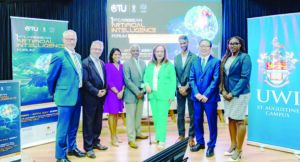
As part of its vision for homegrown AI solutions, the report highlights the need for greater investment in healthcare, agriculture, disaster preparedness, education and public services, identifying these as key sectors where AI could help address some of the Caribbean’s most pressing challenges.
“It’s about survival, in fact. And we have the opportunity to strengthen food security, improve disaster preparedness, modernise public services, enhance healthcare delivery, support education, and expand innovation and entrepreneurship. And I do have confidence that our region and our University of the West Indies possess unique and immeasurable strengths in this regard.”
Meanwhile, Deputy Secretary General of the Caribbean Telecommunications Union (CTU), Nigel Casimir, stressed that Governments cannot advance AI development on their own, emphasising the need for collaboration among universities, non-Governmental organisations, the private sector, civil society, development partners and the Caribbean diaspora.
He said aligning incentives to attract blended financing and private investment would be essential to supporting AI initiatives that serve the public good. Casimir urged participants to use the two-day forum to move beyond discussion by identifying clear action plans, key stakeholders and practical next steps to accelerate AI development across the region.
He also called for commitments that are time-bound, measurable and capable of attracting funding, adding that the Caribbean’s approach to AI should reflect the region’s resilience and ingenuity while remaining ambitious, well-governed and inclusive.
Discover more from Guyana Times
Subscribe to get the latest posts sent to your email.