

The University of Guyana (UG) recently launched the inaugural CoETaL Multidisciplinary Journal of Teaching and Learning during the Centre of Excellence in Teaching and Learning (CoETaL) Symposium at the University’s Turkeyen Campus.
The soft launch marked a significant milestone in the university›s commitment to advancing teaching, learning, and research while encouraging scholarship that extends beyond academia to create meaningful impact in society.
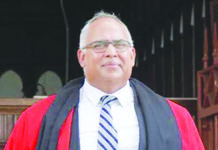
Addressing participants at the launch, Vice Chancellor Professor Paloma Mohamed Martin challenged academics to rethink who research is for and how it reaches the people it is intended to serve.
She urged researchers to move beyond traditional academic spaces and ensure that the knowledge produced within universities informs classrooms, communities, public policy, and everyday life.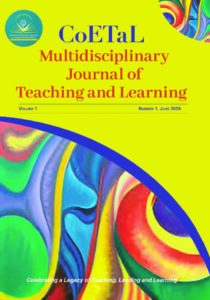
“We are often guilty of living inside our own heads and talking to ourselves. The value is only multiplied and amplified when we give it,” Professor Mohamed Martin said.
For UG, the launch of the journal signals a growing institutional commitment under the university’s Blueprint 2040 vision to strengthen research, encourage interdisciplinary scholarship and create knowledge that contributes directly to national and regional development.
The publication, produced by the UG Press, is CoETaL’s first double-blind, peer-reviewed academic journal and brings together scholarship from educators and researchers across Guyana, the Caribbean, Africa, and North America.
Mohamed-Martin praised the quality of the publication and the commitment of the team behind it, particularly the Director of the Centre of Excellence in Teaching and Learning and Editor of the journal, Dr Charmaine Bissessar, whose efforts helped transform conference presentations into a permanent scholarly record.
Describing the publication as “intellectual food”, the Vice Chancellor said she was impressed not only by the quality of the research but also by the possibilities it creates for wider public engagement with scholarship.
According to the journal’s introduction, the publication was born out of a desire to preserve and expand upon presentations delivered during CoETaL’s Third Biennial Conference, which was held under the theme “Celebrating a Legacy of Leading, Teaching and Learning” in recognition of UG’s 60th Anniversary.
The inaugural volume brings together seven scholarly articles written by emerging, established and international researchers and organised into three thematic sections examining contemporary issues affecting teaching, learning and assessment.
The publication was guided by an advisory board comprising representatives from across the university community, including Dr Charmaine Bissessar, Dr Theodosius Velloza, Noella Joseph, Sekhar Mallampati, Shevon Nedd, Maureen Bynoe, Donette Washington, Dr Kara Lord and Dr Jacqueline Murray.
The journal’s first section, “The Effects of COVID-19: Students’ Perspectives”, revisits one of the most significant disruptions in modern educational history.
In “Is Learning Really Student-Centred? In “The Experience of University Students Studying Online during the COVID-19 Pandemic in Jamaica”, researchers Stephen R Wallder and Dr Nardia J Brown explored whether emergency online learning truly reflected the principles of student-centred education.
Complementing that work, Gerson Hakutumbulwa, Dr Faustina Kashinauua Neshila, and Tomas Shivolo examined the broader impact of COVID-19 on classroom assessment practices through a comprehensive literature review.
Their research highlighted the flexibility and accessibility offered by online assessments while also identifying persistent concerns surrounding technological barriers, unequal access to digital resources and academic integrity.
The second section of the journal, “Language and Literature”, explores innovative approaches to teaching in Caribbean classrooms.
In “Translanguaging Practices for Effective Instruction Across the Curriculum in Anglophone Caribbean Multilingual Classrooms”, Professor Iris Hewitt-Bradshaw and Dr Lynette Tyson-Noel argued for instructional approaches that recognise both Creole languages and Standard English as legitimate linguistic resources within multilingual learning environments. Their work proposes more inclusive and culturally responsive strategies for education across the region.
Guyanese educator Scott Ting-A-Kee contributed “Shakespeare: Social Media, Authentic Assessments, and CAPE Literatures in English”, a study that merged classical literature with modern digital platforms. Using authentic assessments delivered through social media, Ting-A-Kee found that 90 per cent of participating sixth-form students developed a greater appreciation for Shakespeare and recognised the relevance of his works to their own lived experiences.
The journal’s third section, “Student Learning and Teaching”, focuses on strengthening educational outcomes and supporting teacher development. In “Impact of Social-Emotional Learning on Adolescents’ Conflict Resolution Skills”, Paula Smith examined the role of virtual social-emotional learning curricula in helping adolescents develop emotional intelligence and conflict management skills. While students recognised the importance of these competencies, the research found that continued support and reinforcement were necessary for them to apply those lessons consistently in real-life situations.
Meanwhile, Renate Olga Shikwaya and Dr Faustina Kashinauua Neshila explored the challenges student teachers encounter while designing reinforcement assessment tasks during school-based studies. Their findings pointed to difficulties in aligning assessments with learning objectives, addressing diverse learner needs and selecting suitable assessment methods, leading the researchers to recommend stronger mentorship systems and expanded professional development opportunities for future educators.
Completing the collection is “Addressing the Challenges of Academic Integrity in Online Assessments in Higher Education” by Dr Amuthenu Silohenda Hileni, Dr Ndahafa Lusia Nghitotelwa and Tomas Shivolo, which examined practical strategies institutions can adopt to preserve fairness, credibility and reliability within digital learning environments. Their recommendations included secure online proctoring systems, improved assessment design and greater reliance on criteria-based evaluation methods.
According to Dr Bissessar, the publication represents years of planning, collaboration and commitment to advancing scholarship in teaching and learning. Describing the journal as “the culmination of a long journey marked by persistence, dedication and a shared commitment to advancing scholarship”, she thanked contributors, peer reviewers and university partners whose support helped bring the project to fruition.
She also announced that the journal’s second issue has already been completed and submitted to the UG Press for publication later this year, while work has already begun on a third edition.
Discover more from Guyana Times
Subscribe to get the latest posts sent to your email.