

…as township faces critical shortfall
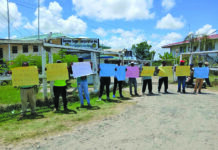
Residents and businesses in Linden, Region 10 (Upper Demerara-Berbice) have been complaining about the prolonged power outages and unstable electricity supply -something which the Linden Electricity Company Inc (LECI) says they are actively working to address. In a statement on Sunday, LECI said they are having discussions with the power supplier to secure additional, immediate generation capacity to meet the growing demand of the township. Region 10 receives its power from bauxite company, Bosai Minerals Group, which generates some 14.1 megawatts (MW). However, Linden’s peak demand is over 15 MW, which LECI explained has caused a “critical generation shortfall”. According to LECI, “The company is working diligently to find a solution that mitigates the inconvenience to residents as quickly as possible.” Only Friday, during a press conference, Public Utilities and Aviation Minister Deodat Indar had disclosed that Region 10 is the only region with a generation shortfall in the country. He said Bosai was being engaged to supply an additional three MW of power to bridge the gap. Meanwhile, the Linden Electricity Company in Sunday’s missive, went onto to cite the unprecedented demand surge coupled with hotter-than-normal El Niño conditions for the power outages. “The extreme heat has led to a substantial uptick in the use of cooling equipment, particularly air conditioning units, placing unprecedented strain on the grid,” it said. LECI noted that while its current maximum available generation capacity stands at 14.5 MW, the surge in peak demand has outpace the available supply. It added too that prior to this weather-driven spike, the Linden community has already been experiencing consistent demand growth due to positive economic development, including the expansion of housing schemes and new business enterprises. “While this growth is welcome news for the community, it has accelerated the timeline for required infrastructure upgrades,” LECI stated. Among those long-term solutions underway is major 15 MW solar Photovoltaic (PV) farm project that is aimed at bolstering Linden’s power supply. The first phase of this solar installation is scheduled for commissioning by the end of 2026, bringing a total of 7 MW of electricity to the township. However, LECI pointed out that the unexpected and sudden demand surge driven by the El Niño weather pattern has arrived ahead of this scheduled deployment, creating a temporary gap between supply and consumption. To prevent a total grid collapse and protect the system’s integrity, LECI said it has been forced to implement scheduled load-shedding (rolling blackouts) during peak demand periods. “These outages are being carefully managed to rotate across the community, ensuring that no single area bears the burden for an extended period,” the Linden Electricity Company stated. Additionally, the Government had engaged Linden sawmillers to change their operations to off peak hours, between 22:00h to 11:00h daily – something which they operators agreed to. Nevertheless, LECI is appealing for patience and understanding, urging residents and businesses to assist in reducing the strain on the system by conserving electricity as much as possible. Consumers are encouraged to: set air conditioning units to higher, energy-efficient temperatures; turn off lights and appliances when not in use; and limit the use of high-energy appliances during peak daylight hours. “The management of LECI understand the frustration that comes with power interruptions, and we sincerely apologise for the inconvenience. We are in a race against time to bridge this demand gap, and we are committed to keeping the community informed as we, with support from Government, work with our supplier to stabilise the grid,” the Linden Electricity Company stated. Guyana is experiencing hotter-than-normal temperatures brought by strengthened El Niño conditions that will last from August through October 2026, with prolonged dry spells and up to 80 hot spell days instead of the usual 30 expected as well. These conditions, coupled with a growing customer base, have driven up electricity demand across Guyana, forcing the Government to implement a series of measures to not only enhance power supply but also conserve electricity and stabilise the aged national grid system. During Friday’s press briefing, it was disclosed that peak demand on the Demerara-Berbice Interconnected System (DBIS) has reached 242.6 MW, compared with 221 MW in 2025, and is projected to reach 266 MW by the end of October. GPL currently has 256 MW of reliable generation capacity. An additional 9.3 MW is expected to become available by today, while generating assets currently undergoing maintenance are expected to return to service by the end of August. Together, these will provide an additional 24 MW of generation, increasing GPL’s reliable generation capacity to 280 MW by the end of August and providing additional reserve as electricity demand continues to grow. In the interim, GPL is encouraging customers to conserve electricity, particularly between 19:00h and 21:00h, which is the peak period for electricity demand.
Discover more from Guyana Times
Subscribe to get the latest posts sent to your email.