

Residents of Supenaam and Good Hope, Essequibo Coast, Region Two (Pomeroon-Supenaam), are set to benefit from approximately 7600 to 7700 metres of new drains under the Government’s Model Village Initiative.
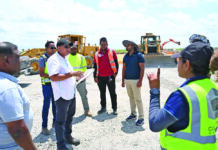
Minister within the Housing Ministry, Vanessa Benn, presented residents with a proposal for the development of the community, based on assessments conducted by architects, engineers, surveyors and other technical personnel over the past several weeks and months.
Using a rendering, Benn walked residents through the proposed works, displaying maps of the areas, including their drains, roads, and boundaries.
She also showed residents conceptual renders of what the upgraded community could look like while outlining the proposed works, which are expected to be implemented in phases.
The presentation also highlighted issues involving road reserves and other reserves within the community, including areas where persons are reportedly occupying those spaces illegally.
“Okay, so for the village of Supenaam, Good Hope, you’re about 227 acres with 5700-plus streets, over 600 households, over 40 businesses and shops, two public government offices, one playground, one cemetery, and the existing concrete drains measure about 83 metres. Based on the assessment by our technical teams done over the last few months, they’ve identified that just 7600, let’s say about 7700 metres of drains need to be constructed.”
Benn further outlined the proposed next steps, noting that residents would have an opportunity to share their views, ideas, suggestions and concerns as part of the development process.
According to Benn, the proposed intervention is intended to address several of the longstanding issues affecting residents across the various communities.
She said the works will focus on improving drainage systems, upgrading roads and road shoulders, and addressing the issue of garbage collection, which she identified as a recurring concern raised by residents during consultations across different Neighbourhood Democratic Council (NDC) areas.
Benn said there is a need for garbage to be removed from communities on a more frequent basis, while also tackling the accumulation of derelict and abandoned vehicles along roadways and road shoulders.
She pointed out that old cars, trucks, and other abandoned vehicles are not only creating unsightly conditions but, in some instances, are also being left in drains, further contributing to problems within the communities.
Apart from these concerns, Benn said the proposed programme will target a wider range of public infrastructure, including roads, bridges, drains, lantern posts, and street lighting.
She stressed that the improvements are also intended to make communities safer and more accessible for residents, particularly pedestrians, through the development and improvement of walkways and road shoulders.
According to Benn, the proposed works form part of a broader effort to improve the overall condition and appearance of communities, while ensuring that public infrastructure is upgraded to better serve residents.
Benn also emphasised the importance of incorporating green spaces as part of the overall community development initiative.
She said the plans would include efforts to preserve and enhance shade trees, introduce ornamental plants and beautify public areas, including roadways and play parks.
“Key and integral as part of this whole process and initiative as well is looking at how we have green spaces, how do we look at the nice shade trees, how do we have those beautiful ornamental plants that truly beautify not only our respective yards, but our community along the roadways, in the play parks, etc. And how do we upgrade those public spaces? And for me as well, and for the President indeed, how do we after this intervention maintain it? How do we maintain it?”
According to Benn, the technical assessment also included an inspection of utility poles, which she referred to as “lantern poles”, to determine their condition. She said the assessment identified poles that were rotten or leaning and those requiring replacement, while also determining areas where additional poles may be needed.
Discover more from Guyana Times
Subscribe to get the latest posts sent to your email.