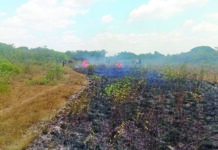


Following the recent discovery of rocks on the Lethem Aerodrome in Region Nine (Upper Takutu-Upper Essequibo), citizens and leaders in hinterland regions across Guyana are being urged to be more responsible when it comes to these critical infrastructures.
This call was made by the Aviation Operators Association of Guyana (AOAG), which underscored the importance of aviation to the lifeline of Guyana’s hinterland communities.
On Saturday, the Guyana Civil Aviation Authority (GCAA) expressed alarm at the incident and confirmed it is working closely with the Guyana Police Force (GPF), which has launched a formal investigation to identify the perpetrator(s).
However, in a subsequent statement late Saturday, the AOAG “…is urgently appealing to all citizens, community leaders, drivers, motorcyclists, farmers, miners and residents across the hinterland to exercise greater care, awareness, and responsibility in and around the nation’s airstrips and runways.”
The Association reminded that aircraft provide critical transportation for residents, medical evacuations, delivery of food and supplies, educational support, tourism, mining operations, and emergency services. It added that for many hinterland communities, the airstrip is the only reliable connection to the rest of the country.
“Unlike major international airports, the majority of Guyana’s hinterland runways are short, narrow, and unpaved. Pilots operating into these locations already work with limited safety margins, particularly during adverse weather conditions. Every foot of usable runway matters, and every hazard introduced onto a runway increases the risk of a serious accident,” the AOAG emphasised.
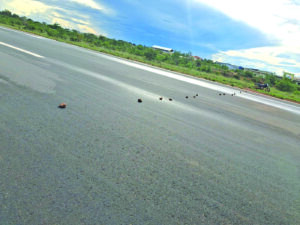
Moreover, the Association disclosed that it continues to receive reports of dangerous and irresponsible activities occurring on and around airstrips across the country. These include: motor vehicles, motorcycles, bicycles, and pedestrians crossing runways in front of approaching or departing aircraft; bottles, debris, and other foreign objects being left on runway surfaces; stones, and other obstacles being deliberately or inadvertently placed on runways; persons using runways as public roads or shortcuts; damage to runway shoulders and surfaces caused by repeated vehicle traffic, resulting in ruts, erosion and narrowing of the usable runway area; encroachment and deterioration that effectively shortens already limited landing distances; and persons, including Law Enforcement Officers, playing games on active runways. According to the AOAG, while these actions may appear harmless to some, they create serious hazards for pilots, passengers, and communities. “A single bottle, stone, rut, or unexpected vehicle crossing can cause a loss of aircraft control, a propeller strike, a blown tire, structural damage, or a catastrophic accident. The consequences of such incidents are often irreversible. They can result in serious injury, loss of life, destruction of aircraft worth hundreds of millions of dollars, disruption of essential services, and long-term impacts on communities that depend on aviation,” the Association warned.
Already, the GCAA has warned about serious consequences for such actions.
Section 83 (1) of the Civil Aviation Act 2018 provides: “Any person who trespasses on any land forming part of an aerodrome or causes any animal to trespass on such land commits an offence and is liable on summary conviction to a fine of one million dollars and to imprisonment for six months.”
Additionally, Section 86 makes it an offence for any person to intentionally interfere or attempt to interfere with air navigation within Guyana. Those found guilty are liable on summary conviction to a fine of $3 million and imprisonment for two to three years, depending on the nature and severity of the offence.
But beyond the legal consequences, the AOAG stressed that irresponsible use of runways drives up operating costs throughout the aviation sector, which, in turn, would increase airfares to hinterland communities.
To this end, the Association called on citizens to take the necessary precautions to avoid as well as protect all aviation infrastructure. “Runway safety is not solely the responsibility of pilots, operators or regulators. It is a shared national responsibility. Every citizen has a role to play in ensuring that aircraft can operate safely and reliably throughout our country. The Association urges all stakeholders, including village councils, community leaders, miners, loggers, businesses, schools and residents, to support a nationwide culture of aviation safety and respect for our airstrips. Together, we can prevent accidents, protect lives, preserve vital infrastructure and ensure that Guyana’s aviation sector continues to safely connect our people and communities,” the missive detailed.
Discover more from Guyana Times
Subscribe to get the latest posts sent to your email.