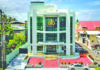


The US$150 million Cheddi Jagan International Airport (CJIA) Expansion project, which was plagued by prolonged delays and cost overruns under the previous A Partnership for National Unity+Alliance for Change (APNU+AFC) Coalition Administration, was recently flagged by a senior United States (US) Government official. Citing the controversial CJIA project as an example, Assistant Secretary of State for Western Hemisphere Affairs in the Department of State, Juan Pablo Segura, criticised Chinese state-owned companies for their track record across the Latin American and Caribbean (LAC) region. In a recent post on X (formerly Twitter), Segura pointed out that the Timehri, East Bank Demerara (EBD), international airport “…was plagued by more than a decade of construction delays and cost overruns.” He also highlighted other troubled major projects undertaken by Chinese companies in the region, including a costly, poorly built, and failing hydroelectric dam in Ecuador, as well as abandoned construction projects and corrupt efforts to manipulate bidding processes in Peru. “Our region is riddled with projects led by Chinese state -owned companies such as the Sinohydro Corporation and China Railway Group Limited where corners were cut, contracts were broken, Governments saddled with debt, and the local environment suffered,” the Assistant Secretary of State for Western Hemisphere Affairs contended. The CJIA Expansion and Modernisation project got underway in 2012 under the then People’s Progressive Party/Civic (PPP/C) Government when Guyana secured a US$138 million loan from the China Exim (Export-Import) Bank with a contribution of some US$12 million from the Guyanese Government. The US$150 million project was awarded to China Harbour Engineering Company (CHEC). While in opposition, the APNU/AFC had cut the funding for the expansion project. When the coalition subsequently came to power in 2015, the project was put on hold. It was later announced that the project would continue but a number of downgrades were made to the design. Since then, widespread concerns and questions have been raised over the project’s costs and delayed construction. The project was initially supposed to have been completed within 32 months, but several extensions, spanning years, were given to the contractor. By the time the coalition left office in 2020, the contractor was paying penalties for the delays. Upon assuming office in August 2020 under a new PPP/C Administration, Public Works Minister Juan Edghill described the project as “very troubled,” citing incomplete runway extensions as well as significant defects in the newly renovated terminal building such as a leaking roof, improper tiling, and problems with the air conditioning and lighting, among other issues. However, the most significant defect identified at the time was regarding the airbridges. The initial design presented by the PPP/C had eight airbridges, but this was reduced by the APNU/AFC to just two. The coalition subsequently added two other airbridges after funds were obtained from the National Assembly, but none of those were operational in 2020.
At the time, Edghill said the project engineer indicated that they had been trying to get the Chinese contractor to comply with the terms and conditions of the contract and deliver what was agreed upon. The PPP/C Government subsequently took a number of steps to fast-track the airport upgrades and enhance the facility, including the addition of two more airbridges. Moreover, China Harbour was engaged and agreed to complete some US$15 million in additional works at no extra cost to the Government, including the construction of a new boarding corridor to accommodate the two additional airbridges as well as a superstructure and curtain wall at the departure building.
CHEC eventually completed all those major works in June 2022 – nearly a decade after the expansion and modernisation project started. That same year, the Chinese company at the centre of the controversial CJIA project entered into a US$25 million quarry deal with a company owned by the US-sanctioned and indicted Opposition Leader Azruddin Mohamed. Nevertheless, in recent years, the PPP/C Administration has undertaken several other upgrades at the country’s main port of entry to enhance operations and passengers’ experiences. In fact, immigration services have been digitised at the airport with the introduction of electronic embarkation and disembarkation forms and automated e-gates.
With the country seeing record increases in arrivals almost monthly, Guyana’s CJIA was just this year ranked number one for overall passenger experience in the LAC region. Meanwhile, the CJIA is currently undergoing a second wave of expansion, which includes works on a new air traffic control tower and a 150,000-square-foot Terminal Two arrivals facility. Work on the new Terminal Two building commenced earlier this year by BHM Construction Inc out of the United Kingdom (UK) in collaboration with Manchester Airport Group Ltd – both of which are teaming up to design and construct the facility within an 18-month timeline.
Some $3.2 billion was allocated in Budget 2026 to advance the construction of the new terminal, which will showcase Guyana’s natural and cultural beauty as well as feature duty-free zones, retail opportunities, rental offices, and lounges. With this new building, the CJIA will be able to dedicate separate buildings for arrivals and departures. Only last week, it was reported that a new state-of-the-art baggage handling system will be operationalised by the end of September, allowing passengers to drop off their checked bags directly at the airline check-in counters, where screening will then be conducted remotely. To support these initiative, new and modern baggage scanners are also being installed to ensure seamless backend operations.
Discover more from Guyana Times
Subscribe to get the latest posts sent to your email.