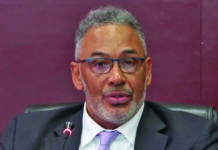


As key stakeholders come together in Georgetown over two days to examine financing models for biodiversity conservation, Guyana’s Lead Climate Negotiator Dr Pradeepa Bholanath underscore the importance of the outcomes at the Global Biodiversity Alliance (GBA) conference to sustaining humanity.

She made these remarks during a special edition of the Starting Point podcast on Thursday ahead of today’s opening of the second GBA conference. Held at the Arthur Chung Conference Centre (ACCC) in Greater Georgetown under the theme ‘Investing in Nature: Accelerating Biodiversity Finance for Sustainable Development’, the two-day conference brings together some of the world’s leading institutions and thought leaders to mobilise financing instruments to protect nature.
In addition to the environment, Dr Bholanath pointed out that biodiversity conservation is critical to humanity’s survival. She argued that these conservation efforts should not be one-track, focusing only on forest financing.
“It really has to be along multiple tracks because when the forest resources are conserved, it is not just the trees that are protected, but it’s life as a whole. You know, plant and animal life benefit as well as bring that value to humanity that we need to sustain our lives.”
“So, it’s looking at it through a broader lens of biodiversity function, watershed management function, climate regulation function, and recognising that what we are protecting and conserving as a natural resource – over 85 per cent of our land mass covered in forest, approximately 18 million hectares of forest across the entire country – that that value and that function really needs to provide and present opportunities for our people. So, at the end of the day, it’s really a people-centred agenda. How do we sustain humanity? [And] how do we sustain livelihoods,” the climate specialist noted.
Dr Bholanath, who is also the leading the GBA organising team, has played a key role in Guyana’s environmental stewardship over the years, starting from the conceptualisation and implementation of the Low Carbon Development Strategy (LCDS) under the Bharrat Jagdeo presidency, to the expansion of the strategy, LCDS 2030, under the President Irfaan Ali’s Administration, giving birth to the Biodiversity Alliance in July 2025.
“We are in a strong position”
According to the Lead Climate Negotiator, the establishment of the GBA was intentional in moving forward the conservation agenda and not just duplicating what has been done before. In fact, with the GBA membership having grown from 17 founding members last year to now more than 140, the two-day conference will optimise what these various partners bring to the table to ensure the conservation of the world’s biodiversity resources.
“We are in a strong position this year because we are now 142 members strong, from academic institutions to the private sector, to the development banks, to civil society, to other Governments as well. And we are now sitting together to shape the way that biodiversity financing could not just be accelerated, but could hit the ground running in terms of delivering financing where it matters most,” she declared.
Dr Bholanath went onto add, “So, we have voices that don’t often come together to take account of what we are to confront and to shape those solutions. And that is what will be happening in Guyana over the course of Friday and Saturday of this week.”
Following this morning’s opening ceremony, day one of GBA conference will see stakeholders taking stock of what currently exists, and charting the path forward in terms of building out what needs to be done, as well as create a state of readiness to be able to access financing instruments and deliver on them.
Meanwhile, the second day of the conference will take a deeper dive into what are these instruments that are available and how to utilise them for actual delivery of biodiversity conservation. This will see discussions on how to take traditional green financing instruments that Guyana has been quite successful in mobilising, such as for renewable energy and sustainable agriculture, and move those to the second frontier – biodiversity financing instruments and the opportunities that exist.
“So, there is more to be done, the work is not yet complete. And that creates a strong sense of excitement as to what lies next,” Dr Bholanath posited.
Discover more from Guyana Times
Subscribe to get the latest posts sent to your email.