

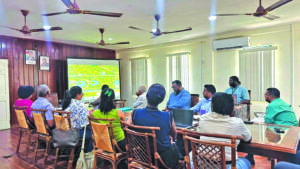
The ongoing redevelopment of the Botanical Gardens and Zoological Park in Georgetown is expected to unlock tremendous opportunities across the tourism value chain, says President of the Tourism and Hospitality Association of Guyana (THAG), Mitra Ramkumar. THAG recently met with the Protected Areas Commission (PAC) management team for a presentation and discussion on the ongoing works. During the engagement, stakeholders were given an overview of the vision, proposed design and visitor experience for the upgraded facility, while also having the opportunity to share feedback from a tourism perspective.
Worldclass destination
In a subsequent interview with this publication, the THAG President highlighted the significant benefits the project is expected to bring to Guyana’s tourism industry. “The redevelopment is designed to turn the Gardens into a single, cohesive, world-class destination rather than a collection of disconnected attractions, and that shift is what stakeholders expect to drive tourism growth. The new Discovery Centre, the immersive aquarium-style “Land of Many Waters” experience, the Guyana Shield “earth story,” the five-tower Sky Trail through the forest canopy, the Story Grove amphitheatre, the new wildlife sanctuary, and features such as “Giants of the Rivers” and Roraima Falls are all intended to give the site the scale and quality of a flagship national attraction,” Ramkumar expressed. He explained that during the discussion with PAC, tourism operators pressed for greater clarity on the timeline of the project, so that stakeholders can plan ahead. They also suggested offering limited and controlled visits to partially-developed areas while construction continues on other sites. The need to make the location friendly to Persons with Disabilities (PWDs) was also discussed. Concerns were also raised about crowd management and addressing congestion, especially at entryways. “Two pieces of earlier stakeholder feedback were noted as having already shaped the design: concerns about congestion at the existing entrance, which led to the new entrance location east of the Seven Ponds and an earlier call for an aquarium, which is being addressed through the aquarium-style experience built into the Discovery Centre,” Ramkumar noted, underscoring the importance of consultation.
Interactive experiences
The THAG President emphasised the need for interactive experiences to be included in the project, noting that it will appeal to visitors. “The immersive, walk-through approach used for the “Land of Many Waters” aquarium experience, where visitors move through rather than simply view an exhibit, could be applied to animal habitats to create closer, more sensory encounters. The multimedia rooms planned for children at the Discovery Centre suggest an interactive, activity-based model that could be built into the zoo experience as well,” he noted.
Other possibilities include keeper and animal-care experiences where appropriate, allowing visitors to learn how animals are cared for and rehabilitated; interactive biodiversity exhibits explaining Guyana’s forests, wetlands, savannahs, rivers and coastal ecosystems; digital interpretation, including QR codes, multilingual information, augmented-reality features and interactive displays; and birdwatching experiences, building on the Gardens’ existing birdlife and the bird-trail work previously supported by THAG. Additionally, he said the project could incorporate behind-the-scenes conservation experiences, particularly around wildlife rescue, rehabilitation and environmental protection; children’s and family programmes, including an expanded Nature School and hands-on conservation activities; night or early-morning experiences, such as guided birding or wildlife-focused programmes, where operationally and environmentally appropriate; and indigenous and cultural interpretation, connecting Guyana’s wildlife and landscapes to the knowledge, traditions and relationship with nature of Indigenous peoples. Ramkumar also suggested the inclusion of a “miniature journey through Guyana”, allowing a visitor who may only spend a few days in Georgetown to get an introduction to the country’s different ecosystems before travelling into the interior. “The important thing is that these experiences should be authentically Guyanese. International visitors can see conventional zoos in many countries; what they cannot see elsewhere is Guyana’s particular biodiversity and conservation story,” he expressed.
Tourism value chain
According to Ramkumar, the redevelopment is expected to create opportunities across several parts of the tourism value chain. “New attractions will need guides able to deliver the interpretive stories built into each zone, pointing to demand for specialised guiding roles once the site reopens. The plan also leaves room for future concession-operated activities, such as boating or a designated fishing area along the waterways. The Story Grove Amphitheatre, intended to host live storytelling, cultural performances and community events, creates an ongoing venue for local artists and cultural groups,” he noted. For tour guides, he said there would be opportunities for specialised nature, birding, wildlife and environmental tours. Guides could also package the Zoo and Gardens as the highlight with other Georgetown attractions. For tour operators, he noted that the upgraded facility could become a reliable component of city tours, cruise excursions, family packages, school tourism, corporate programmes and pre- or post-hinterland-tour experiences. Ramkumar pointed out that the Guyana Tourism Authority (GTA) has already recognised the Gardens’ potential for expanding the catalogue of excursions offered by licensed operators. Meanwhile, for micro, small and medium-sized enterprises (MSMEs), Ramkumar noted that there could be opportunities in areas such as: food and beverage; local handicrafts and souvenirs; transportation; photography; bicycle and recreational rentals; specialised guiding; events and educational programmes; cultural performances; children’s activities; and locally produced interpretation and merchandise. He added that the recent development of bicycle experiences at the Botanical Gardens is a good illustration of how the site can support new tourism businesses and experiences beyond the traditional hotel-and-tour model. “There is also an important employment and skills-development opportunity. THAG’s Tourism Development Fund, for example, specifically supports product development, marketing and training for young people entering tourism,” he further explained.
Partnerships
The THAG President said this attraction should be promoted as part of a collective tourism product rather than a standalone Government facility. “Hotels could include the Zoo and Botanical Gardens in their concierge recommendations, digital visitor guides, welcome packages and optional excursions. Tour operators could develop dedicated zoo-and-gardens tours or incorporate the attraction into Georgetown city tours. Airlines can play a role through destination marketing, inflight content, social media campaigns and travel packages that showcase Georgetown’s attractions alongside Guyana’s hinterland experiences. There is also an opportunity to work with travel agencies and online travel platforms to package the attraction for international visitors before they arrive,” he outlined. According to Ramkumar, because tour operators are already securing bookings two to three years in advance, establishing a formal partnership to bundle the Gardens and Zoo with interior lodge stays and guided tours could position the attraction as an integral part of a broader Guyana itinerary. “This would allow tour operators to promote the Gardens and Zoo to visitors well before their arrival, potentially increasing advance bookings and visitor numbers,” he noted.
He added that there is already a foundation for this kind of public-private collaboration through THAG, PAC and the Guyana Marine Conservation Society which entered into a Memorandum of Understanding (MOU) specifically aimed at sustainable development, conservation, tourism and community development, while THAG’s Tourism Development Fund has previously supported bird-trail signage at the Botanical Gardens. “Ultimately, the opportunity is bigger than renovating a zoo. If properly executed, the project can become a gateway through which visitors experience Guyana’s biodiversity, conservation efforts, landscapes and culture while also creating business opportunities for Guyanese. The redevelopment should therefore be designed not only as infrastructure, but as a marketable tourism experience that connects Government, communities and the private sector,” Ramkumar expressed. Last month, the PAC announced that the Guyana Zoological Park will be temporarily closed to the public as preparatory works begin to support planned improvements at the facility.
Discover more from Guyana Times
Subscribe to get the latest posts sent to your email.