

– introduces Paper 032 to replace SBAs in non-practical subjects
The Caribbean Examinations Council (CXC) has announced sweeping adjustments to its School-Based Assessment (SBA) framework, replacing the traditional SBA with a revised examination format for most non-practical subjects from 2027, as it seeks to safeguard academic integrity amid the growing use of artificial intelligence (AI).
Under the new framework, candidates in non-practical subjects will complete Paper 032, the current alternative assessment conducted under examination conditions, with several key adjustments.
Students will receive their assessment topics approximately one month in advance and will be permitted to bring reference notes into the examination room.
According to CXC, the revised format is intended to preserve the spirit of extended, reflective assessment while restoring confidence in the authenticity and authorship of students’ work.
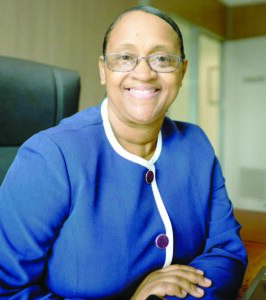
This was announced by the director of operations at the Caribbean Examinations Council, Dr Nicole Manning, on Thursday through an online video publication.
The School-Based Assessment (SBA) is a mandatory set of coursework projects for in-school CSEC and CAPE candidates, accounting for a significant portion of your final grade. It requires you to conduct research, collect data, or complete practical tasks following Caribbean Examinations Council (CXC) guidelines.
Dr Manning explained that for decades, the SBA has been a distinctive feature of CXC’s examinations, designed to allow students to demonstrate their knowledge and skills over time within the context of their schools and communities.
However, she noted that in recent years, the assessment model has faced significant challenges, with generative artificial intelligence being the greatest source of concern.
She explained that AI tools are now widely available and can generate text, essays, research papers, and analyses within seconds. Dr Manning stressed that CXC is not seeking to prevent the responsible use of AI, but rather to harness its capabilities to support students in preparing for SBAs and written assessments.
She emphasised that while AI may assist with preparation, students’ abilities must ultimately be demonstrated under controlled examination conditions without the use of AI.
Dr Manning outlined the changes being implemented under the new framework.
“For subjects that are truly practical in nature, subjects like Agricultural Science, Visual Arts, Music, Physical Education, Technical Drawing, Food and Nutrition, and Health, the SBA will remain. These are subjects where hands-on, project-based assessment still gives us something that an examination room cannot replicate; [thus], we will retain those SBAs and strengthen how they are moderated. However, for non-practical-based subjects, subjects like Mathematics, English, Caribbean History, Social Studies, Principles of Business and others, we will be transitioning away from the traditional SBA.”
She added, “In its place, candidates will be required to sit for Paper 032, the current alternative assessment conducted under examination conditions, but with important and considered adjustments. And what will these adjustments be, you might ask? In preparation for these assessments, candidates will receive their topics approximately one month before the assessment, and they will be permitted to bring reference notes into the examination room with them. For us at CXC, this is a thoughtful, deliberate design that achieves two important things.”
Dr Manning explained that CXC did not make these reform decisions unilaterally, noting that educators across the region were consulted before the changes were introduced.
“We surveyed close to 2,400 educators across the region; of these, 77 per cent indicated support for this reform in CSEC and 76 per cent in CAPE. The Caribbean education system has spoken, and CXC has listened and continues to listen.”
Meanwhile, Dr Manning said more than half of the respondents who supported the reform recommended that it be implemented as early as the 2027 examination session. She explained that for CAPE, the transition to Paper 3-2 for non-practical-based subjects will take effect during the May-June 2027 examination session. For CSEC, candidates will have the option to complete either the SBA or Paper 3-2, based on the choice made by their respective schools, with full implementation expected in 2028.
In closing, Dr Manning reaffirmed CXC’s commitment to preserving the value and integrity of its qualifications, noting that the reforms are intended to ensure that students are recognised for their genuine knowledge and abilities. She added that the council’s decisions remain focused on ensuring that CXC certificates continue to represent the skills and achievements they are meant to reflect.
Discover more from Guyana Times
Subscribe to get the latest posts sent to your email.