


…as World Food Day was celebrated at Mainstay/Whyaka
Scores of people gathered at Mainstay-Whyaka, Region Two (Pomeroon-Supenaam), on Friday as the Agriculture Ministry, in collaboration with the Food and Agriculture Organization (FAO), hosted a World Food Day celebration as part of Agriculture Month activities.

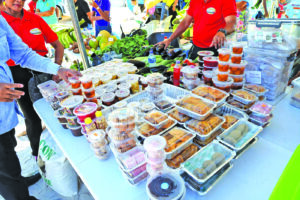
The event was held under the theme “Innovate Today, Nourish Tomorrow”, highlighting the role of innovation in strengthening food production, improving livelihoods and building resilient and sustainable food systems.
Toshao of Mainstay-Whyaka, Marsha Williams, welcomed participants and expressed pride that the Indigenous community was selected to host the national observance.
She said the occasion provided an opportunity to highlight agriculture, food security and sustainable farming, while recognising the men and women who ensure food reaches households.
Williams noted that agriculture was deeply connected to the community’s way of life, describing it as “not just an economic activity” but also part of its heritage, livelihood and identity.
She said Mainstay-Whyaka continued to build on its two main pillars, agriculture and tourism, while highlighting the contribution of farmers who cultivate crops, including the community’s well-known sugarloaf pineapples and cassava.
“Our village stands proudly on two pillars of agriculture and tourism, and we continue to work towards strengthening these sectors for the benefit of our people,” she said.
Acknowledging the challenges farmers face from changing weather patterns, Williams said their continued commitment demonstrated agriculture’s importance to the community’s future.
She called for continued cooperation to ensure sustainable community development, access to nutritious food for families and greater recognition of farmers’ contributions.
Speaking at the event, Agriculture Minister Zulfikar Mustapha said the observance provided an opportunity to reflect on Guyana’s progress in strengthening food security and the need for continued innovation and investment.
He said the 2026 theme was particularly relevant to the transformation underway in the agricultural sector, noting that current decisions and investments would shape opportunities for future generations.
“It challenges us to think beyond traditional approaches to food production. It calls on us to embrace innovation, strengthen partnership, develop human resources, and create systems capable of meeting the needs of future generations,” Mustapha said.
He cautioned that food security could not be taken for granted, given the challenges posed by climate change, global supply chain disruptions, rising production costs, conflicts, and uncertainty in international markets.
These challenges, he said, reinforced the need to strengthen domestic food production, protect agricultural systems and ensure citizens have reliable access to nutritious food.
Mustapha pointed to Government investments in drainage and irrigation, farm-to-market roads, agricultural research, mechanisation, modern production systems, storage, processing and marketing infrastructure. He said production had also expanded in several areas, including rice, fruits and vegetables, and livestock.
“When you look around our country, we are seeing massive transformation taking place. The whole food system is being transformed,” he said.
Innovation & modern agricultural practices
The Minister stressed that innovation should combine modern agricultural practices with the traditional knowledge and experience of farmers, fisherfolk and Indigenous communities.
He identified drones, digital technologies, precision irrigation, improved crop varieties, stronger disease surveillance and reliable agricultural data as tools that could improve production and decision-making. He also emphasised the need to strengthen storage, processing, transportation and marketing to reduce post-harvest losses and increase value across the sector.
Mustapha said the Government was also creating opportunities for young people and women through initiatives such as the Agriculture Innovation and Entrepreneurship Programme, which enables graduates of the University of Guyana and Guyana School of Agriculture to establish agricultural enterprises.
He said the programme had facilitated the establishment of hundreds of shade houses across the country, allowing young agricultural professionals to earn a livelihood through farming.
“Those persons who would have passed through the University of Guyana and the Guyana School of Agriculture are now making their livelihood from agriculture. Those are the transformations that we are talking about,” he said.
While highlighting progress across several agricultural subsectors, Mustapha stressed that increased production must translate into improved incomes and opportunities for farmers and other stakeholders.
He said Government subsidies and other support measures were intended to lower production costs, increase farmers’ disposable income and facilitate the expansion of agricultural industries.
The Minister also highlighted Region Two’s contribution to national food production through rice farming, fishing and other agricultural activities, which support thousands of families and contribute to the country’s food supply and export earnings.
He said the region had considerable potential for further agricultural diversification, with continued Government investment aimed at unlocking that potential.
“There is no better place to discuss the importance of agricultural development than Region Two,” Mustapha said.
He added that agricultural development must extend beyond primary production, with greater emphasis on processing, storage, transportation and marketing.
Mustapha said agro-processing facilities had been established across the country and that the Government wanted more Guyanese agricultural products on supermarket shelves, in hotels and restaurants, and in regional and international markets.
“We want our agro-processors to develop businesses that can compete locally, regionally and internationally,” he said.
He credited farmers, fisherfolk, workers, entrepreneurs and families, alongside Government investment, for the progress made in agriculture and encouraged women and young people to take advantage of emerging opportunities.
“To the farmers who rise before dawn to cultivate their land, I say today on behalf of the Government of Guyana, thank you,” he said.
Increase production, reduce losses.
Mustapha said Guyana must continue to increase production, reduce losses, improve market access and ensure agricultural development benefits communities nationwide.
He reaffirmed the Government’s commitment to investing in infrastructure, technology and services to ensure every Guyanese has access to sufficient, safe, affordable and nutritious food.
“The investment we are making today must become the harvest of tomorrow. The innovations we introduce today must become the opportunities of tomorrow,” he said.
Mustapha said the observance at Lake Mainstay served as a reminder that food security begins within communities and depends on the dedication and resourcefulness of their people.
“Let us continue to innovate today so that we can nourish Guyana’s tomorrow, strengthen the Caribbean, and secure a more prosperous future for generations to come,” he said.
Guyana’s farmers’ knowledge
Meanwhile, FAO Representative in Guyana Dr Gillian Smith said innovation must extend beyond technology and produce practical solutions for farmers, fishers and communities.
She said digital advisory services could provide farmers with weather forecasts, market information and technical guidance, while improved irrigation, soil monitoring and protected cultivation could support more efficient production and help them respond to climate-related risks.
Smith noted that the knowledge held by Guyana’s farmers, Indigenous peoples and local communities, combined with scientific research and appropriate technology, could strengthen resilience and improve food production.
She stressed that innovation must be accessible and affordable, particularly for small-scale producers, women and young people.
“When innovation reaches the people who grow, harvest, process and deliver our food, investment becomes impact,” she said.
Regional Chairman Devin Mohan said farmers remained the backbone of Region Two’s economy, contributing to employment, family livelihoods and national food security.
Discover more from Guyana Times
Subscribe to get the latest posts sent to your email.