

The Caribbean Community (Caricom) has reaffirmed its unwavering support for Guyana’s territorial integrity and the judicial process before the International Court of Justice as a ruling in the border controversy with Venezuela looms.
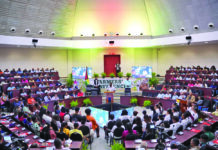
This position was conveyed by Caricom’s Assistant Secretary General Elizabeth Solomon on Thursday during the opening ceremony of the Centre for International and Border Studies Conference in Georgetown.
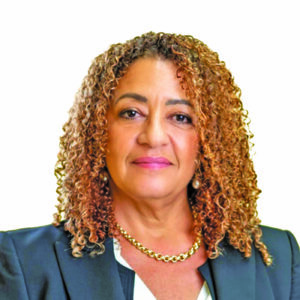
“Sovereignty is not a static achievement but a continuous work of diplomacy, intellectual rigour and national resilience. Within this context, I reiterate the unwavering position of the community regarding the Guyana-Venezuela border controversy. Caricom remains firm in its support for the judicial process before the International Court of Justice and continues to advocate for a peaceful, legal resolution that respects Guyana’s territorial integrity and maintains our region as a zone of peace,” she expressed.
Guyana approached the International Court of Justice (ICJ) in 2018 to obtain a final and binding legal affirmation of the 1899 Arbitral Award, which establishes the land boundary between Guyana and Venezuela. The World Court will likely deliver a ruling by year-end or early 2027, having concluded both written and oral phases of the proceedings.
Guyana has already maintained that it will abide by the judgement, noting that it is waiting with patience, decorum, dignity, and optimism.
Venezuela, on the other hand, insists that it will ignore the ruling and continues to reject the ICJ’s jurisdiction to resolve the matter – even though it participated in the proceedings.
In fact, Venezuela’s interim President Delcy Rodriguez, told the World Court on the final day of oral hearings on Monday that “this Court was created to resolve conflicts, not to encourage them. Only a political and negotiated solution to the territorial dispute can lay a solid and stable foundation for good neighbourliness, cooperation, shared economic development, and the promotion of secure investment in the region.”
However, Guyana has since urged respect for the World Court’s ruling, noting that the international community would not allow Venezuela “to defy the most fundamental rules of international law, which demand a world order based on the rule of law”.
Moreover, Guyana noted that it will continue to address Venezuela “in a spirit of peace, cooperation and friendship and as sovereign equals. We will respect Venezuela’s sovereignty, as we have always done, and insist that Venezuela refrain from trespassing on, or threatening, Guyana’s sovereignty.”
US support
Only recently, United States Under Secretary of State for Economic Affairs Jacob Helberg said Washington continues to monitor the border controversy case before the ICJ while also pursuing private diplomatic engagements on the matter amid continued threats from Venezuela.
He told a news briefing in Guyana on Wednesday that “we’re monitoring that event at the ICJ very, very closely”. We understand and agree that security is a precondition for prosperity, and ultimately a lot of those conversations right now will be private, and we believe that we can make progress through private conversations.”
His comments come on the heels of United States Congresswoman Maria Elvira Salazar, Chair of the House Foreign Affairs Subcommittee on Western Hemisphere Affairs, issuing a statement sharply criticising Venezuela’s interim President Delcy Rodríguez, over continued threats to Guyana’s territorial sovereignty.
In the statement via X on Tuesday evening, Salazar said, “Delcy thinks she can trick President Trump the same way she and Maduro tricked and destroyed Venezuela. But President Trump knows exactly who she is: another member of Ali Baba and the 40 thieves. You don’t deal with him through secret letters while trying to steal territory from a free and sovereign nation like Guyana. Unlike the Maduro regime, Guyana didn’t rob its people. They managed their oil wealth responsibly, created a sovereign wealth fund, and saw GDP per capita quadruple in just five years. Delcy should stop threatening Guyana and start learning from it.”
Salazar’s statement came one day after Rodriguez told the World Court during oral hearings that Venezuela will ignore its ruling on the border case.
On Thursday, US Congress Representative Gregory Meeks of New York, Ranking Member of the House Foreign Affairs Committee and the Chamber’s Senior Democrat on Foreign Policy, issued a direct call to the Trump Administration this week, urging it to stand firmly behind Guyana.
“Any attempt by Venezuela’s interim Government – whose party lost the 2024 elections – to unilaterally claim authority over Essequibo is unacceptable. The Trump Administration should make it clear that the United States stands with our democratic partner, Guyana,” he posted on X.
Discover more from Guyana Times
Subscribe to get the latest posts sent to your email.