

– hopes for greater support, safe spaces for BRCA carriers
By Tamika Joseph
Coping with a breast cancer diagnosis and the ensuing treatment is well known for being a traumatic experience that tests survivors to their limits, both physically and mentally. Although the prevailing message is that “early detection saves lives”, outside the mainstream narrative are those who go even further than early detection: those who choose preventative, risk-reducing elective mastectomy. Despite receiving little attention, this group can face physical and psychological challenges just as harrowing as a cancer diagnosis.
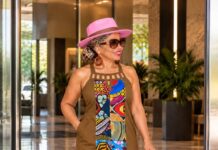
This was the case for young mother Bhano Persaud, who underwent a double mastectomy after learning of her family’s hereditary BRCA1 mutation.
With her situation being about prevention and not actual treatment, Bhano at times struggles with seeing her experience as being as empowering as that of a breast cancer survivor. But for her, the experience is as equally agonising as dealing with cancer treatment.
“I even felt at times like I was on the brink of death. Some people may not look at it as I didn’t have cancer so I can’t compare myself… But I had my own journey,” she noted. 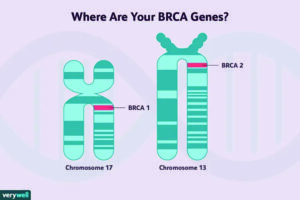
Cradling her youngest daughter while in her living room, Bhano gazed into the distance as she recalled an experience that feels like another lifetime.
“We need counselling and guidance when dealing with something like this,” she mused. “As much as I thought I was prepared for it, it would’ve been good to have a support group. At times I felt lonely. You even need space to mourn as well. I think I mourned losing my breast for over a year. As much as I feel relieved that I reduced my risk of cancer, I initially felt sad about my body and how it looked.”
She often questions where she fits within the broader breast cancer community; she hopes for greater support and safe spaces in Guyana where BRCA carriers can openly share their experiences.
“Sometimes I feel that I’m too young for all these things to be happening to me. I couldn’t even look at myself in the mirror. I used to cry so much,” she reflected.
She hopes to one day see more sensitisation on this preventative measure for breast cancer to propel more community support systems.
“Not a lot of people know that this is an option. I don’t even know of anyone else in Guyana that ever did it. But when I went on TikTok, I saw several people overseas who do it, and it felt good knowing that I’m not the only one. We need that in Guyana,” she urged.
BRCA mutation discovery
“People don’t understand what BRCA means, so when I talk about having the BRCA mutation, for people it’s like I’m telling them I have cancer. They run with the narrative that I have cancer. But I don’t like persons saying ‘she has cancer’; I don’t want people to speak over my life like that.”
The BRCA1 and BRCA2 are genes that everyone typically has, which protect the body against cancer by repairing damaged DNA. BRCA mutations compromise this function, increasing the risk of persons with the mutation developing certain cancers. For women with a confirmed BRCA mutation, particularly those with a strong family history of breast cancer, elective mastectomy is a preventative measure that significantly reduces the risk of someday getting cancer.
The elective mastectomy involves surgically removing breast tissue before any cancer diagnosis. While it cannot eliminate the possibility of cancer entirely, it offers a measure of protection to women living with the uncertainty of an inherited genetic predisposition.
“For me it was a brand-new lease on life for me. The person I was before and the person I am now… it was an eye-opener for me. I don’t know how to say it changed my life, but I live more for the moment now,” Bhano explained.
Though in retrospect she recollects her decision with confidence, the initial discovery of her BRCA mutation was far from easy. For Bhano, learning that she carried the BRCA1 gene meant confronting a future shadowed by hereditary cancer risk.
“I opened the results and I just saw BRCA1 mutation in big, blue, bold letters,” she recalled.
“My world started spiralling out of control. The first thing that came to my mind was ‘I’m gonna die. I’m gonna get cancer and I’m gonna die, and I have four daughters.’ My youngest daughter was only about six months at the time.”
With several family members who have been diagnosed with cancer over the years, Bhano is no stranger to the effects that a cancer diagnosis has on a family. Her mom was first diagnosed when she was just 10 years old.
“My mother’s whole experience came back to me. I didn’t want that for my children. I remember that experience of my mom not being at home and different family members having to take care of me and my siblings. I remember how she wasn’t able to do anything. I was thinking who’s gonna look after my kids? Everybody has so much on their plate right now. So I was panicking.”
Aside from her mother, Bhano’s life has always been interlaced over the years with stories of other family members being diagnosed with cancer – siblings, aunts, cousins, and even in-laws. Including one case that devastatingly ended with suicide.
“While growing up I heard stories about an aunt. I never met her. Her cancer had spread all over her body… and the pain was too much, and then she just committed suicide. She was 29,” she shared.
Surgery and challenges
Notwithstanding the family history, it wasn’t until she got older, as the mother of four little girls, that the severity of what she had inherited hit home.
“When I hit 32 a few years ago, I suddenly felt this awareness that ‘I’m at the age where my mother got cancer,’ so I decided to go to the hospital to do a check-up and get tested.”
It was a few years ago that another one of her family members uncovered the BRCA link in the family gene pool.
“It was something that was passing down. But we never really knew about it. I had no idea it had a term like BRCA,” she explained.
Witnessing breast cancer affect other family members, coupled with her determination to be there for her four daughters for as long as possible, strengthened Bhano’s resolve to go ahead with a double mastectomy. But a mentally overwhelming situation would only be further compounded by the inadequate, and at times absent, care she received from some medical practitioners.
Right off the bat her first interactions with seeking help in the health care system went awry. A private healthcare facility refused her request for a mammogram and would only offer an ultrasound and doctor’s consultation.
“I wanted to do the mammogram, but they told me they are not doing mammograms for persons below 40. But when I was explaining my family history to the doctor, he said he doesn’t see the need for me to do an ultrasound. I should have done a mammogram,” she said.
She would later start seeking assistance in the public health system – another testing experience.
“When I say these things are stressful, it was extremely stressful at a public hospital. You have to get different dates for every different thing. For the mammogram, you get one date and a time. For the ultrasound, you get another different date and time. To go over to see the gynaecologist, it’s another date and time. And you’re just there lining up from morning till into the afternoon to see the doctor,” she recollected. “I was forced now to go seek private again.”
Facing an indefinite wait for surgery at the public facility, Bhano turned to a private doctor, who arranged for a general surgeon to perform the procedure.
However, despite seeking private care, according to Bhano, the care also left much to be desired.
“The morning I turned up for the surgery the doctor did not show up on time,” she recalled. “After the surgery I spent a night at the hospital, with the doctor scheduled to be there at 10:00h the next morning to discharge me. At 10:00h he never showed up. After 11:00h he still hadn’t come.”
She ran into more issues with the payment for her surgery. While she paid a fixed up-front price for the surgery, afterwards, she said, she was quoted a higher price.
The situation with her aftercare only got continuously worse. The first sign that things were going bad was when she had an allergic reaction to the tape used on her after her surgery.
“There was no bandage under the tape. My skin looked as if I had gotten a burn.”
Mentally, the adjustment was just as difficult as she dealt with the reality of coming to terms with what her body now looked like.
“The first time I looked at it, I couldn’t stare at it too long. I looked down and it was just horrible. I saw just staples right through.”
According to Bhano, the doctor removed the surgical draining tubes from her breast just three days after her surgery, which was later determined to be too early. It created a new situation of fluid build-up under her skin. She contacted the surgeon regarding the situation and was informed that, as he was overseas on leave, he would refer the matter to a colleague for further assessment. However, no subsequent communication or follow-up was received from him.
“The area just kept swelling up until one day the liquid just started gushing out of the breast area. I just started to panic,” she noted. “I eventually spoke to the doctor who I had originally consulted with, and she would be the one to finally drain the fluid from my chest area.”
However, this situation meant that a surgery that was initially expected to be healing in one month, took over three months to be rectified.
Still panicked about the situation in the following weeks, Bhano would later consult yet another doctor at a different private institution.
“I just broke down in this doctor’s office. I still even had my staples on my chest. The other doctors never told me when to come back to take out the staples. He saw the staples and said he could see that the entire area was still raw, and it’s not healing, and this was weeks later,” she noted. She would also be placed on medication to deal with her anxiety and was advised to do annual check-ups to ensure that should anything develop, it could be dealt with early.
Despite the ordeal, Bhano believes the decision was worthwhile, giving her greater peace of mind about the future and her ability to be there for her daughters.
“I even feel good knowing I can play a part in my girls’ life to ensure that they go and get tested early. I waited until I was 32 to get tested and do my mastectomy, but I see a lot of women doing it very young. Some women 20, 22 going right away, removing it early and doing reconstruction.”
“It was a hard decision, but I don’t regret choosing to do the surgery. I realise I’m young and I still have my whole life to live. Now I’m even back to being confident about my body,” she revealed.
Discover more from Guyana Times
Subscribe to get the latest posts sent to your email.