

…turned 9-year survival journey into mission of hope
The disparity shaped between fear and survival is one that needs to be leapt over, not lived in. For Desiree Edghill, that leaping moment came with a diagnosis of a rare cancer and a decision that survival would not be the end of her story but the beginning of a new one dedicated to helping others through theirs. Desiree Edghill’s journey with cancer began with a sign she could not ignore.
In 2017, at the age of 61, she experienced two weeks of abnormal bleeding, an alarming symptom for a woman who had already reached menopause. What followed was a diagnosis of leiomyosarcoma, a rare and aggressive form of uterine cancer. For Edghill, the news was the beginning of a long and uncertain medical journey that would take her across borders, through surgery and chemotherapy and ultimately into survival.
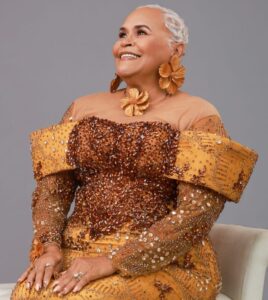
She recalled the moment of realisation, when something inside her told her that what she was experiencing was serious and needed immediate attention. “I saw the sign, and I just knew something was wrong because I had about two weeks of bleeding, and as a menopausal woman, that is not normal. When I went to the hospital, I told the doctor straight away that something was wrong because I could feel it in my body. After the tests, I was told I had leiomyosarcoma, and I remember just asking, ‘What happens now?’ because your mind just goes blank in that moment and you are trying to understand what your next step in life will be.”
Uterine cancer
Uterine cancer primarily refers to cancer of the endometrium (the inner lining of the uterus). The most common symptom is abnormal vaginal bleeding, such as post-menopausal bleeding or bleeding between periods. The standard treatment is surgery (a hysterectomy), often combined with radiation or chemotherapy. From that point, her life shifted into a series of urgent medical decisions, and surgery was quickly recommended, with medical professionals outlining a radical hysterectomy as the immediate course of action.
However, navigating the healthcare system proved to be just as overwhelming as the diagnosis itself. She described the emotional weight of going home after receiving the diagnosis, unsure of what the future would hold, and turning to the only instinct she knew, helping others while needing help herself.
“I went home and I cried because I really did not know what to do. I have been a counsellor for years, especially in HIV work, so I am always the one helping people. But when it became me, I had to stop and ask myself, if someone came to me and said they were diagnosed with cancer, what would I tell them? That is when I got up; I reached out for help, and I started calling people because I knew I could not go through this alone.” As Edghill sought guidance from doctors locally and abroad, she was confronted with conflicting opinions and urgent advice about where and how she should be treated. Specialists from the United States (US) and Trinidad raised concerns about local capacity at the time, particularly in relation to gynaecological oncology expertise.
She said the process taught her not only about medicine, but also about urgency, timing and the importance of specialised care in cancer treatment. Even through the midst of these battles, one hurdle came her way strongly – chemotherapy. She said it stripped her physically and emotionally but also reshaped her mindset. It became a period of surrender, resilience and acceptance, supported by family, friends and fellow survivors who stood beside her through every stage.
Chemotherapy
In fact, she underwent four rounds of chemotherapy.
“Chemotherapy was the hardest part because it changes everything about you. I could not walk properly, I could not breathe sometimes, I lost my hair, and I remember people saying that when you lose your hair, it means you are really sick, and that broke me.
But I never gave up. I told myself that if I am still here, then I am here to fight. I had people who supported me through every session, friends who stayed with me, and someone who was also a survivor who would encourage me and say, ‘You are looking at stage one here; I am stage four, and we are going to get through this.’ That kind of support carried me through when I felt like I could not carry myself.”
Cancer ambassador
Today, nearly a decade later, Edghill describes herself as a nine-year cancer survivor. More than that, she has transitioned into a role she says was shaped by her own experience, supporting others who are now walking the same difficult path she once walked. She now works as a cancer ambassador with the Giving Hope Foundation, accompanying patients to appointments, chemotherapy sessions and scans, while offering both emotional and practical support. Her work, she says, is rooted in the belief that no one should face cancer alone.
“When I came back to Guyana, I was cancer-free, and now I am a survivor of almost nine years. I am currently a cancer ambassador with the Giving Hope Foundation, and I walk with patients through their journey. I go with them to their first doctor’s visit, their first chemotherapy session, and their scans because when you are going through something like that, you are not thinking clearly. Sometimes you are scared; sometimes you are overwhelmed, so having someone there makes a difference. I have walked with many patients, and even though I have lost some, I know that I am helping others to survive, and that gives my life meaning.”
In fact, Edghill also lost her beloved daughter to cancer, but this tragedy has only strengthened her resolve. Today, at 70 years old, Edghill continues to strongly advocate for greater awareness, earlier diagnosis, and stronger cancer care systems in Guyana and the wider Caribbean – determined that her journey will not be hers alone but one that helps ensure other lives are saved.
Discover more from Guyana Times
Subscribe to get the latest posts sent to your email.