

…as Govt briefed by CDEMA
Preliminary recommendations by the Detailed Damage Sectoral Assessment team on the recent countrywide flooding are for income support for farmers, relocation of farms in some areas, procurement of planting materials and the provision of food supplies to affected persons.
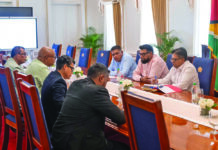
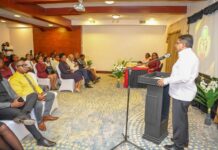
This was among the major recommendations made to the Government on Wednesday, when Prime Minister, Brigadier (Ret’d) Mark Phillips, and a high-level team of Government Ministers were updated on the preliminary findings of the assessment team.
Among the key findings in the social sector were the displacement of individuals and families across communities and the fact that many children were unable to attend school as a result of the disaster.
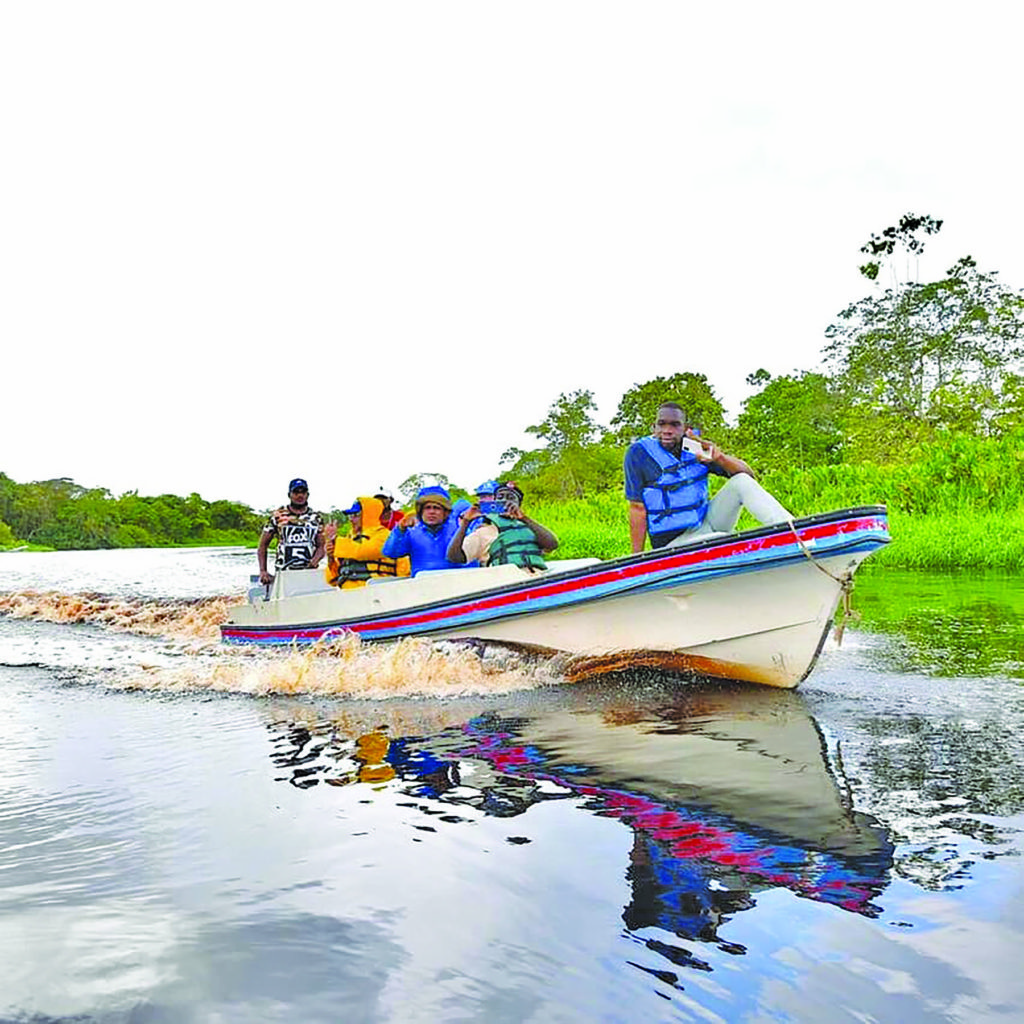
A statement from the Prime Minister’s office following the meeting stated that the assessment, which is being conducted by the Caribbean Disaster Emergency Management Agency (CDEMA) in collaboration with Guyana’s Civil Defence Commission (CDC), revealed that the floods were severe.
The preliminary findings were made by CDEMA Executive Director, Elizabeth Riley. The team found that all impacted areas experienced damages to crops and livestock and disruptions of livelihoods, adding that the damages have created a decrease in supply, which has substantially increased market prices.
Meanwhile, Prime Minister Phillips said that the overall report, which will be submitted to the Government, will identify the impact of the floods on various sectors and will be a guide in the Government’s recovery process.
“What it will help us to do is to start the recovery process in an informed manner, the contents in the report will aid us in determining the priority projects. What will happen now is that they will put together a detailed report that will be submitted to the Government and from there we will determine our next steps,” the Prime Minister added.
The CDEMA Executive Director, who arrived in Guyana on Wednesday, said that the team conducted a comprehensive analysis and examined a range of issues.
“We looked at water and sanitation issues …we also discussed impacts to housing and the potential steps that could be taken to address this, as well as infrastructure and sheltering arrangements for persons who have been displaced,” Riley said.
She praised the CDC for its efficiency in coordinating an effective response to the disaster.
“We looked at the extent of which the coordination was being effected within the sectors and I think that one of the very good findings is that the Civil Defence Commission, under the leadership of Colonel Craig, has done an excellent job in the overall coordination thus far.”
To date, the CDC has coordinated and distributed over 34, 000 food hampers and over 26,000 sanitation hampers across the country.
According to information from the CDC, since May 18 there have been reports of persons affected by flooding. Those reports have now totalled over 51,000 households in more than 300 communities across all 10 administrative regions of the country.

Also present during Wednesday’s meeting, were Finance Minister, Dr Ashni Singh; Public Works Minister Juan Edghill; Natural Resources Minister, Vickram Bharrat; Agriculture Minister, Zulfikar Mustapha; Health Minister, Dr Frank Anthony and CDC Director General, Lieutenant Colonel Kester Craig.
Floodwaters receding
Meanwhile, the CDC on Wednesday evening said that due to moderately improved weather conditions and drainage of lands, floodwaters have begun to recede across the country, with several regions reporting significant decline in the height of floodwaters.
However according to the CDC, given the extent of the flooding there still remains some amount of water in some communities.
It noted that there has also been a slight increase in shelter operations, with a new shelter being established at the Rockstone Guest House, Region 10 (Upper Demerara-Berbice) which is housing seven persons as at June 28. Overall, the number of persons occupying shelters has increased to a total of 239, and they are being housed in a total of 10 shelters activated in Regions Two (Pomeroon-Supenaam), Five (Mahaica-Berbice), Nine (Upper Takutu-Upper Essequibo) and Region 10 (Upper Demerara-Berbice).
The number includes 30 persons at the Barama Building in Karawab, Region Two; seven persons at the Mortice Primary HM Building in Region Five; four at a shelter in Tabatinga in Region Nine; and 198 persons across seven shelters in Region 10.
There is a total of 133 females and 106 males in those shelters, the CDC said.
It also noted that floodwaters in the coastal regions have mostly receded, while there have also been significant improvements in Region Nine where waters have receded from several communities including the township of Lethem while in the other interior regions there has been significant drops in the water level.
Discover more from Guyana Times
Subscribe to get the latest posts sent to your email.