

…as stakeholders gathered in Georgetown for high-level symposium
As regional stakeholders gathered in Guyana to discuss aviation safety, the importance of air connectivity to the Caribbean was heavily underscored, along with the need to collectively build out the necessary systems to ensure a safe and resilient aviation industry across the region.
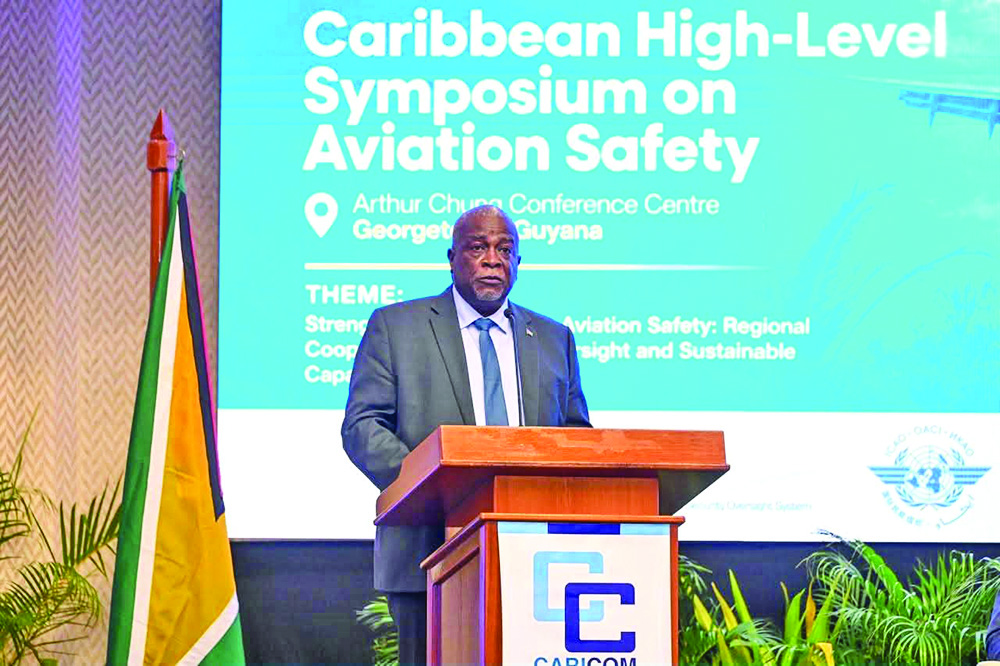
Hosted by CARICOM in collaboration with the International Civil Aviation Organization (ICAO), the Caribbean High-Level Symposium on Aviation Safety was held on Thursday in Georgetown under the theme “Strengthening Caribbean Aviation Safety through Regional Cooperation, Resilient Oversight and Sustainable Capacity Development”.
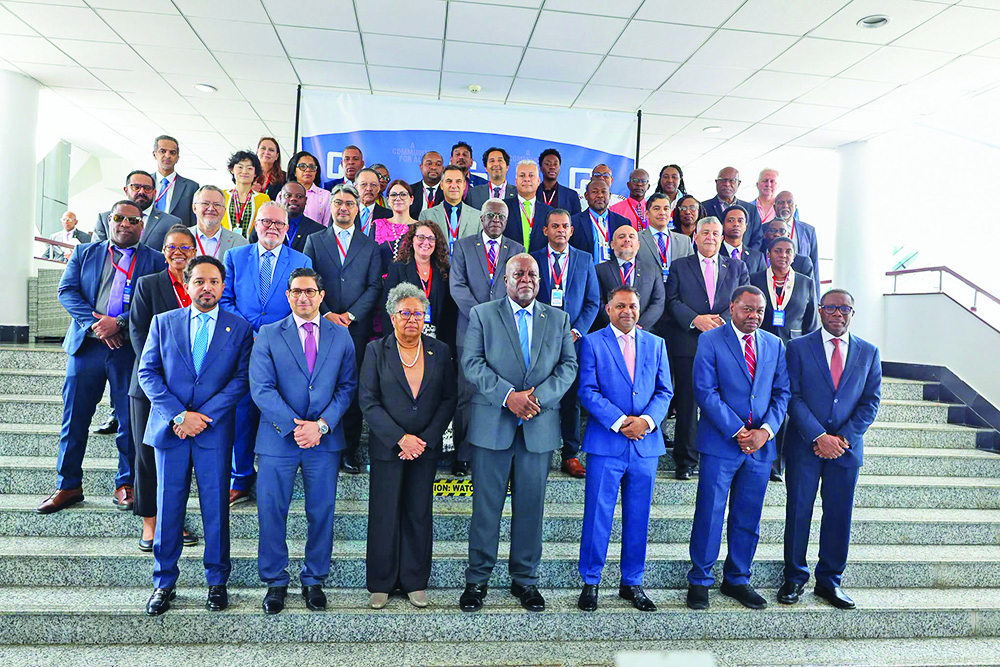
The one-day aviation safety forum brought together regional aviation leaders, regulators, and international partners to advance practical action on aviation safety, oversight, and cooperation across the Caribbean.
Delivering remarks at the opening ceremony, Prime Minister (PM) Brigadier (Ret’d) Mark Phillips, noted that this forum comes at a time when aircraft routes and operating demands continue to change while the specialised skills required for effective oversight remain difficult for individual states to individually maintain.
PM Phillips said such engagements among stakeholders are key to collectively strengthening aviation oversight in the region.
“This symposium, therefore, gives us an opportunity to examine what progress has been made and to agree on the practical support our aviation authorities need now,” the PM stated, adding that this “…calls for strong decisions about infrastructure, efficient resource use, and protecting the environments in which airports operate. Safety and sustainability both require us to consider the consequences of today’s decisions.”
He went on to underscore the importance of safe and reliable air transport to the Caribbean, where aviation connects families, facilitates access to healthcare, and supports tourism and economic activity. In fact, he pointed out that in Guyana domestic air travel provides critical access to hinterland communities that takes long period to get to, or are entirely inaccessible, by road or river.
Phillips further cites figures that show growing international visits to the Caribbean and increased intra-regional travel, saying that these demonstrate the heightened demands being placed upon aviation institutions and their personnel.
The Caribbean must work together
Against this backdrop, he noted that the Caribbean must work together, urging stakeholders at the symposium to address practical challenges, including shortages in specialist skills, the recruitment and retention of experienced inspectors, information-sharing among jurisdictions, and the resources required to maintain dependable regional oversight as traffic continues to grow.
“Shared specialist expertise can help an authority meet a technical need that it cannot readily staff alone, and joint training can make better use of scarce resources. Greater consistency in standards can also help operators understand their obligations across the region. While each state retains responsibility for safety within its jurisdiction, regional cooperation gives it more means to discharge that responsibility.”
“We welcome expertise that helps develop our inspectors, improve our systems and test our practices against international standards. A successful partnership should leave local and regional authorities better equipped to perform their duties year after year… A passenger may never see an inspection record or know the name of the controller guiding a flight. That passenger has every right to expect that the work has been done. Our responsibility is to make that confidence deserved,” the Guyanese Prime Minister asserted.
Stronger regional cooperation
Meanwhile, Public Utilities and Aviation Minister Deodat Indar also sounded calls for stronger regional cooperation, harmonised regulations, shared expertise and sustainable capacity across the Caribbean’s aviation sector.
To achieve this, Indar contended that the region must move from discussion to implementation.
“The decision before us is whether regional cooperation will remain an aspiration or become the operating principle of Caribbean aviation. Let us choose action. Let us build a system in every state that has the support and the capability to meet the responsibilities before us,” the aviation minister noted.
Similarly, CARICOM Secretary General (SG) Dr Carla Barnett pointed to the importance of air travel to regional integration and connectivity, as she too pushed for strengthened aviation safety.
According to the SG, “Connectivity is not a convenience; it is a necessity. Air transport sustains tourism, trade, investment, emergency response, family connections, and the wider economic and social integration of our community… We gather here, therefore, not simply to exchange perspectives, but to fulfil a shared responsibility. We must do all we can to ensure that Caribbean aviation remains safe, resilient and efficient, and that our systems always meet all international standards.”
Moreover, key partners, including the ICAO and the Caribbean Development Bank (CDB), have pledged to continue supporting regional efforts to strengthen aviation safety and resilience.
During Thursday’s symposium, stakeholders focused on the role of the Caribbean Aviation Safety and Security Oversight System (CASSOS) – the region’s safety oversight body. In fact, a draft CASSOS Roadmap and Action Matrix to 2035 was presented to regional leaders to guide future cooperation.
The one-day engagement concluded with regional stakeholders affirming commitment to safer regional skies through the adaptation of the Georgetown Declaration on Aviation Safety.
Discover more from Guyana Times
Subscribe to get the latest posts sent to your email.