

…says Global South must be ready before next global pandemic
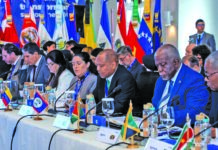
President Dr Irfaan Ali on Tuesday highlighted the urgent need for sustained global action and investment in pandemic prevention, preparedness and response so as to avoid the widespread catastrophe that COVID-19 meted out across the world. He made these remarks at a forum held on the sidelines of the 81st United Nations General Assembly (UNGA) being held in New York. As part of the week-long UNGA activities, a High-Level Meeting on Pandemic Prevention, Preparedness and Response (PPPR) will be held on Friday. But ahead of that event, Guyana on Tuesday co-chaired a high-level discussion on financing the PPPR to build global health security. The discussions brought together Heads of State, Ministers, international organisations, financing institutions and development partners from Africa and the Americas.
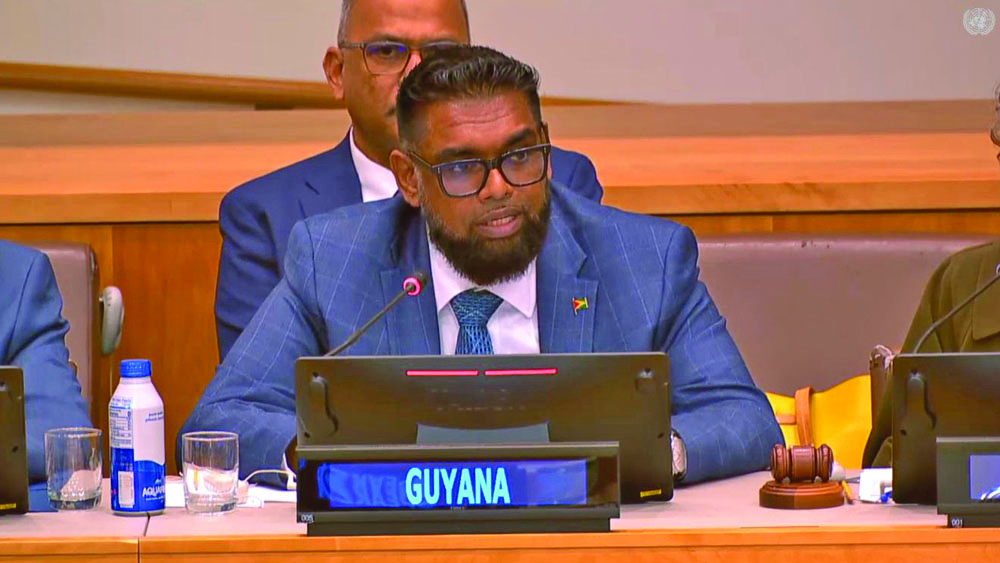
Addressing these stakeholders, President Ali described the COVID-19 pandemic as one of the most tragic global health crises in modern human history. He said in order to prevent a crisis of such scale and gravity, that there needs to be consistent and sustained action. “We cannot prevent every outbreak, but we can prevent an outbreak from becoming another catastrophe. That is the responsibility we carry from the pandemic and a promise we owe to those who will come after us,” he declared. The Guyanese Leader noted that the COVID pandemic exposed crucial fault lines within and between countries – something that must be repaired before the next emergency finds them. This, he emphasised, is especially true for development countries. In fact, the President outlined five key lessons to which developing nations must pay critical attention when it comes to preparing for and responding to global health crises. First on that list is building local capacity. “Preparedness must begin before the emergency,” Ali contended. “COVID-19 taught us that the real test comes when ordinary capacity is overwhelmed.” To this end, he underscored the need to build strength throughout local health systems, starting from community care and disease surveillance to laboratories, hospitals and trained personnel. This way, he explained, a surge in demand would not result in a collapse in capacity.
Readiness in the Global South
Moreover, the Guyanese Leader also stressed the importance of both the Americas and African region establishing alternatives to source critically-needed medical supplies. “The pandemic showed what happens when countries depend too heavily on distant sources for essential medicines, vaccines, diagnostics and protective equipment. Every country must ask, what happens if the supply stops? The answer must include diversified suppliers, strategic reserves and greater domestic and regional capacity,” he stated. Against this backdrop, President Ali pointed out that the Global South must become a producer of solutions and not just merely a consumer. He said while these regions possess scientists, engineers, doctors, researchers and institutions of considerable talent, those assets remain too fragmented. As such, President Ali’s call for the Global South to connect their scientific and technical capacities across borders. “Share research, pool investment, and build regional capabilities to develop and manufacture vaccines, medicines, diagnostics and other life-saving technologies. Science should know north or south, but access to its fruits must never depend on geography. We must build a world in which the global south has a scientific capacity, not simply to receive life-saving innovation, but to help create it,” he asserted.
Financing
The Head of State also spoke about the financial impact of pandemics on economies. He said when such crises arise, Governments need resources immediately to respond – something that may not always be available. As such, he encouraged nations to ensure they have reserves, sustainable debt and some public finances that will allow them to act freely. Similarly, he pointed to the devastating effect a health crisis can have on livelihoods, especially those who depend on informal employment. “A resilient society is one that can absorb a shock without allowing it most vulnerable to fall through the floor. These lessons point to a larger truth. Pandemic preparedness cannot be the responsibility of Health Ministries alone. It belongs to finance, science, education, agriculture, trade, technology and foreign policy. It belongs to Governments, regions and international community. “The next global crisis may come from a virus we know or one we have never encountered. What matters is whether we meet it with the vulnerabilities of yesterday or the preparedness of tomorrow… Guyana anticipates that the outcome of this discourse we are having today will not be merely for academic purposes, but will be translated into a programme of action,” President Ali noted. Tuesday high-level discussions were co-chaired by Guyana and Burundi, in collaboration with the Africa Centres for Disease Control and Prevention (Africa CDC), the Pan American Health Organisation (PAHO) and with support from the United Nations (UN) Foundation. During a subsequent panel discussion, Health Minister Dr Frank Anthony highlighted some interventions Guyana has made in building that other countries can learn from. He revealed following the COVID-19 pandemic, Guyana commissioned an independent study which highlighted the gaps within the local health systems.
With those findings, the Government subsequently launched the Guyana One Health Project aimed at strengthening national capacity to prevent, detect and respond to public health threats by upgrading laboratories, expanding surveillance systems, improving emergency preparedness and reinforcing coordination across human, animal and environmental health sectors. To finance this initiative, Guyana secured a US$15 million grant from the Pandemic Fund as well as a US$7 million loan through the World Bank.
Discover more from Guyana Times
Subscribe to get the latest posts sent to your email.