

Tamùkke Feminists and the Wapichan Women’s Movement on Saturday launched a ‘Sexual and Reproductive Health and Justice’ (SRHJ) training manual, aimed at strengthening grassroots education on bodily autonomy, sexual justice and reproductive rights.
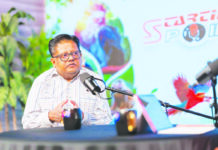
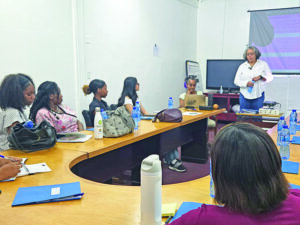
The manual, designed by Tamùkke Feminists and the Wapichan Women’s Movement, was launched in Georgetown. Speaking at the launch and a training-of-trainers session, Tamùkke Feminists’ Board Director Renata Chuck-A-Sang described the document as “ground-breaking”.
Chuck-A-Sang pointed out that the manual not only presents sexual and reproductive health information from a feminist perspective but also adopts a grassroots approach.

“It really grounds itself in revealing the cultural values of a community before shaping how the material is presented,” she said.
She explained that the manual seeks to engage with the cultural values of communities while promoting bodily autonomy and the right to choose. She added that it is also informed by Indigenous cultures and traditional ways of doing things.
“This manual is for persons who will go out into communities to conduct SRHJ training. It contains all of the tools and guidance for effective training sessions,” Chuck-A-Sang explained.
She said that those who complete the training would be better informed and equipped to uphold their individual rights and guide their communities in making decisions about family planning, maintaining healthy relationships and adopting better health-seeking behaviours.
Tamùkke Feminists’ Managing Director Akola Thompson said the training manual fills a gap in access to sexual and reproductive health education and services in Guyana.
“Access to reproductive healthcare and education generally needs major work across Guyana,” Thompson said, and noted that, for Indigenous communities, these gaps are further compounded by their remote locations and the prevalence of violence, highlighting the need for stronger response and support mechanisms.
As a collective focused on SRHJ, Thompson said Tamùkke Feminists recognised the need to develop a comprehensive toolkit grounded in local realities.
She added that the organisation wanted to ensure the manual was sensitive to the cultural contexts and needs of Indigenous peoples so that it could be effectively used in their communities.
Thompson also thanked the partners who supported the development of the manual, which is now publicly available.
“It has been a productive process, and we’re happy to now offer it to you, the public, to read, sit with, and do your own training sessions,” she said.
Founded in 2017, Tamùkke Feminists has worked to advance SRHJ in Guyana, with a focus on community-led education, access and cultural relevance. The organisation recognises that SRHJ includes the right to make informed choices about one’s body, relationships, family and future, and is inseparable from social, economic and environmental justice.
Its programmes address consent and bodily autonomy, menstrual and sexual health education, contraceptive access and information, parenting and intergenerational communication, freedom from gender-based violence, and safe, stigma-free access to abortion.
Its campaigns have included media campaigns, workshops, community events and creative educational methods that challenge stigma and centre community needs.
Discover more from Guyana Times
Subscribe to get the latest posts sent to your email.