


By Feona Morrison
Following two hours of arguments on Tuesday, the Caribbean Court of Justice (CCJ) ruled unanimously to dismiss the appeals filed by two brothers—Orwin and Cleon Hinds—against their convictions for the murder of 71-year-old Clementine Fiedtkou-Parris, who was gunned down at her Lot 42 Robb Street, Georgetown residence on June 30, 2011.
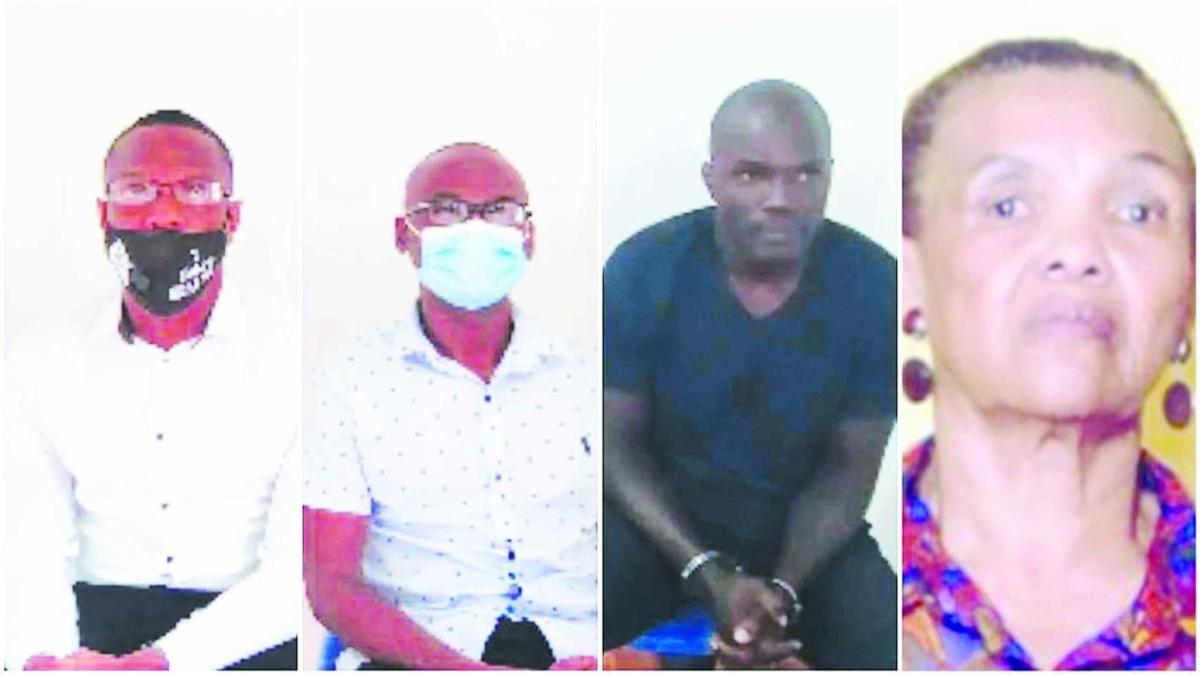
However, in relation to their appeal against a 50-year jail sentence which was imposed on each of them by the Court of Appeal of Guyana, which their lawyer, Arudranauth Gossai argued is excessive and not in keeping with established sentencing guidelines, the CCJ has reserved its ruling.
After a trial before Justice Navindra Singh in 2015, the two men along with Roy Jacobs and another man, Kevin October, who passed away in jail, were jailed for 81 years each with the possibility of being paroled after 45 years for the pensioner’s murder but had their sentences reduced to 50 years each in April by the Court of Appeal.
Dissatisfied with the ruling of the local appellate court, the brothers lodged separate appeals at the CCJ. It is unclear whether Jacobs has filed an appeal with the regional court.
During the men’s appeal hearing at the CCJ, their lawyer cast doubt on the identification evidence and confession statements used to convict his clients, arguing that if these were to be excluded, their convictions would be rendered unsafe and therefore should be quashed.
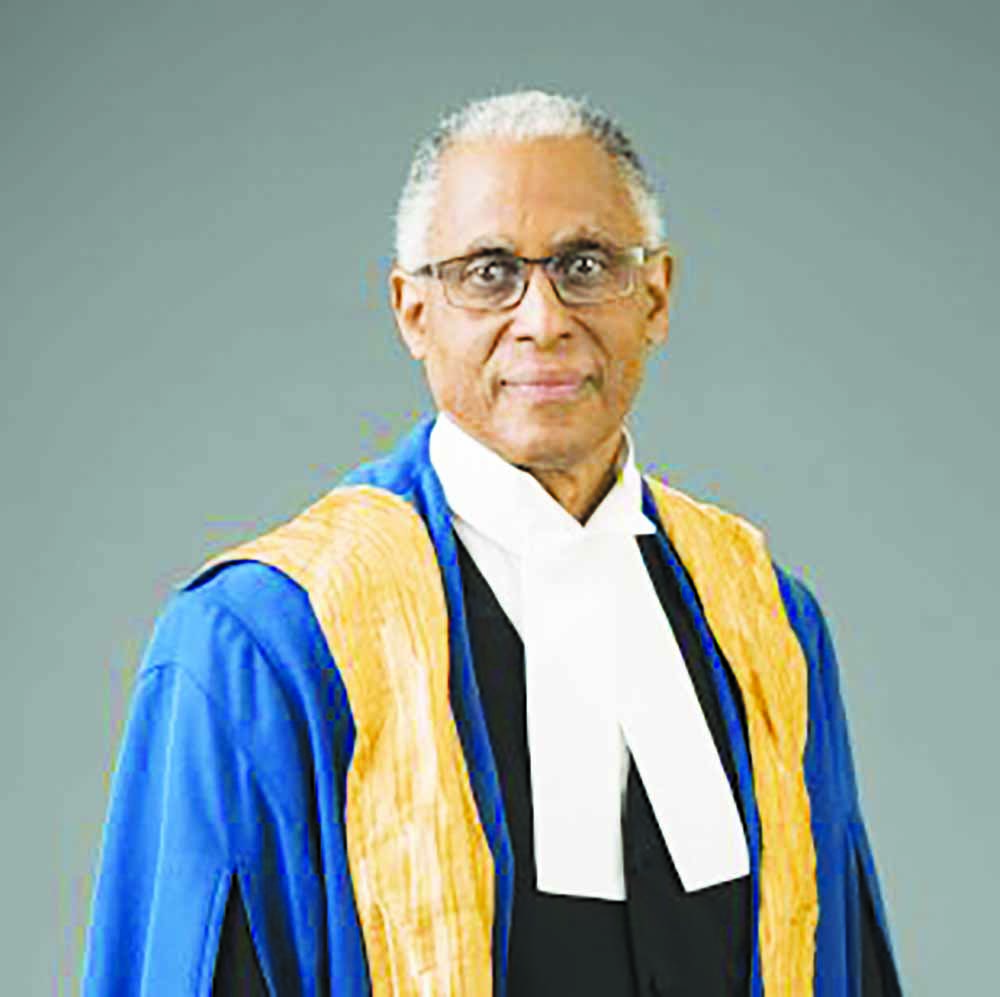
But the CCJ led by its President Justice Adrian Saunders rejected all of the grounds of appeal against their convictions advanced by Gossai, finding that they had no merit. The panel of five Judges retired for a 10-minute break before returning with their decision to dismiss the pair’s appeal against their conviction.

Among the grounds of appeal against their conviction were that there was a “lack of description” of Orwin Hinds from the eyewitness who had pointed him out on an identification parade, that the trial Judge failed to give the jury proper directions on the law relating to alibi defence and that the caution statements given by the brothers was not freely and voluntarily made because they were beaten by Police ranks while in custody to affix their signatures to them.
“Manifestly excessive” sentence
In his clients’ appeal against the sentence, Gossai submitted that the 50-year jail term imposed on each of the men by the Court of Appeal is manifestly excessive and not in keeping with established sentencing guidelines, including those set out by the CCJ.
Given the directions outlined by the CCJ in the local case of Jarvis Small and Bibi Shareema Gopaul v Director of Public Prosecutions (DPP), he said that a sentence ranging from 15 to 20 years would be reasonable, since besides the use of a gun, and the woman’s death being a murder for money, there are no other aggravating factors.
Gopaul was initially sentenced to 106 years in prison for the 2010 murder of her 16-year-old daughter Neesa Gopaul. But in 2021, the Court of Appeal found that the sentence imposed by the trial Judge—Justice Singh—was manifestly excessive and therefore reduced it to 45 years.
The 57-year-old woman challenged her sentence at the CCJ, which in August, held that the 106-year sentence imposed on her, with a starting point of 60 years, exceeded the life expectancy of a human being and was grossly disproportionate and manifestly excessive.
The CCJ also found that the sentence itself of 45 years, though not as grossly disproportionate as the trial Judge’s sentence, was still manifestly excessive. As such, the Trinidad-based court reduced her sentence from 45 to 25 years, ordering that she be considered for parole “not before 15 years”.
Unlike the Gopaul case in which there was a statutory minimum starting point of 15 years, Gossai said that his clients were charged under Section 100 (1) (d) (i) of the Criminal Law (Offences) Act which provides a penalty of either death or life imprisonment.

Asked by Justice Saunders if he believes that in a case of joint enterprise that each party must receive the same sentence, Gossai replied “no”.
He went on to add, “because the evidence may unfold that despite the fact that this is a charge of joint enterprise… all are equally liable, there may be participation by one in the actual commission of the crime, while another, for example, may not have participated”.
According to him, Orwin Hinds confessed that he stood outside while his accomplices attacked the old lady, telling them that “I’m not going in there [the woman’s house]”.
In such a circumstance, the lawyer reasoned that the court could exercise its discretion and impose a lesser sentence on him, though he is not an innocent bystander, for his “non-participation” in the actual commission of the act which led to Fiedtkou-Parris’s death.
He submitted that the court could consider different sentences for Orwin and Cleon.
“In relation to a life sentence for Orwin Hinds, if the court was minded to go along that line, that some definition… [as was done in a case from Barbados] as to what can be considered life imprisonment, that a similar exercise be done in the Guyana context,” he said.
The lawyer explained that his reason for requesting this is because there is no definition of what constitutes life imprisonment under the laws of Guyana.
“Do you need a definition? Life imprisonment means life imprisonment…,” responded CCJ Judge Denys Barrow who went on to explain that the imposition of a life sentence means that parole will not be granted.
For his part, Justice Saunders expressed that the problem he has with this appeal like with many other cases is, “when sentencing is carried out in the manner in which it was done,” while alluding to the trial Judge’s failure to hold a sentencing hearing for the brothers.
Justice Saunders said, “I don’t know anything about Orwin Hinds. How old is he? Does he have children? What are the factors that produced this kind of person? What does the people he lives with say about him? Can you really sentence someone [in the absence] of all of those factors?”
Considering this, the CCJ President stressed the need for trial Judges to conduct sentencing hearings during which the court will, among other things, obtain a pre-sentence report which will detail the offender’s background.
Gossai agreed with Justice Barrow’s suggestion that this matter “should be sent back for sentencing so that these considerations can be explored so that a sentencing report can be prepared…”
For the CCJ to re-sentence the convicts without considering these factors, the men’s counsel submitted that this “would not assist the jurisprudence” in relation to sentencing.
Assistant Director of Public Prosecutions (DPP) Teshana Lake reminded the court that she filed submissions in the matter before the court rendered its decision in the Gopaul matter.
Like Gossai, she too, pointed out that the sentence for the category of murder for which the men were convicted is death or imprisonment for life.
Lake, however, submitted that Section 100A (3) (a) of the Criminal Law (Offences) Act specifies that should the trial Judge sentence the offender to life, he/or she must serve not less than 20 years before being eligible for parole.
Considering this, Lake advocated for the duo to both be given the life sentence. As it relates to their eligibility for parole, she said that a “reasonable” starting range “maybe” between 20 and 30 years.
This, she pointed out, will ensure that murders under [Section 100 (1) (d) of the Criminal Law (Offences)] Act do not attract the same sentence as the murder in Gopaul’s case did.
“We are requesting this starting range so that there will be consistency in the methodology and approaches for sentences. We are asking for them to get the same sentence because of the roles they played in the murder. Both of them provided the [murder] weapon [a gun]. It is just that Orwin got further involved in planning the execution of the murder,” Lake said.
Interjecting, CCJ Judge Jacob Wit highlighted that the four men were offered some GY$1.2 million to kill the elderly woman and asked whether there was an investigation into who hired them.
The prosecutor told the court that indeed an investigation was done but it did not lead the Police to who authorised the killing. She said that the State has all the information about the land transaction over which Fiedtkou-Parris was murdered.
In relation to the other convict, Jacobs, she told the CCJ that his 50-year sentence “will have to attract our Parole Act because once prisoners are of good behaviour, they are granted remissions on their sentence. So, if he is a model prisoner, his sentence should be far less than 50 years.”
The prosecutor explained that the DPP’s Chambers usually receives files from the Parole Board after a convicted person has spent 15 years in prison. “It is a matter of practice,” she informed the Justices.
In Jacob’s case, she noted that it would be incumbent on the DPP’s Chambers to advise the Parole Board that he becomes eligible for parole after 20 and not 15 years in keeping with Section 100A (3) (a) of the Criminal Law (Offences) Act.
Responding to Justice Saunders’s question about the matter being remitted to the trial Judge for a sentencing hearing, Lake said that Guyana does not have laws that allow for the case to be sent back and urged the panel to exercise their sentencing discretion with the information that is before the court given the length of time the case has been ongoing.
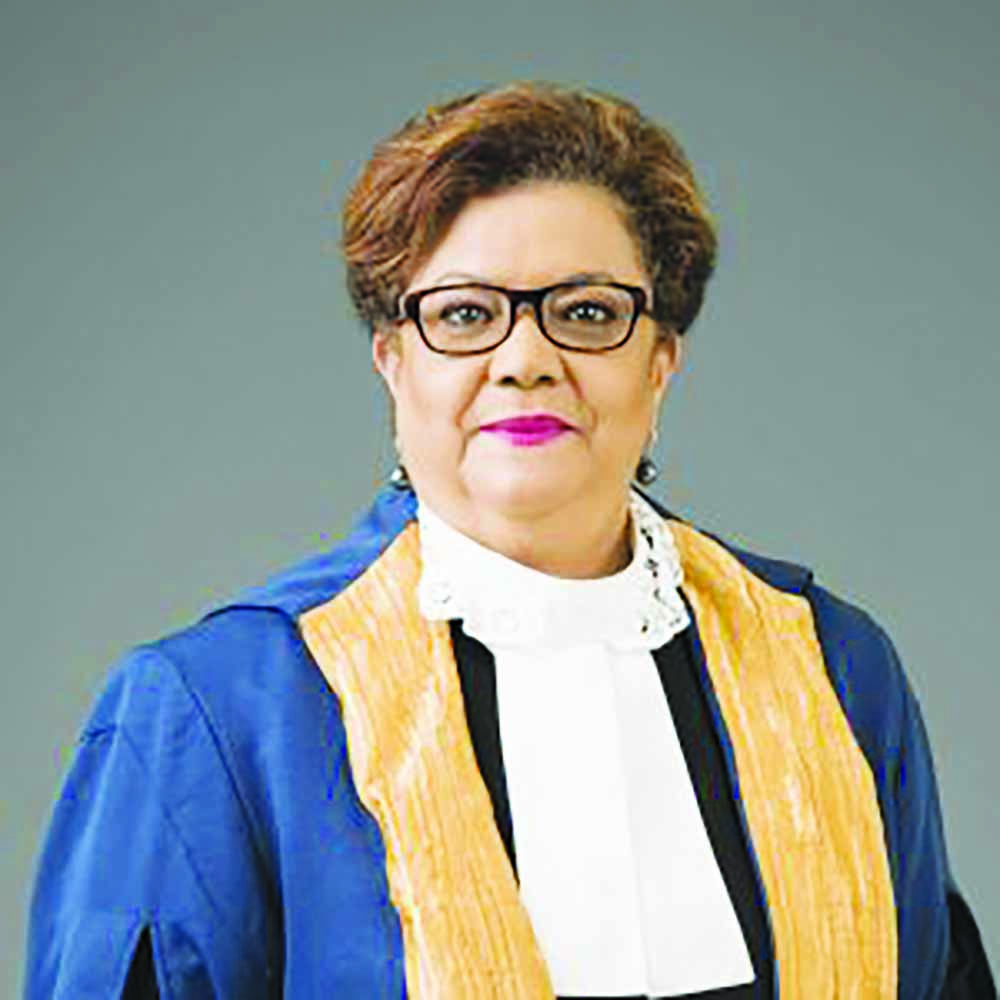
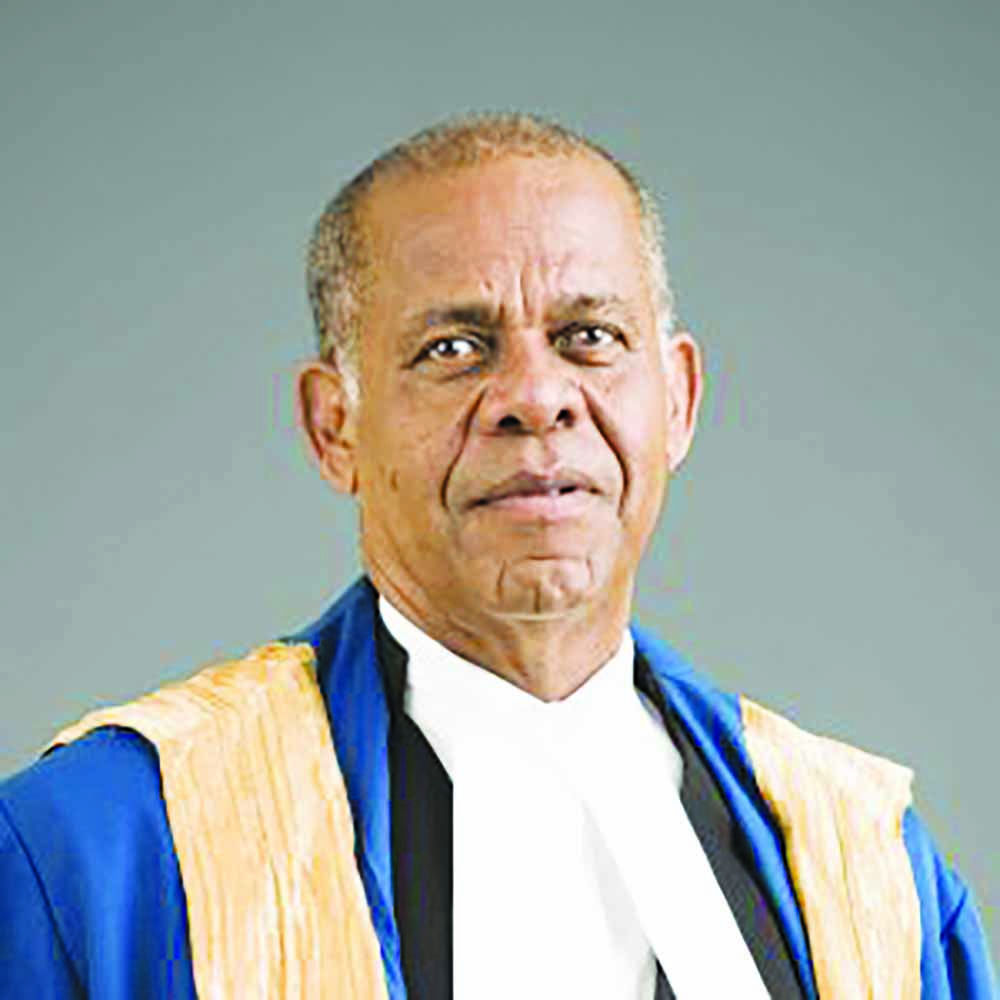
Besides Justices Saunders, Barrow and Wit, Justices Andrew Burgess and Maureen Rajnauth-Lee were the other Judges who deliberated on the siblings’ appeal against their conviction and sentence.
Execution
The charge the men had faced detailed that, on June 30, 2011, they murdered Fiedtkou-Parris pursuant to an arrangement wherein money was intended to be passed from one person to another. The elderly woman was shot and killed on the night of June 30, 2011.
It was reported that three men had gone to the woman’s home asking for “Auntie”, and when she emerged from her bedroom, one of them pulled out a gun and shot her several times to her upper body.
The men then fled the scene in a waiting motor car while the elderly woman was rushed to the Georgetown Public Hospital Corporation, where she was pronounced dead. It is believed that a bitter dispute over a property might have been the motive for her killing.
Discover more from Guyana Times
Subscribe to get the latest posts sent to your email.