


…as Pres Ali highlights disconnect between population, regulators
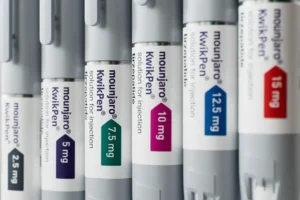
The Government Analyst-Food and Drug Department (GA-FDD) in Guyana is working on approving the use of Mounjaro, a once-weekly, self-injectable medication for managing Type 2 diabetes and chronic weight management in adults.
This was revealed by President Dr Irfaan Ali on Wednesday during the 70th Annual CARPHA Health Research Conference at the Arthur Chung Conference Centre, where he highlighted the disconnect between health innovation and regulatory frameworks.
According to President Ali, while “everybody is using it”, regulatory authorities are still working on approving the drug.
“Health innovation is advancing at a pace that far exceeds the ability of many regulatory systems to assess, approve, and monitor. I’ll give you a simple example. I spoke to our Minister of Health recently. Our regulators at the Food and Drug Administration are still trying to approve Mounjaro, and everybody is [already] using it,” he pointed out.
“If the solution runs too far ahead of the regulator because of their ineffectiveness, or the ineffectiveness of the system to respond quickly, then the population will be ahead of you. The population will be ahead of you, and that is the complete collapse of a healthcare system,” the president outlined.
In fact, he contended that if the population is ready to accept a treatment or a new technology, while the regulators are lagging behind, “it’s a major problem”.
Against this backdrop, President Ali issued a call for the region to collectively address this issue.
“With the political will, we can fix this in a day. The models are all there. We can gather all of the best lawyers in the region and parliamentary counsels and match them with regulators and come up with one master piece of legislation that the region can implement as a whole. Are we willing to do it?”
Apart from the weight loss drug, President Ali explained that artificial intelligence, digital therapeutics, and rapidly developed medical products are entering the market faster than governance frameworks can evolve.
This, he noted, creates tension between speed and safety.
“The challenge is now even sharper with generative AI and adaptive algorithms where questions of transparency, accountability, and post-market surveillance remain unresolved. Without regulatory innovation, technological innovation risks outpacing public trust. And this conference must be able to do that. You have to find that balance. If we don’t find that balance, then public trust will be eroded,” the president stated.
 Ozempic-equivalent drugs
Meanwhile, last year, Minister of Health Dr Frank Anthony had announced that Guyana is in discussions with several international pharmaceutical companies interested in partnering to produce biosimilar medicines locally, including alternatives to popular drugs like Ozempic.
He made the announcement during a White Coat graduation ceremony.
“These partnerships will open doors for industrial pharmacy and local pharmaceutical manufacturing. We are laying the groundwork for a future where Guyana not only delivers high-quality healthcare but also contributes to global pharmaceutical innovation,” Dr Anthony had stated.
Discover more from Guyana Times
Subscribe to get the latest posts sent to your email.