


…memories remain as vivid as ever despite life sentences for killers – relatives
By Andrew Carmichal
By the time the High Court handed down life sentences to Anil Sancharra and Vinod Gopaul convicted of murdering West Coast Berbice (WCB) cousins Joel and Isaiah Henry, nearly six years had passed since the brutal killings that shook Guyana and sparked outrage. For the courts, the sentencing marked the end of a lengthy criminal trial. For relatives of the two young men, however, the judgment has done little to ease the pain of a loss they say continues to shape their lives every day. Donna Thomas, a first cousin of Joel Henry’s father and a close relative who watched the two cousins grow up in Number Three Village, WCB, says the verdict has brought legal closure, but not emotional peace. Standing outside her home, just a short distance from where the boys once spent their afternoons laughing, rapping and teasing each other, Thomas reflected not only on the sentencing but on the memories that have refused to fade since September 2020.
Her reaction to the court’s decision was measured, rooted more in faith than celebration. “God knows best,” she said. “If they are innocent, all I can say is stop crying and pray without ceasing. They have received life imprisonment, but before their time comes, if they are innocent, God will reveal the truth at the right time.”

Thomas said she has heard members of the public express differing opinions about the convictions but maintains that she cannot pass judgment beyond what she personally knows. “Some people say those are not the men who committed the killings. I wasn’t there, so I cannot judge. Only God knows,” she said. At the same time, she believes that anyone with genuine knowledge of what happened on that September afternoon has a moral responsibility to come forward. “If anyone knows, who did it, they should speak. If they know names, call the names. I can’t call any names because I know nothing. I wasn’t there. But if they know something, they should say it.” Her comments came one day after Justice Simone Morris sentenced the two convicted men to life imprisonment for the murders of the teenage cousins, ordering that each must serve 35 years before becoming eligible for parole. While the legal proceedings have concluded, Thomas said her thoughts immediately returned to happier days, long before the murders transformed the quiet agricultural community into the focus of national attention.

Days filled with laughter
She remembers two energetic young men whose afternoons were filled with music, laughter and dreams. “Every afternoon when I came home from work, Isaiah and Joel would be sitting outside, singing and rapping against each other. As soon as I got out of my vehicle they would call out to me and wave. I would stop and listen to them.” Those ordinary moments, she said, have become some of her most treasured memories. “That was the last time I saw them.” Joel, she recalled, worked at the nearby sugar estate and would usually return home in the afternoons before joining Isaiah outside. Isaiah, meanwhile, was known throughout the community as a helpful and cheerful young man who rarely refused anyone seeking assistance. “Isaiah didn’t have a problem helping anybody,” Thomas recalled. “On weekends he would go into the backdam, bring out coconuts and sell them. He was always smiling. Whenever he passed you, he had a smile on his face.” She described him as someone who got along easily with everyone in the village, whether young or old. “He mixed with everybody, and everybody mixed with him.” Thomas also recalled Isaiah’s close friendship with another young man in the village, explaining that he often helped neighbours completing odd jobs and willingly assisted wherever he was needed.
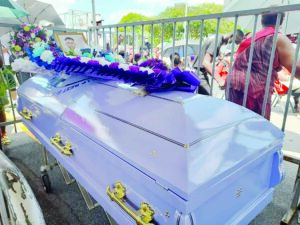
Looking back now, she said there was nothing to suggest that the ordinary rhythm of village life would soon be shattered. The memory of the day the cousins disappeared remains vivid. Thomas had been at work and returned home late that evening. “When I returned home, I saw a commotion on the road, but I didn’t know what had happened,” she said. After asking her daughter what was taking place, she learned that Isaiah’s mother and others had gone into the backdam looking for the boys.
Discovery
At that point, however, no one knew the full extent of what had happened. “It wasn’t until the next day that I learned they were missing,” she recalled. Like many others in the community, she watched as concern quickly turned into fear. Hours later came the devastating confirmation that Joel and Isaiah had been found brutally murdered with their body completely mutilated. The discovery stunned the village and sent shockwaves across Guyana, triggering widespread grief, anger and demands for justice. For Thomas, however, the tragedy has never simply been a headline or a court case. It remains deeply personal. “They left to go into the backdam,” she said quietly, pausing before adding words that still weigh heavily on her six years later. “And they never came back. The days that followed were among the most difficult Thomas said she has ever experienced.
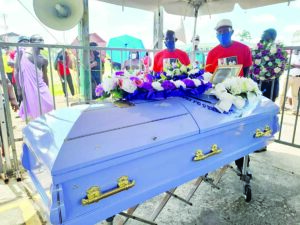
Like hundreds of residents, she watched as the village transformed almost overnight. What had been a close-knit farming community became the centre of an intensive police investigation, an outpouring of public grief and days of protests that drew national and international attention. Thomas said she was not among those who searched for the cousins when they first disappeared, nor was she present when their bodies were discovered. Her first direct visit to the area came several days later, when investigators returned to the backdam to continue gathering evidence. “The only time I went into the backdam was days later with a team that went to look for evidence. There were police and soldiers. That was the only time I went there,” she recalled. Asked about claims that surfaced during the investigation regarding the area where the killings occurred, Thomas was careful to distinguish between what she personally observed and what she later heard from others.
No ganja farm
“As far as I know, there was no ganja farm there,” she said. “I know that area because I used to go into the backdam. We saw a watermelon farm and a camp, but I did not see any ganja farm.” Her recollection represents only what she said she witnessed during that visit. More vivid in her memory, however, are the tense days that engulfed West Coast Berbice after news of the killings spread. Travelling to and from work became almost impossible as roads were blocked and protests intensified. Thomas recalled leaving for work as usual, only to find herself unable to return home because of erected roadblocks along the public road. “My boss had to turn back because nobody could pass. There were people on the road with sticks and cutlasses and the roads were blocked. We had to wait until things settled before we could get through,” she said. Although she found herself caught in the disruption, Thomas stressed that neither she nor members of her immediate family participated in the protests. “I wasn’t part of the protests,” she explained. “I was mostly inside. Friends who knew me would sometimes come and I would help them get through, but I wasn’t protesting.” She also rejected rumors that circulated in the aftermath of the killings, insisting that she would only speak about events she personally witnessed. “I can only tell you what I saw,” she said. Six years later, Thomas believes the emotional scars left by the murders remain just as deep. In the years since Joel and Isaiah were killed, both of their mothers have died.
For Thomas, that loss has added another layer of sadness to a family already burdened by unimaginable grief. “It affected the family terribly,” she said.
Can’t stay away for long
She became emotional as she spoke about Isaiah’s relationship with his mother, recalling that he rarely stayed away from home for long. “If he went out, he would come back quickly because he knew his mother would be looking for him.”
She paused before continuing. “Until now it still troubles me.” Then came the memory that has remained with her every day since September 2020. “Every morning when I open my back window, I imagine seeing Isaiah walking along the dam.” She smiled briefly, as though replaying those moments in her mind.
“That was the last image I have of him.” It is a simple routine, opening a window that unexpectedly returns her to a time before tragedy struck, when the cousins would greet neighbours, laugh with friends and spend hours talking about music and life. She said those memories are impossible to erase. “They were good boys.”
Nevertheless, Thomas said no sentence can restore what the family has lost. The empty chairs at family gatherings remain. The familiar voices have fallen silent.
The dreams the two young men once carried into adulthood ended long before they had the chance to realise them. Thomas said she has accepted that the court has delivered its judgment, but she continues to believe that truth and justice ultimately belong to God. “If those men are guilty, they have to answer for that,” she said. “But if they are innocent, then they must pray, and God will reveal the truth,” she reiterated. She also repeated her appeal to anyone who may still know something about the killings. “If people know anything, they should speak. Don’t just keep saying you’re here wrongfully. If you know something, say it.”
For the Henry family, the sentencing closed a legal chapter but for relatives like Donna Thomas, the passing of time has not dulled the pain. Justice may have been delivered in a courtroom, but grief has no final judgment. For the Henry family, the memories of two young cousins whose lives ended so violently continue to live on in their hearts and the fact that one day, they will all reunited in heaven.
Discover more from Guyana Times
Subscribe to get the latest posts sent to your email.